Digital Twin Engineering That Delivers ROI, Not Just 3D Models
Physics-based digital twin engineering with calibration, multi-physics co-simulation, and constrained optimization for industrial decision-making.
The digital twin market is projected at $24–36 billion in 2025 and growing above 35% annually (Fortune Business Insights, Grand View Research), and Gartner expects the technology to cross the chasm into mainstream enterprise adoption in 2026. Yet 75% of digital twin projects fail to deliver ROI (Context Clue, 2025). The simulation software is almost never the problem.
Why Most Twins Fail: The Engineering Between Simulation and Decision
The failure pattern is consistent: an organization buys a platform, builds a 3D model, connects some sensors, and waits for value to appear. It does not appear. The problem is not the simulation software. It is the engineering between the simulation and the decision:
- Calibrating the twin against real operational data.
- Keeping it synchronized as the physical system drifts.
- Composing multi-physics models that cross vendor boundaries.
- Building optimization loops that respect the constraints operators actually face.
That engineering is what an engagement with us is scoped to address.
The Platform Confusion That Costs Buyers Months
The vendor landscape in 2026 is fragmented and genuinely confusing. Buyers who pick an IoT graph platform expecting physics-based optimization end up bolting on FMU/FMI co-simulation, ANSYS solvers, or custom PDE code anyway — after spending months discovering the gap. Each tool below does a piece well; none does the full stack.
| Platform | What it actually is | The gap |
|---|---|---|
| Azure Digital Twins & AWS IoT TwinMaker | IoT graph and visualization platforms | Not simulation engines; physics-based optimization must be bolted on |
| NVIDIA Omniverse | Impressive real-time 3D rendering; adopted by Caterpillar, Foxconn, Toyota, and TSMC for factory visualization | Physics fidelity for thermal-fluid or structural coupling still lags dedicated solvers |
| Siemens Digital Twin Composer | Launched at CES 2026, built on Omniverse libraries | Covers a piece, not the full stack |
| ANSYS Twin Builder | Creates hybrid digital twins combining physics-based reduced-order models with ML analytics | Covers a piece, not the full stack |
The interoperability standard that actually matters is FMI (Functional Mock-up Interface), now supported by 270+ tools. FMI 3.0 with the new SSP 2.0 standard for system structure parameterization enables multi-physics twin composition across vendor boundaries, and Bosch considers FMI the preferred model exchange format. But real co-simulation integration — getting a Modelica thermal model talking to an ANSYS CFD solver talking to a custom control logic layer with proper time-step coordination — requires engineering that no platform automates. That integration is the work our engagements are designed to deliver.
Calibration Is Where Twins Live or Die
A digital twin is only as good as its calibration against the physical system it represents. The technical challenge is not the initial calibration — it is maintaining calibration as the physical system ages, sensors degrade, operating conditions shift, and maintenance events change system behavior. A temperature sensor drifting 0.5 degrees over six months will silently corrupt every prediction the twin makes, and most twin deployments have no mechanism to detect this.
Our approach is to build calibration infrastructure using Bayesian parameter estimation against streaming operational data, with automated anomaly detection that identifies when the twin's predictions diverge from observed reality. The system distinguishes between three divergence causes:
| Divergence cause | What it actually needs |
|---|---|
| Sensor degradation | Sensor maintenance, not model updates |
| Genuine physical change | Model recalibration |
| Operating conditions outside the validity envelope | A clear alert that the model should not be trusted |
That last distinction matters most. Every twin has a validity envelope — the operating conditions under which its predictions are reliable. Our approach characterizes that envelope explicitly and builds automated alerts for when real-world conditions approach the boundary. Decisions based on extrapolation beyond validated behavior are worse than decisions made without a twin at all, because they carry false confidence.
Multi-Physics Composition, Not Single-Solver Simplification
Real industrial systems involve coupled physics: thermal, fluid, structural, electrical, chemical. A single simulation tool rarely handles all domains at the fidelity needed. Consider two examples:
- An energy grid digital twin might need power flow simulation (PSS/E or PowerWorld), thermal modeling for transformer degradation, weather-driven renewable generation forecasting, and market optimization under regulatory constraints (see our research on physics-constrained intelligence for grid disturbances).
- A pharmaceutical process twin might couple computational fluid dynamics for mixing with reaction kinetics and heat transfer.
Forcing all of these into one vendor's solver means compromising fidelity in at least one domain. Our approach composes twins from the best-fit solver for each physics domain, connected through FMI co-simulation with proper time-step synchronization and data exchange protocols. The Modelica ecosystem (Dymola, OpenModelica, Modelon Impact) provides the backbone for system-level modeling, with specialized solvers plugged in where domain fidelity demands it. The result is a twin that respects the physics of each domain rather than averaging them into a single simplified representation.
Optimization That Respects Real Constraints
The optimization layer is where the twin generates value. Our approach applies the right method for the problem structure, respecting the hard constraints operators actually face rather than optimizing against a fantasy (detailed in our whitepaper on constraint-based generative design):
- Bayesian optimization — for expensive-to-evaluate objectives with small parameter spaces.
- Evolutionary algorithms (NSGA-III, MOEA/D) — for multi-objective problems where decision-makers need Pareto-optimal trade-off surfaces rather than single-point answers.
- Reinforcement learning — for sequential decision problems where the twin serves as the training environment.
- Model predictive control — for process control, informed by the twin's physics rather than RL, which is often the right answer.
The critical engineering challenge is sim-to-real transfer. RL policies trained in simulation fail when transferred to physical systems due to three compounding factors: physical and dynamic mismatches between the simulator and reality; perceptual uncertainty (simulation agents have perfect information while real systems use noisy sensors); and out-of-distribution states the policy never encountered during training.
Domain randomization helps but does not solve structural model misspecification. If the twin's physics model has the wrong PDE or a missing coupling term, no amount of randomization produces a policy that works on the real system. Our approach validates sim-to-real transfer through progressive deployment: first in shadow mode alongside existing controls, then with bounded authority, then at full autonomy, with continuous monitoring for divergence between expected and actual outcomes.
The AI-Native Simulation Frontier
The convergence of AI and simulation is reshaping what is possible. NVIDIA Modulus trains physics-informed neural network surrogates that run orders of magnitude faster than traditional solvers; Ansys integrated Modulus into its semiconductor simulation products (Ansys Seascape), demonstrating a 100x speed-up for thermal simulations. Foundation models for physics (Compositional Neural Operators, Physix) promise reusable surrogate bases that reduce solver-per-PDE overhead, and the same closed-loop approach drives our research on closed-loop AI materials discovery.
Agentic digital twins, where AI agents autonomously operate within the twin's simulation environment, are now formalized in academic literature (AAAI 2025/2026) and deployed at scale: PepsiCo's AI agents identify up to 90% of potential issues in manufacturing digital twins before physical modifications, delivering 20% throughput improvement and 10–15% investment cost reduction. We have built a working demo of an autonomous AI lab where agents operate a simulated experimental loop end to end.
But the hype outpaces the engineering reality. A 2025 paper identifies fundamental flaws in physics-informed neural networks for engineering systems: narrow validity envelopes, poor characterization of failure boundaries, and lack of physical interpretability. Our approach uses AI surrogates where they are appropriate (fast inner-loop evaluations within an optimization, real-time what-if exploration for stakeholders) and falls back to high-fidelity solvers where accuracy is load-bearing. The choice between surrogate and solver is an engineering decision made per-component, not a platform commitment.
What the Numbers Say
- GE's gas turbine digital twins save $64 million annually, with a 75% reduction in product waste and 38% fewer quality complaints (Skan.ai).
- The emergency-versus-planned maintenance math is stark: one documented case showed a single emergency repair costing $1.4 million versus $95,000 for the same repair during a planned turnaround (AIDAR Solutions).
- McKinsey reports that digital twins cut product development times by up to 50% and improve quality by up to 25%.
- Enterprise implementations typically cost $500,000 to $4 million depending on scope, with 20–30% operational cost reductions in the first year and 12–36 month payback periods.
- Deloitte found that 42% of companies abandoned most AI initiatives in 2025, with an average sunk cost of $7.2 million per abandoned initiative.
The pattern behind the abandonments: starting with a platform purchase instead of an engineering problem definition.
When a Digital Twin Is the Wrong Choice
Not every system needs a twin. We scope engagements around the decision problem first, and if a twin is not the right answer, we say so. A twin is the wrong tool when:
- The physical system is simple enough that first-principles calculations or statistical process control handles the decision problem — a twin adds cost without insight.
- The organization lacks the sensor infrastructure to feed the twin real-time data — the twin becomes a one-time simulation, not a living model.
- The decision cycle is monthly or quarterly and the system changes slowly — batch simulation runs are cheaper than maintaining a synchronized twin.
- The primary goal is 3D visualization for stakeholder presentations rather than operational optimization — a visualization platform is the right tool, not a physics-based twin.
Key Takeaways
- 75% of digital twin projects fail to deliver ROI — the cause is the engineering between simulation and decision, not the simulation software.
- Cloud IoT platforms (Azure Digital Twins, AWS IoT TwinMaker) are not physics engines; vendor-neutral composition over FMI 3.0 / SSP 2.0 (270+ tools) preserves fidelity across domains.
- Calibration must be maintained, not just performed once — Bayesian parameter estimation plus an explicit validity envelope prevents silent, false-confidence failures.
- Optimization method follows problem structure (Bayesian, NSGA-III/MOEA/D, RL, MPC), with sim-to-real validated through progressive deployment.
- The math is proven — GE saves $64M annually, McKinsey cites up to 50% faster development — but success starts from a decision problem, never a platform purchase.
Solutions for Simulation, Digital Twins & Optimization
 Watch
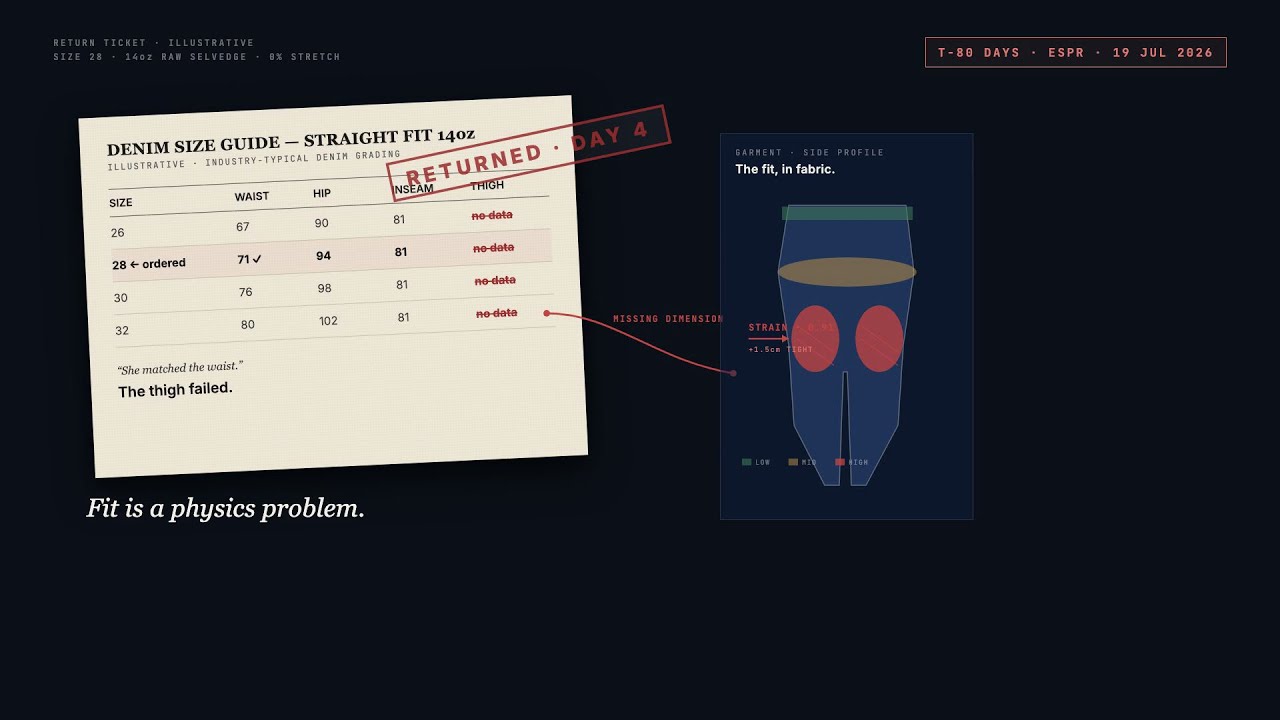
WatchAI Fit Prediction for Fashion E-Commerce
Fashion e-commerce loses more money to returns than to marketing, logistics, or fraud combined. The root cause in 53-70% of apparel returns is the same: the garment did not fit. Size charts reduce this to a guessing game.
 Watch
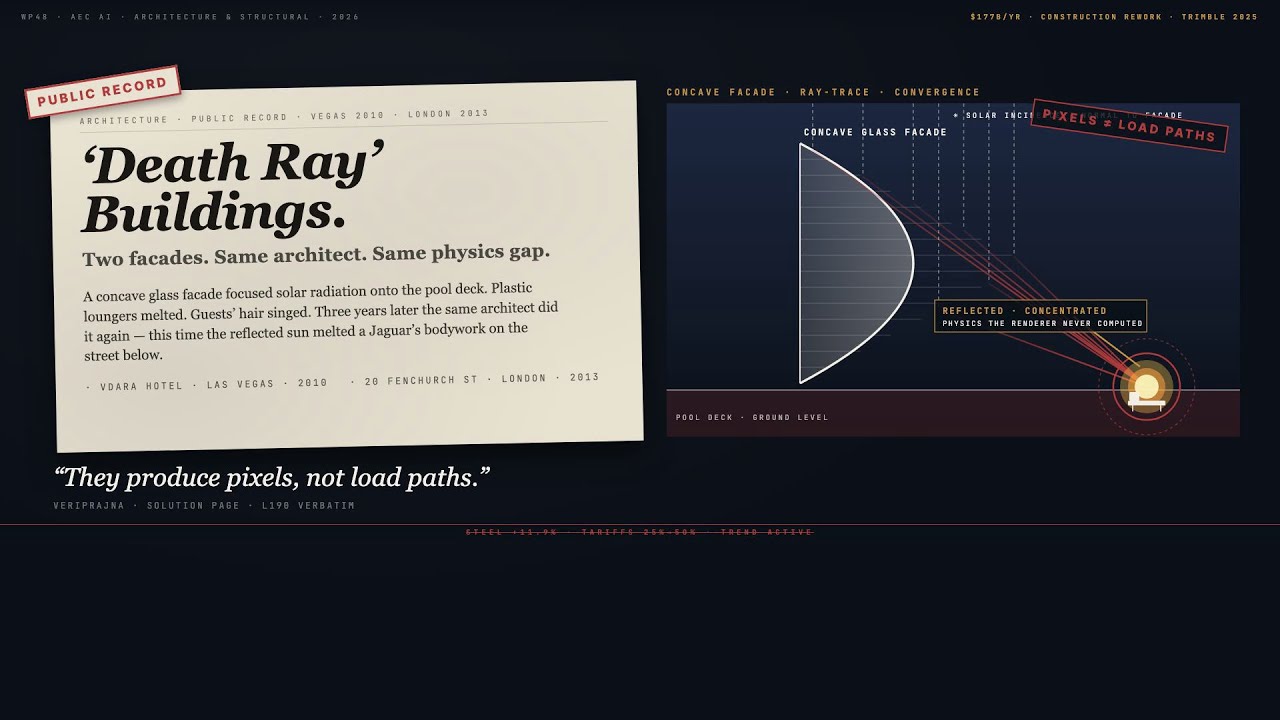
WatchAI for Architecture & Structural Engineering
Generative AI creates stunning architectural concepts in seconds. Then your structural team spends weeks proving they cannot be built. Eighty percent of construction cost deviation comes from design changes, not construction mistakes.
 Watch
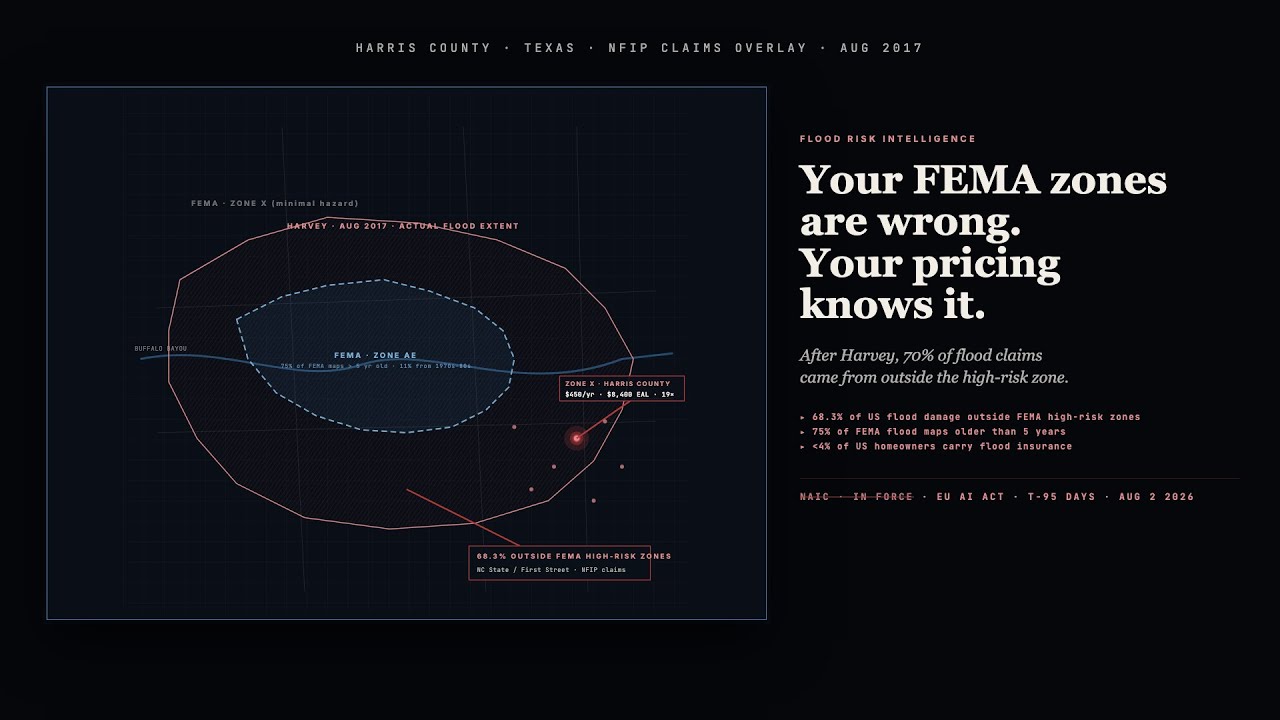
WatchAI-Powered Flood Risk Underwriting
More than two-thirds of US flood damage occurs outside FEMA's high-risk zones. If your rating engine still anchors to Zone AE vs. Zone X, you're mispricing risk on both sides: overcharging the elevated house inside the zone, undercharging the slab-on-grade house outside it.
 Watch
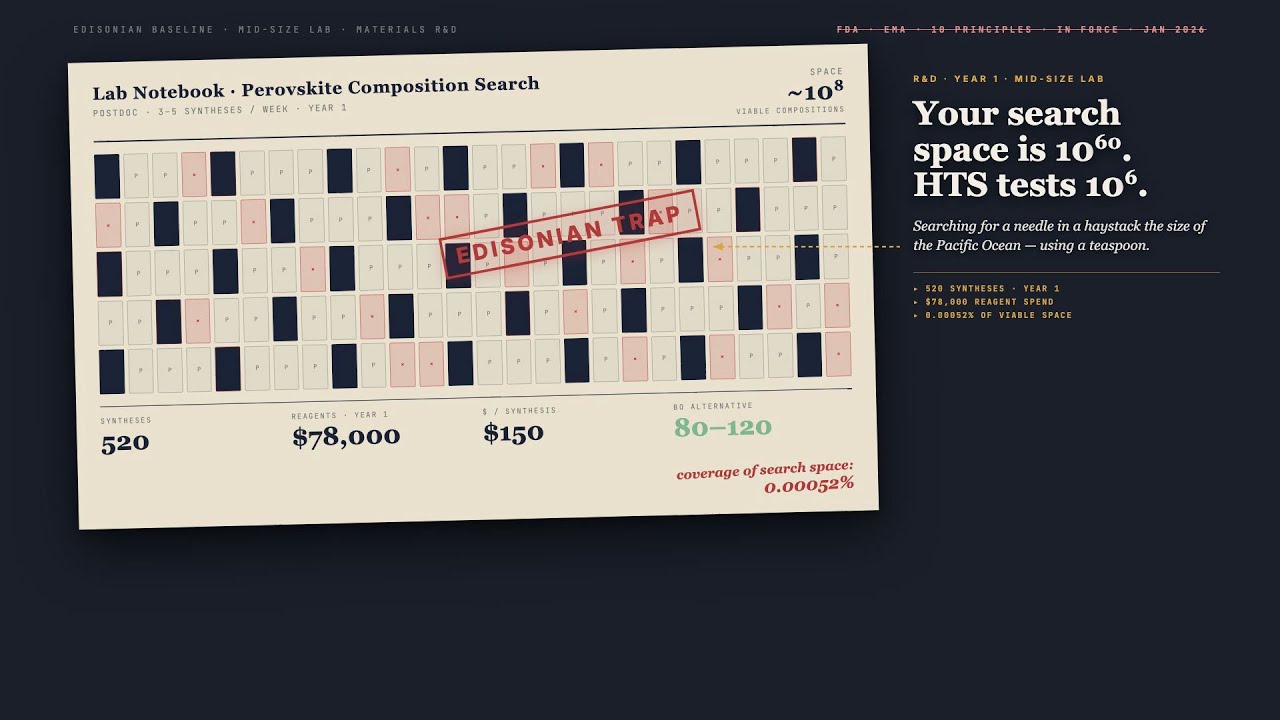
WatchAutonomous Lab AI: Self-Driving Laboratory Design for Materials Discovery
The gap between what high-throughput screening covers and what the chemical space contains is not incremental. It is astronomical. Self-driving labs close that gap by replacing random search with strategic, AI-directed experimentation.
 Watch
WatchData Center Grid Interaction AI
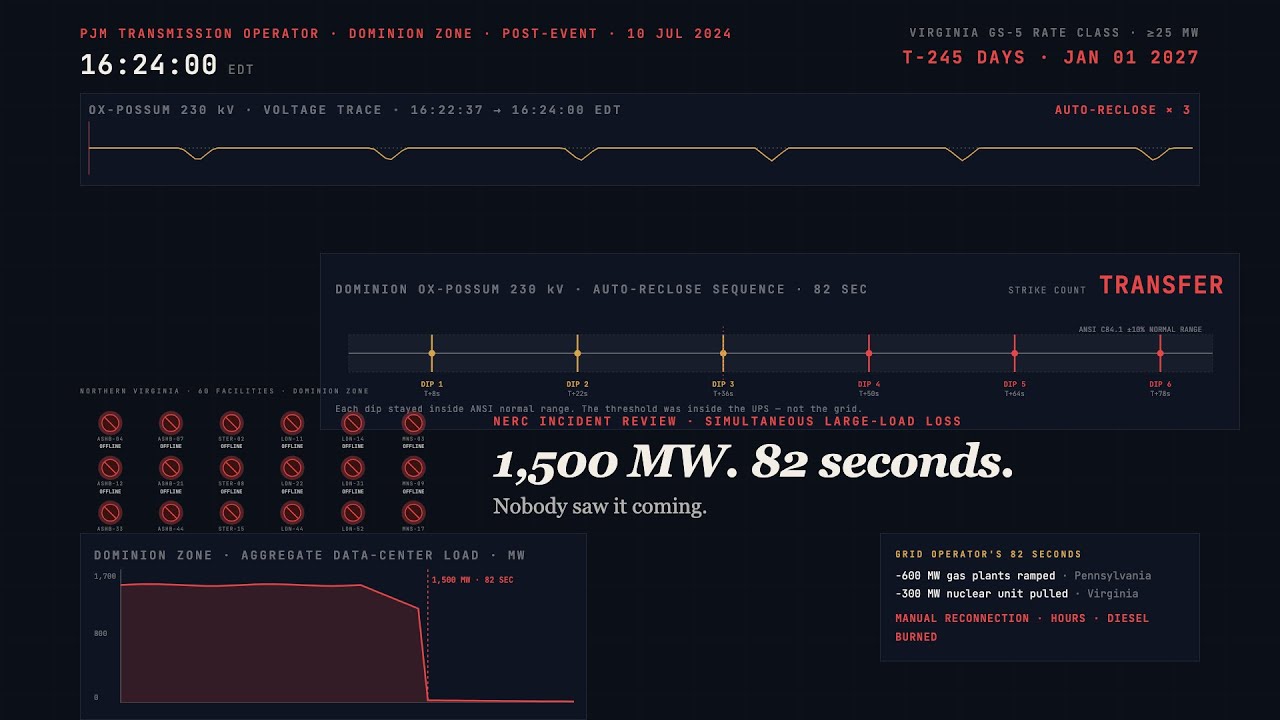
AI-powered grid flexibility orchestration for data centers. Prevent byte blackouts, optimize PJM capacity market costs, and meet NERC large load compliance requirements.
 Watch
WatchPower Grid AI & Resilience Engineering
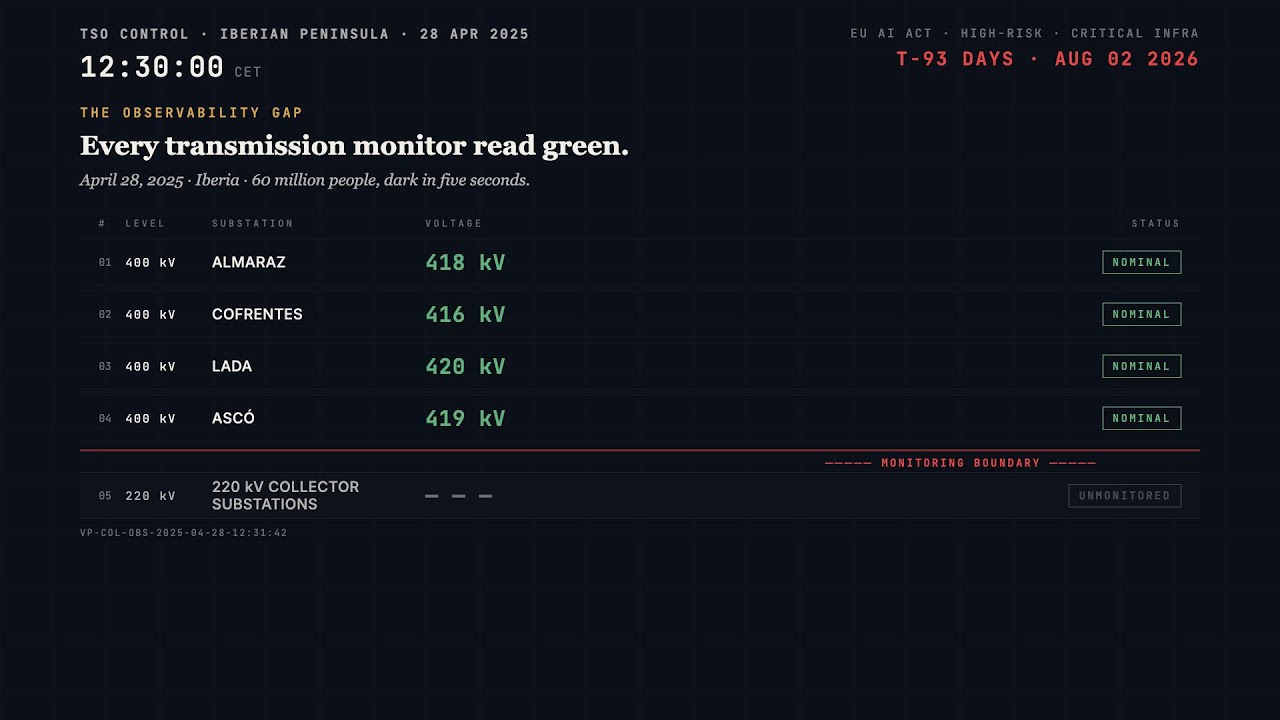
PJM fell 6,625 MW short of its reliability target for the first time in history. ERCOT's interconnection queue hit 233 GW with only 23 GW of new generation online. The Iberian blackout wiped out 15 GW in 5 seconds because no one was watching the right voltage level.
 Watch
WatchSemiconductor AI Verification & Silicon Correctness
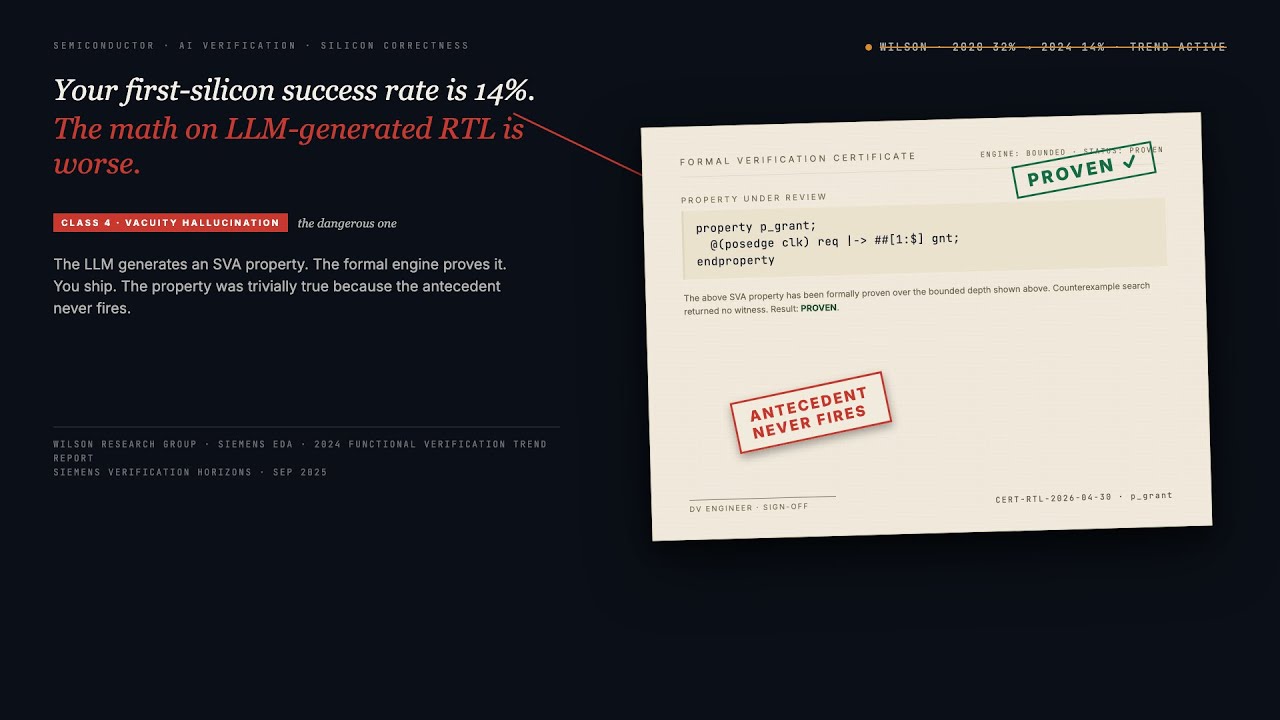
We build custom verification pipelines that wrap fine-tuned open-weight LLMs around your existing formal engine (JasperGold, VC Formal, Questa Formal, or SymbiYosys) and run entirely on your own hardware. No RTL leaves your network. No vendor lock-in.
Frequently Asked Questions
How much does an enterprise digital twin implementation cost?
Enterprise digital twin implementations typically range from $500,000 to over $4 million depending on the number of physics domains, sensor integration complexity, and optimization requirements. A single-asset twin with one physics domain and existing sensor infrastructure sits at the lower end. Plant-wide multi-physics twins with real-time optimization and custom solver integration sit at the upper end. The payback math usually works out to 20-30% operational cost reductions within the first year, with full ROI at 12-36 months. For context, one documented emergency repair cost $1.4 million versus $95,000 for the same repair during planned maintenance. A single prevented failure can exceed years of twin deployment cost.
Why do most digital twin projects fail to deliver ROI?
75% of digital twin projects fail to deliver ROI, and the simulation software is almost never the cause. The top failure pattern is a technology-first approach: buying a platform, building a 3D model, connecting sensors, and waiting for value. The actual causes are poor data quality and fragmented data sources (the number one killer), no clear business problem definition driving the twin's design, confusion between visualization and physics-based simulation, and inability to maintain calibration as the physical system drifts over time. Projects that start with a specific decision problem and engineer backward to the minimum twin complexity needed consistently outperform those that start with a platform purchase.
Should I use Azure Digital Twins, AWS IoT TwinMaker, or a dedicated simulation platform?
Azure Digital Twins and AWS IoT TwinMaker are IoT graph and visualization platforms, not physics simulation engines. They excel at device management, data routing, and 3D visualization. But if you need physics-based optimization (thermal, fluid, structural, chemical), you will still need dedicated solvers like ANSYS, Modelica-based tools, or custom PDE code connected through FMI co-simulation. Many organizations spend months discovering this gap after starting with a cloud platform. Dedicated industrial platforms like Siemens Xcelerator and ANSYS Twin Builder provide deeper simulation capabilities but lock you into a single vendor ecosystem. The right architecture often composes cloud IoT infrastructure for data ingestion with vendor-neutral simulation engines for physics fidelity.
What is FMI and why does it matter for digital twin interoperability?
FMI (Functional Mock-up Interface) is the dominant interoperability standard for model exchange and co-simulation, now supported by 270+ tools. FMI 3.0 with the new SSP 2.0 standard enables composing multi-physics digital twins across vendor boundaries: a Modelica thermal model can talk to an ANSYS CFD solver and a custom control logic layer with standardized data exchange. Bosch officially considers FMI the preferred model exchange format. Without FMI, you are locked into whichever vendor's solver ecosystem you start with, and switching costs are measured in months of re-implementation. We build twin architectures on FMI specifically because it preserves the ability to swap components as better tools emerge.
How do you handle the sim-to-real transfer gap for RL policies trained on digital twins?
The sim-to-real gap is the primary failure mode for reinforcement learning policies trained in simulation. Three factors compound: physical mismatches between the simulator and reality, perceptual uncertainty (simulation gives perfect state information while real systems use noisy sensors), and out-of-distribution states the policy never saw during training. Domain randomization helps with parameter uncertainty but cannot fix structural model misspecification. If the twin's physics has the wrong PDE or missing coupling terms, no training technique saves the policy. We address this through progressive deployment: shadow mode alongside existing controls first, then bounded authority with human override, then full autonomy with continuous divergence monitoring. Each stage validates that the policy performs within acceptable bounds on the real system before expanding its authority.
What is the difference between AI surrogate models and traditional simulation for digital twins?
Traditional simulation (FEA, CFD, discrete event) solves physics equations directly and produces high-fidelity results but can take hours per evaluation. AI surrogates (physics-informed neural networks, reduced-order models via NVIDIA Modulus or ANSYS) learn approximations that run orders of magnitude faster. Ansys demonstrated 100x speed-up for thermal simulations using NVIDIA Modulus integration. The trade-off is validity: surrogates are accurate within the training distribution but have narrow, poorly characterized validity envelopes. A 2025 research paper identifies fundamental flaws in PINNs for engineering systems, particularly around failure boundary characterization. We use surrogates for fast inner-loop evaluations in optimization and real-time what-if exploration, and high-fidelity solvers where accuracy is load-bearing. This is a per-component decision, not a platform-level commitment.
How long does a digital twin implementation take from kickoff to production?
Timeline depends on scope. A single-asset twin with one physics domain and existing sensor data typically takes 8-16 weeks from kickoff to validated production deployment. Multi-physics twins coupling three or more domains with custom solver integration and optimization loops take 4-8 months. Plant-wide or fleet-scale deployments where you are composing multiple twins with shared data infrastructure take longer. The fastest path is starting with a single high-value asset where sensor data already exists, proving the calibration and optimization value, and then scaling. Trying to build a plant-wide twin from day one is the approach most likely to join the 75% that fail to deliver ROI.
Why hire a consultancy for digital twin work instead of using Siemens or ANSYS directly?
Siemens and ANSYS sell their own solver ecosystems. Their professional services teams are excellent at implementing within their own toolchains. The gap appears when your twin needs to cross vendor boundaries: ANSYS CFD coupled with Modelica electrical models coupled with a custom ML surrogate coupled with an optimization layer that none of these vendors provide. Platform vendors optimize for platform adoption. We optimize for the engineering outcome. If Siemens Xcelerator or ANSYS Twin Builder covers your full problem, use them directly. If your twin spans multiple physics domains, needs vendor-neutral interoperability through FMI, or requires custom optimization and calibration infrastructure, that is where independent engineering delivers value that platform vendors structurally cannot.
Build Your AI with Confidence.
Partner with a team that has deep experience in building the next generation of enterprise AI. Let us help you design, build, and deploy an AI strategy you can trust.
Veriprajna Deep Tech Consultancy specializes in building safety-critical AI systems for healthcare, finance, and regulatory domains. Our architectures are validated against established protocols with comprehensive compliance documentation.