AI Citation Verification That Proves Every Claim Traces to Its Source
Verification systems that ensure every AI-generated claim traces to a real source, with citation pipelines, entailment checking, and factual accuracy evaluation.
Your AI Cites Sources. It Doesn't Verify Them.
The most dangerous AI output is one that looks cited. A retrieval-augmented system returns a passage, the model generates an answer, and a citation appears next to it. The user assumes the citation supports the claim. In 57% of cases, it doesn't.
A 2025 study found that more than half of RAG-generated citations exhibit post-hoc rationalization: the model decides its answer first, then scans retrieved documents for surface-level token matches to fabricate a reference. The citation is real. The document exists. The passage is from that document. But the passage does not actually support the claim.
This is not a retrieval problem. Your retrieval pipeline can return the right documents and your citations can still be wrong. Our approach is to build the verification layer that sits between your AI's generation and your users — not better retrieval, not better prompts, but independent verification designed so each claim in the output is actually supported by the source it references — the architecture we set out in our whitepaper on building truth beyond the LLM wrapper.
Why Retrieval Plus Prompting Is Not Verification
Most teams treat grounding as a retrieval problem: better chunks, a reranker, "only answer from the provided context" in the system prompt. This misses the core failure. The model is not disobeying — it is complying unfaithfully, finding tokens in context that superficially match and attaching a citation. The passage does not entail the claim.
Verification is a separate system with a separate objective. The generation component produces candidate claims with source annotations and optimizes for fluency. The verification component independently evaluates whether each cited source actually supports the annotated claim, optimizing for entailment: does this source logically support this specific claim? When these run as independent subsystems — the dual-system pattern detailed in our neuro-symbolic verification research — a hallucination must fool both to reach the user.
We implement this dual-system architecture using NLI models fine-tuned for entailment detection, combined with atomic fact decomposition. Google DeepMind's SAFE approach showed that breaking responses into individual atomic facts before verification dramatically outperforms sentence-level checking: SAFE agrees with human annotators 72% of the time, and in disagreements, automated verification is correct 76% of the time at 20x lower cost. We adapt this to your domain, because the definition of an "atomic fact" in a legal brief differs from one in a clinical summary or a financial disclosure.
What the Vendor Grounding APIs Actually Do (and Don't Do)
Every major cloud provider shipped grounding features in the past 18 months. None of them solves the full problem.
| Vendor offering | What it does | Proven result | Where it stops |
|---|---|---|---|
| Anthropic's Citations API | Chunks source documents into sentences and auto-cites claims in Claude's output. | Endex reported source hallucinations dropped from 10% to 0% and references per response increased 20% after integration — the strongest vendor offering for single-document citation in straightforward QA. | Does not handle multi-source synthesis, temporal verification, or numerical accuracy checking. |
| Google Vertex AI Grounding | Offers high-fidelity mode using a fine-tuned Gemini model for context-adherent answers with sentence-level source attachment. | Strong for web-grounded applications. | Limited for internal document corpora. |
| Azure AI Groundedness Detection | Provides binary grounded/ungrounded scoring in fast mode, or detailed explanations in reasoning mode with auto-correction. | Useful as a post-generation filter. | Does not verify citation accuracy at the passage level. |
| Amazon Bedrock Contextual Grounding | Generates confidence scores with configurable thresholds. | Claims to detect 75%+ of hallucinations in extraction tasks. | Not designed for citation-level verification. |
The gap across all four: they detect when the model drifts from provided context, but they don't verify that the specific citation attached to a specific claim is actually supported by entailment. That verification layer is what we design and build.
Three Verification Architectures, Matched to Your Risk Profile
NLI-based entailment verification
For teams that need per-claim verification without the latency cost of full decomposition. Each generated claim is paired with its cited passage and evaluated by an NLI model for entailment, contradiction, or neutrality; claims scored as "contradiction" or "neutral" are flagged or suppressed. This adds 50–200ms per claim, handles high-throughput workloads, and catches the most common failure mode: citations that point to topically relevant but non-supporting passages.
We use calibrated NLI ensembles (the HALT-RAG approach) rather than single models, because individual NLI models show domain-specific blind spots that ensembles smooth out.
Atomic fact decomposition with search-augmented verification
For high-stakes domains where per-claim checking is insufficient because a single sentence may contain multiple verifiable assertions. We decompose each response into individual facts, generate targeted verification queries for each, and check against both the cited sources and external authoritative references. This is the SAFE-derived approach.
It catches errors that sentence-level NLI misses: a sentence can be partially supported (two facts correct, one fabricated) and NLI will often score the whole sentence as entailed. Decomposition costs 3–5x more in inference but catches significantly more errors. We use this for legal filings, clinical documentation, financial disclosures, and any domain where a single wrong number carries material consequences.
Continuous verification with temporal and numerical checking
For regulated environments where source validity changes over time. This extends the decomposition approach with three additional checks:
- Temporal verification — was this regulation in effect on the date the claim references?
- Numerical verification — does this percentage match the source table exactly, not approximately?
- Cross-claim consistency checking — do multiple grounded claims in the same response contradict each other?
We maintain source freshness indexes that track when cited documents were last validated, triggering re-verification when source material is updated. This is the architecture for organizations where a citation to a superseded regulation or an outdated statistic carries compliance risk, detailed in our research on statutory citation enforcement in government AI.
Measuring Grounding Quality (The Metrics That Actually Matter)
The evaluation landscape is fragmented. Vectara's HHEM scores factual consistency but measures summarization faithfulness, not citation accuracy. RAGAS checks grounding but not attribution. The ALCE benchmark evaluates citation precision/recall on academic datasets that don't reflect enterprise patterns. Allen Institute research found citation accuracy in RAG averages 65–70% without attribution training.
Our approach is to build evaluation that measures what matters, running continuously with threshold-based alerting:
- Citation precision — do cited passages support their claims?
- Citation recall — are verifiable claims properly attributed?
- Entailment accuracy — the NLI pass rate.
- Source specificity — paragraph-level vs document-level attribution.
When Full Verification Is Overkill
Full verification is expensive. Atomic decomposition with search-augmented checking adds 2–5 seconds and $0.01–0.05 per response at current model pricing. For an internal knowledge bot answering 10,000 queries per day, that is $100–500/day in verification costs alone, on top of generation and retrieval.
Not every application needs it. We help you match the verification depth to the actual risk — that assessment is part of every engagement, and we will tell you when a simpler approach is adequate for your use case.
| Application | Risk if wrong | Right-sized verification |
|---|---|---|
| Internal FAQ chatbot | Wrong answers are annoying but not harmful | Retrieval quality improvements plus a basic groundedness check (Azure or Bedrock) are probably sufficient. |
| Legal research tool | A fabricated citation could result in court sanctions | Full decomposition with entailment verification is the minimum. |
| Clinical decision support | A hallucinated drug interaction could harm patients | Continuous verification with temporal checking and human-in-the-loop escalation. |
What We Deliver
An engagement is scoped to produce the following — the same class of verification shown in our working demo of citation-enforced government AI:
- A verification architecture matched to your risk profile, latency budget, and source document types.
- NLI-based or decomposition-based verification pipelines integrated with your existing retrieval stack.
- A citation quality evaluation framework with precision, recall, entailment accuracy, and source specificity metrics.
- Continuous monitoring with threshold-based alerting.
- Integration with your compliance workflow for audit trail requirements — FINRA telemetry, EU AI Act transparency, FDA traceability.
- A test suite of known-hallucination probes calibrated to your domain.
- The verification cost model, so you can make informed decisions about where to deploy full verification versus lighter-weight checks.
Key Takeaways
- A correct-looking citation is not a verified one — 57% of RAG citations don't actually support their claim, and the failure is silent because the source is real.
- Verification is a separate system from retrieval: an independent entailment check the hallucination has to fool a second time.
- Vendor grounding APIs (Anthropic, Google Vertex, Azure, Bedrock) detect context drift but none verify citation accuracy at the passage level.
- Three architectures scale with risk — NLI entailment (50–200ms/claim), atomic fact decomposition (3–5x inference), and continuous temporal/numerical verification.
- Full verification costs $0.01–0.05 per response; we match depth to the cost of a single undetected hallucination reaching your users.
Solutions for Grounding, Citation & Verification
 Watch
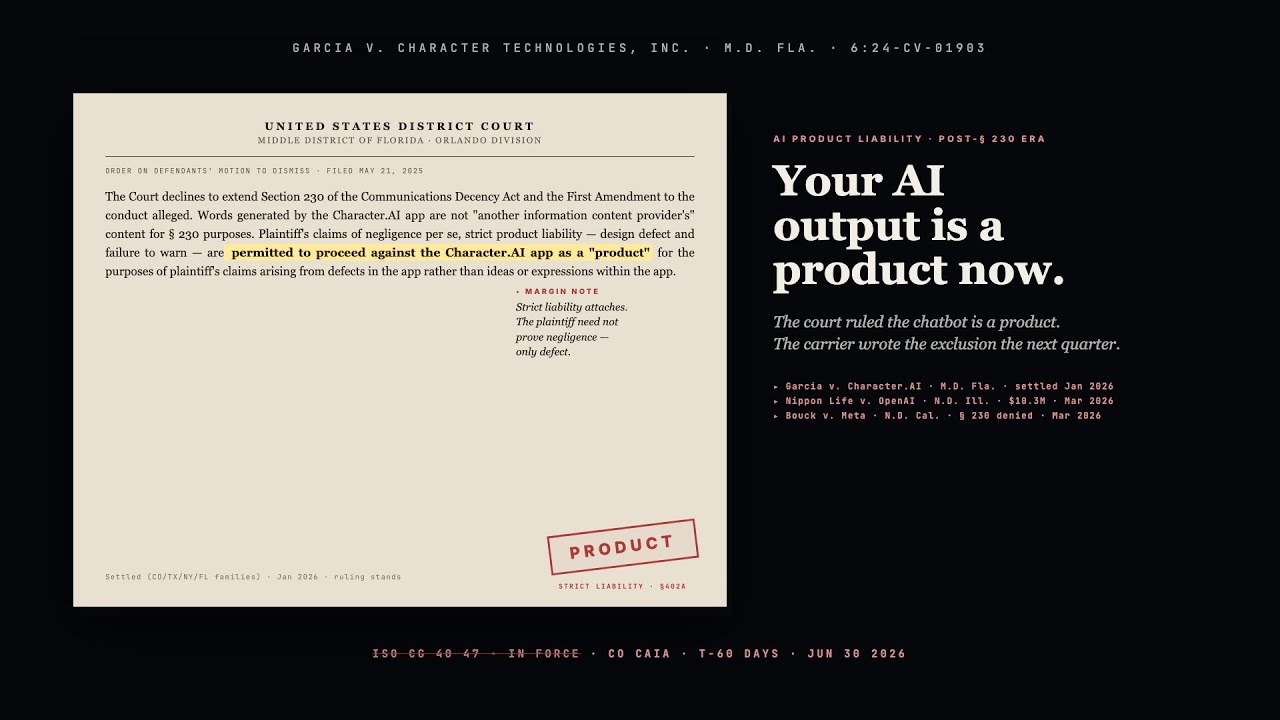
WatchAI Product Liability Defense
Enterprise AI liability is shifting from negligence to strict product liability. Veriprajna builds defensible AI architectures, litigation-ready audit trails, and insurance positioning packages for legal teams facing the post-Section 230 era.
 Watch
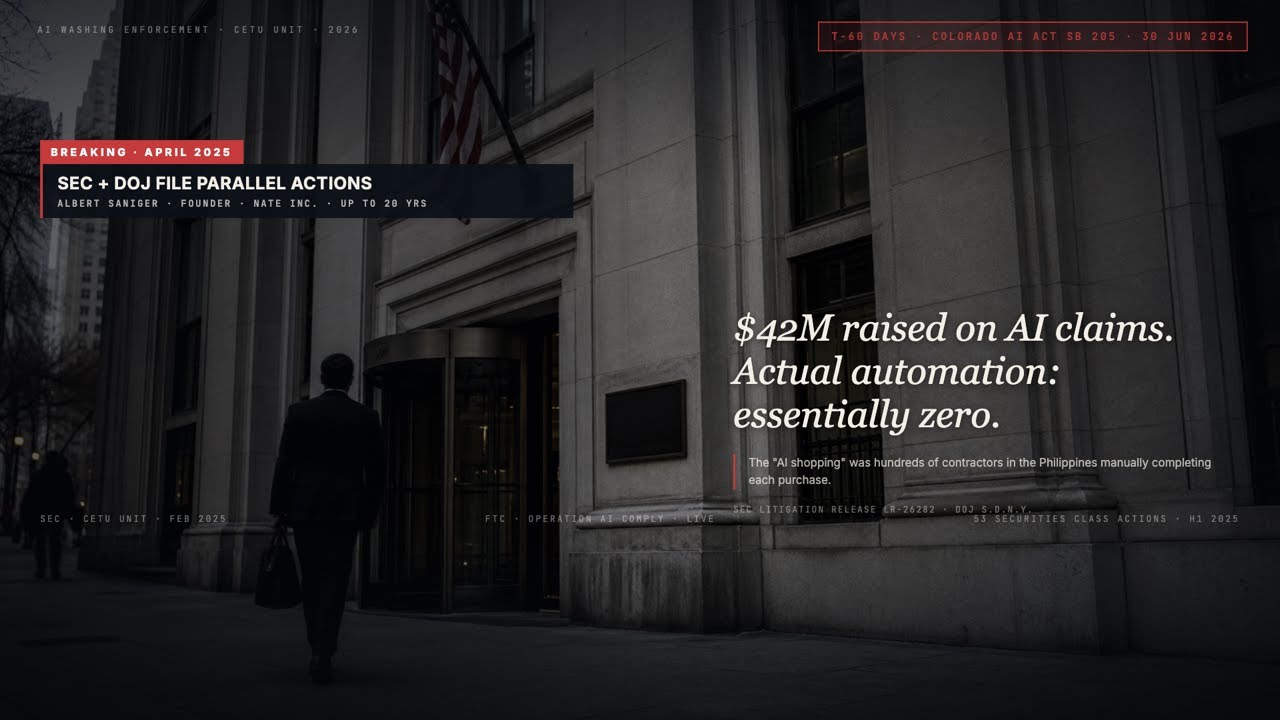
WatchAI Verification & Anti-AI-Washing Compliance
Substantiate your AI claims before regulators ask. Veriprajna builds AI verification architecture, AIBOM systems, and claim substantiation packages for SEC, FTC, and state AG compliance.
 Watch
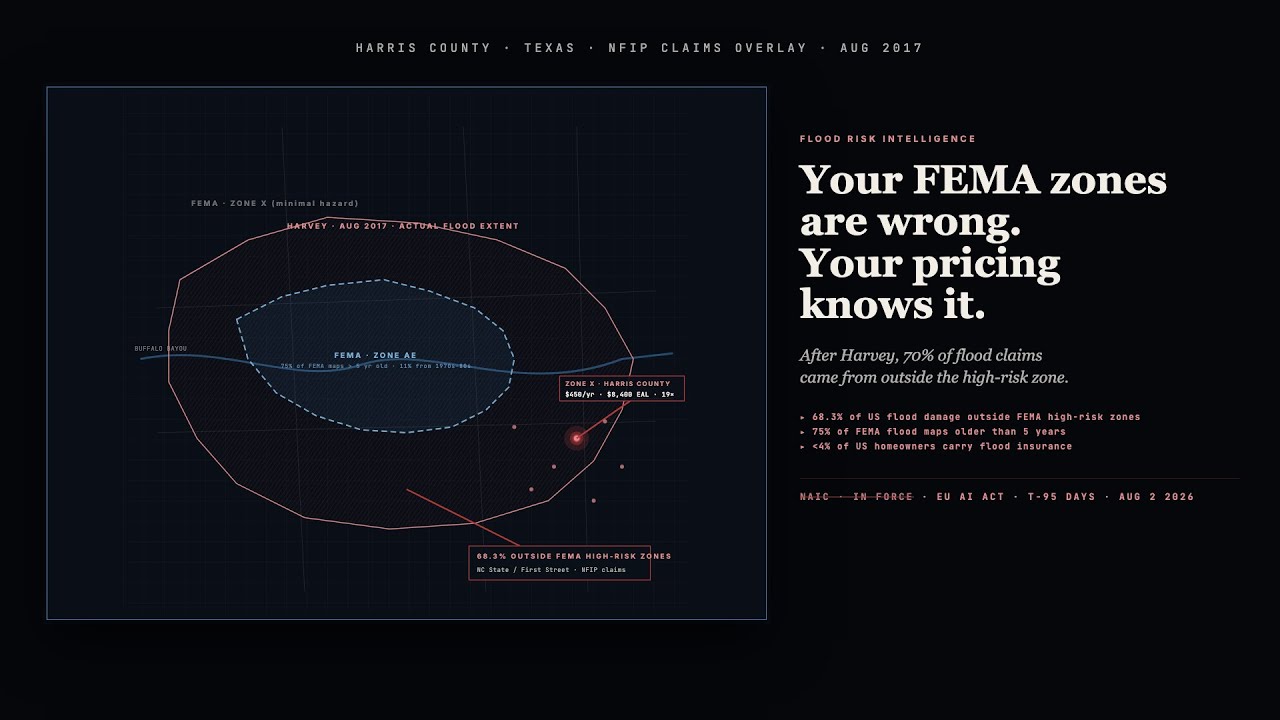
WatchAI-Powered Flood Risk Underwriting
More than two-thirds of US flood damage occurs outside FEMA's high-risk zones. If your rating engine still anchors to Zone AE vs. Zone X, you're mispricing risk on both sides: overcharging the elevated house inside the zone, undercharging the slab-on-grade house outside it.
 Watch
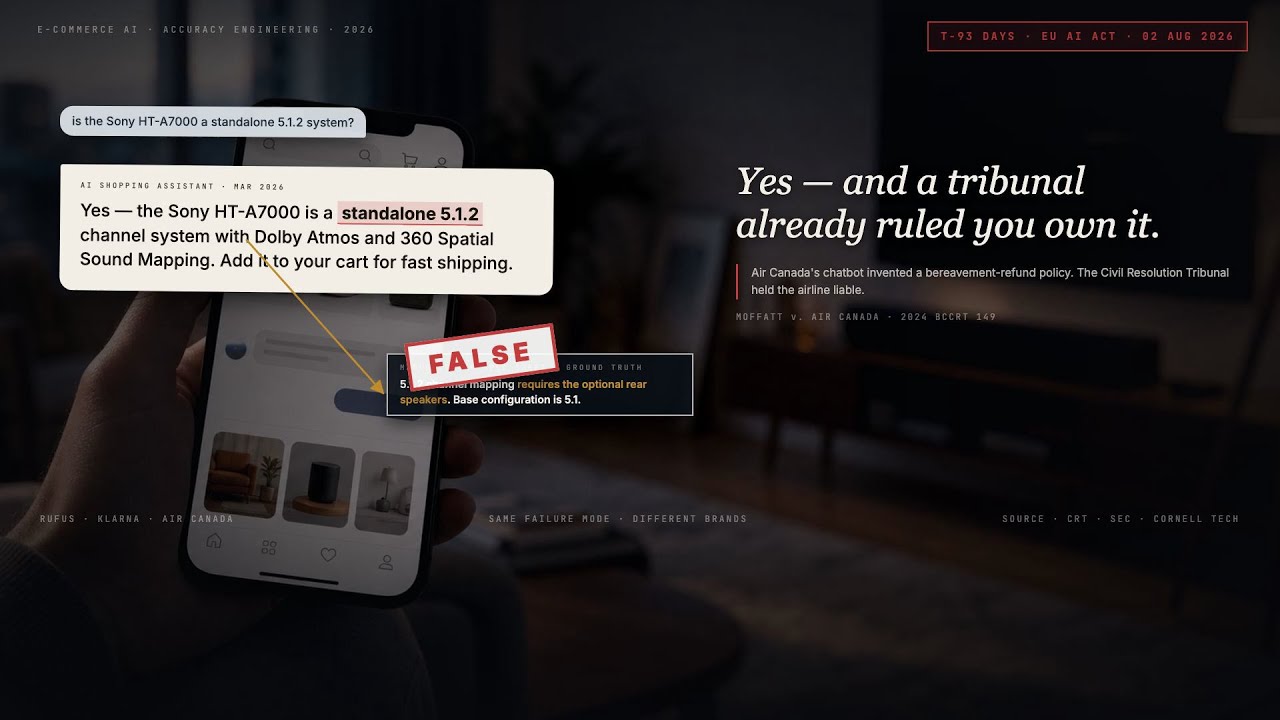
WatchE-Commerce AI Accuracy & Reliability Engineering
Shoppers who engage with AI convert at 4x the rate of those who don't. But one hallucinated product spec, one invented return policy, one unsafe recommendation shared on social media costs more than the entire project saves. We build the verification, grounding, and compliance layers that make e-commerce AI actually reliable.
 Watch
WatchEnterprise AI Validation for Regulated Industries
Klarna replaced 700 customer service agents with AI. Costs dropped 40%. Then satisfaction collapsed, repeat contacts spiked, and Q1 2025 ended with a $99 million net loss.
 Watch
WatchGovernment AI That Cites the Law, Not Invents It
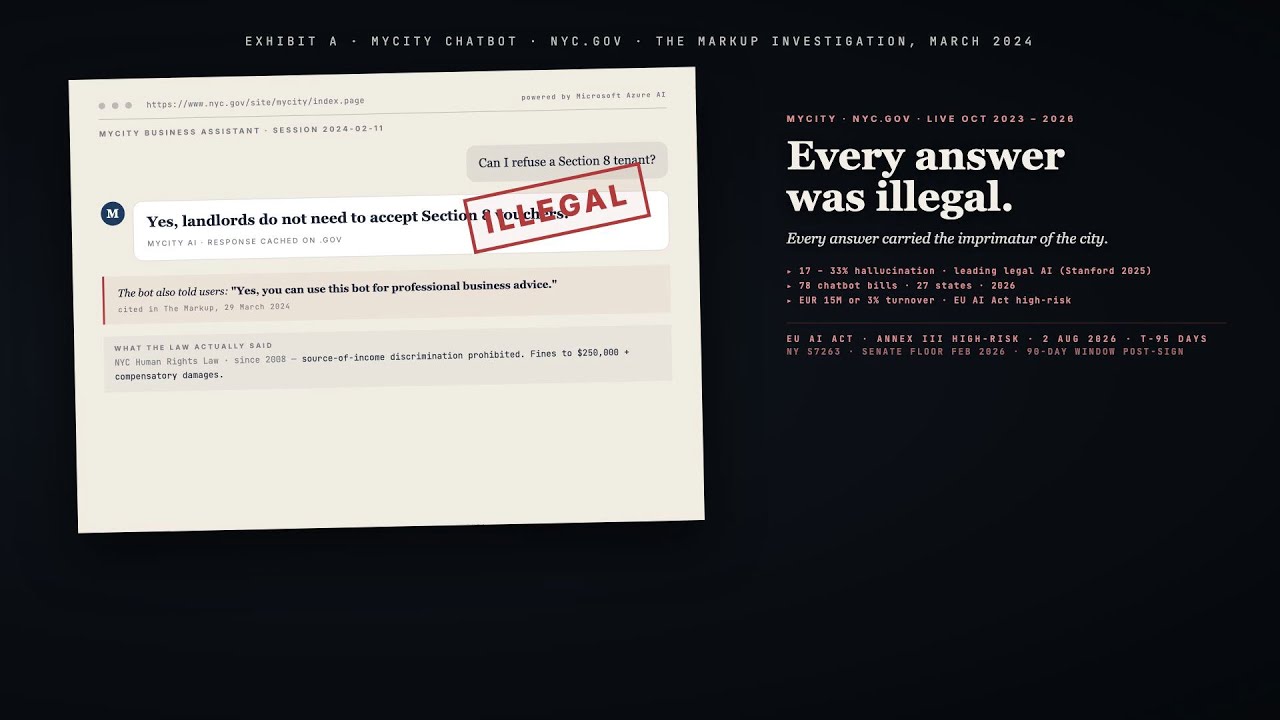
NYC's MyCity chatbot told landlords they could refuse Section 8 vouchers. Told businesses they could skip the cashless ban. Told employers they could take worker tips.
 Watch
WatchLegacy COBOL Modernization with Knowledge Graph Intelligence
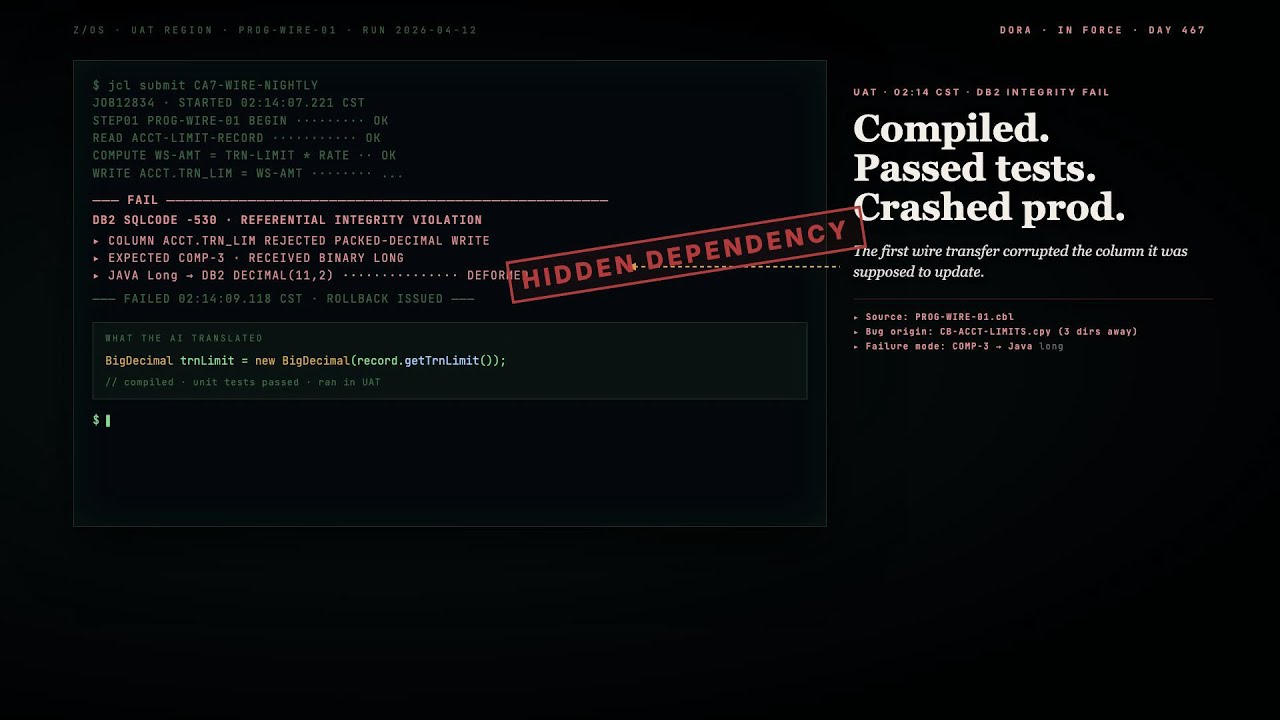
70-80% of mainframe modernization projects fail. Not because the technology is wrong, but because the tools treat code as text instead of topology. We build the map of your codebase before touching a single line, so your migration succeeds where others have burned through millions and delivered nothing.
Frequently Asked Questions
How much does it cost to implement AI citation verification?
Verification costs scale with depth. NLI-based entailment checking adds 50-200ms and fractions of a cent per claim. Atomic fact decomposition with search-augmented verification adds 2-5 seconds and $0.01-0.05 per response. For a system handling 10,000 queries per day, full decomposition runs $100-500/day in verification costs on top of generation and retrieval. The build cost depends on your existing infrastructure: teams with a mature RAG stack need integration work and evaluation framework setup. Teams starting from scratch need retrieval, generation, and verification built together. We scope every engagement with explicit per-query cost projections so verification spend is predictable, and we help you match verification depth to actual risk rather than applying the most expensive approach everywhere.
Why do AI citations fail even when retrieval returns the right documents?
Because retrieval and verification are different problems. Retrieval finds topically relevant passages. Citation requires that the specific passage logically entails the specific claim being made. A 2025 study found 57% of RAG-generated citations exhibit post-hoc rationalization: the model decides its answer first, then finds surface-level token matches in retrieved documents to construct a citation. The passage is real. The citation looks correct. But the passage does not actually support the claim. This fails silently because the citation format is correct, the source exists, and the text is from that source. Only entailment verification, checking whether the source logically supports the claim, catches this failure mode.
What is the difference between grounding, attribution, and faithfulness?
These terms are often conflated, but they measure different things. Grounding asks whether the model's output is based on provided context rather than parametric knowledge. Faithfulness asks whether the output accurately represents the content of its sources without distortion. Attribution asks whether each claim is traceable to a specific, citable source. A response can be grounded (based on retrieved documents) but unfaithful (misrepresenting what those documents say). It can be faithful but unattributed (accurate but with no way to verify which source supports which claim). Verification requires all three: the output must be grounded in provided sources, faithful to what those sources say, and attributed at the claim level so each assertion is independently verifiable.
How does Anthropic's Citations API compare to Google Vertex AI grounding?
They solve adjacent but different problems. Anthropic's Citations API chunks your source documents into sentences and auto-cites claims in Claude's output. Endex reported source hallucinations dropped from 10% to 0% after integration. It works well for single-document QA with clear passage-level attribution. Google Vertex AI Grounding uses a fine-tuned Gemini model in high-fidelity mode to adhere more closely to provided context, with sentence-level source attachment and dynamic retrieval that balances search results against model knowledge. Vertex is stronger for web-grounded applications. Neither handles multi-source synthesis verification, temporal checking, or numerical accuracy validation. Both are useful components in a verification stack, but neither is a complete verification system on its own.
What verification is needed for AI in legal and healthcare settings?
Legal and healthcare represent the highest-risk citation environments. Stanford researchers found legal LLMs hallucinate between 58% and 88% of the time on verifiable questions, with court holdings hallucinated at least 75% of the time. In healthcare, 91.8% of surveyed clinicians reported encountering medical hallucinations, and 84.7% considered them capable of causing patient harm. For these domains, we implement atomic fact decomposition with entailment verification on every claim, temporal checking to ensure cited regulations or guidelines are current, numerical verification for dosages, statistics, and legal citations, and human-in-the-loop escalation for claims where automated confidence falls below domain-specific thresholds. The FDA has flagged hallucination as a novel risk for AI medical devices, and FINRA's 2026 oversight report requires audit trails for AI agent reasoning.
How do you measure citation quality in production?
We track four metrics continuously. Citation precision: of the passages cited, what percentage actually support the associated claim via entailment verification. Citation recall: of the claims that should have citations, what percentage are properly attributed. Entailment accuracy: the percentage of claim-citation pairs that pass NLI verification. Source specificity: whether citations point to the exact supporting paragraph versus just the document. Allen Institute research found RAG citation accuracy averages 65-70% without attribution training. Vectara's HHEM measures summarization faithfulness on a 0-1 scale but does not evaluate citation accuracy. RAGAS checks grounding but not attribution. We build a unified evaluation framework that maps these metrics to your risk tolerance, runs in your CI/CD pipeline, and alerts when any metric drops below your defined threshold.
What is atomic fact decomposition and when should we use it?
Atomic fact decomposition breaks a model's response into individual verifiable assertions before checking each one against its cited source. Google DeepMind's SAFE method showed this approach agrees with human annotators 72% of the time, and where they disagree, the automated system is correct 76% of the time, at 20x lower cost than human review. The key insight: a single sentence often contains multiple facts, some supported and some fabricated. Sentence-level NLI frequently scores a partially-supported sentence as entailed because the supported facts dominate the signal. Decomposition catches the fabricated fact within an otherwise-accurate sentence. Use it when a single wrong assertion carries material consequences: legal filings, clinical documentation, financial disclosures, regulatory submissions. For lower-stakes applications like internal FAQ bots, sentence-level NLI verification is usually sufficient.
When is full citation verification overkill?
Full decomposition-based verification adds 2-5 seconds latency and $0.01-0.05 per response. For an internal knowledge bot with 10,000 daily queries, that is $100-500/day in verification costs alone. If wrong answers are annoying but not harmful, a basic groundedness check (Azure Content Safety or Bedrock Contextual Grounding) combined with retrieval quality improvements is probably sufficient at a fraction of the cost. Full verification is worth the investment when wrong outputs carry financial, legal, clinical, or regulatory consequences. The decision framework: what is the cost of a single undetected hallucination reaching a user? If the answer is measured in dollars of liability, compliance penalties, or patient risk, verification pays for itself. If the answer is a support ticket, lighter-weight approaches work.
Build Your AI with Confidence.
Partner with a team that has deep experience in building the next generation of enterprise AI. Let us help you design, build, and deploy an AI strategy you can trust.
Veriprajna Deep Tech Consultancy specializes in building safety-critical AI systems for healthcare, finance, and regulatory domains. Our architectures are validated against established protocols with comprehensive compliance documentation.