
100,000 new tracks uploaded every day — but how many are real?
When algorithms flood platforms with noise, provenance becomes the only signal that matters.
The global audio ecosystem is facing a structural breakdown. In 2024–25 alone, platforms like Spotify removed 75+ million spam and AI-generated tracks, while 10–30% of all streams are estimated to be fraudulent, draining $2–3 billion annually from royalty pools. This isn’t a creativity boom — it’s an identity crisis.
Our latest whitepaper, “The Unverified Signal”, explains why traditional defenses like metadata and audio fingerprinting are mathematically incapable of detecting modern generative AI, deepfake impersonations, and “low-and-slow” streaming fraud. When AI creates never-before-heard audio, there is no original to fingerprint against.
At Veriprajna, we argue the future of trust in audio doesn’t lie in more generation — it lies in verification at the physics level.
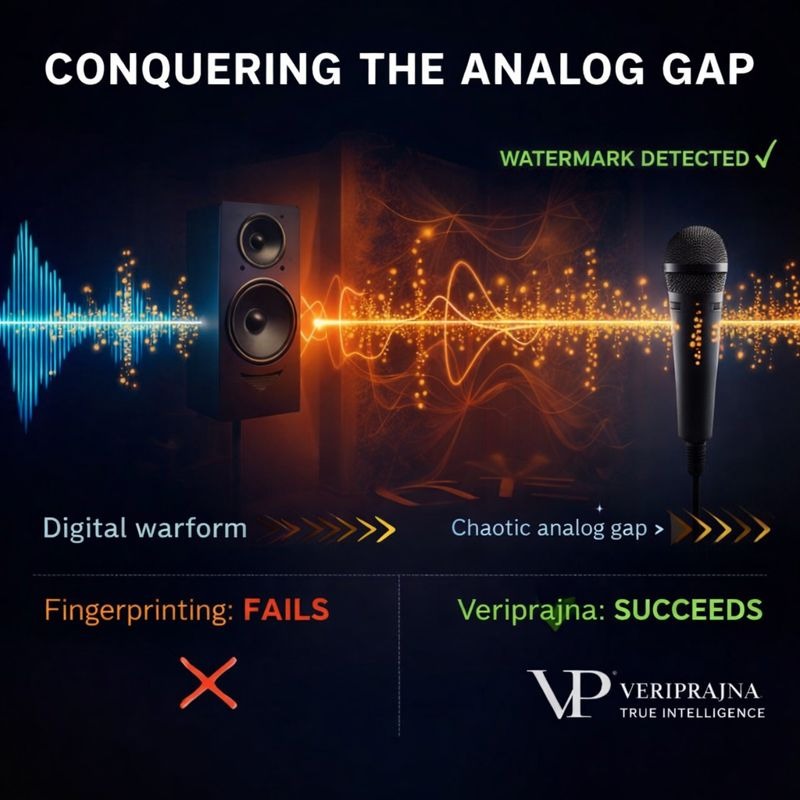
Latent Audio Watermarking embeds imperceptible, immutable provenance inside the waveform itself, surviving compression, editing, and even the analog gap of speakers → air → microphones. Combined with C2PA standards, it creates a deterministic, enterprise-grade chain of custody for human and AI-generated audio alike.
If you’re a DSP, label, AI model provider, or rights holder, this whitepaper outlines:
• Why fingerprinting fails in the generative era
• How streaming fraud hides in the long tail
• What it takes to survive the analog gap
• How watermarking becomes a legal, economic, and compliance shield
📄 Whitepaper link is in the comments.
👉 Want to explore how latent audio watermarking can protect your platform, catalog, or AI pipeline?
📩 Email us at [email protected]
💬 Or message us on WhatsApp: +91 92170 59957
#AudioAI #ContentProvenance #DigitalTrust #StreamingFraud #TrueIntelligence