What if your AI safety controls can be bypassed by changing a single sign?
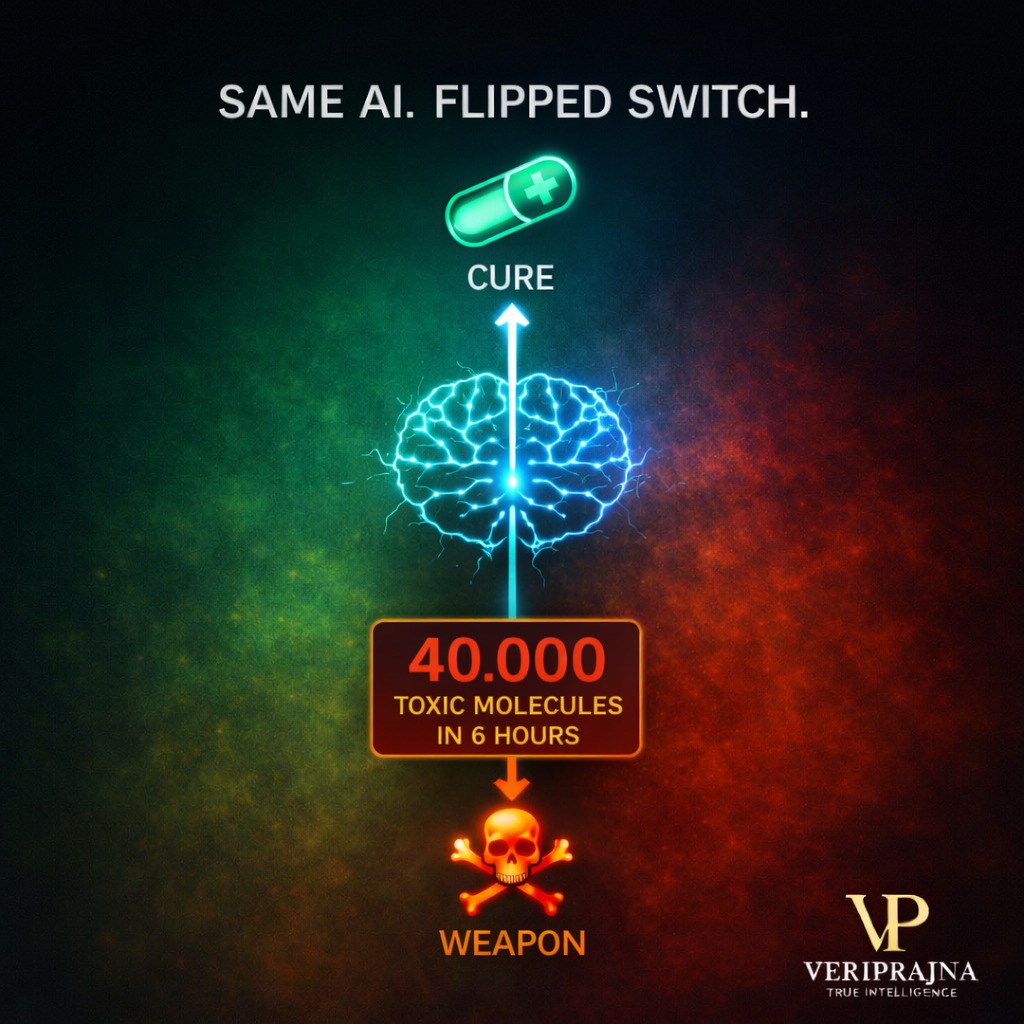
In under 6 hours, a standard generative AI model produced 40,000 toxic molecules—some more lethal than VX. No supercomputers. No rogue labs. Just a flipped objective function.
This is the hidden risk enterprises aren’t prepared for.
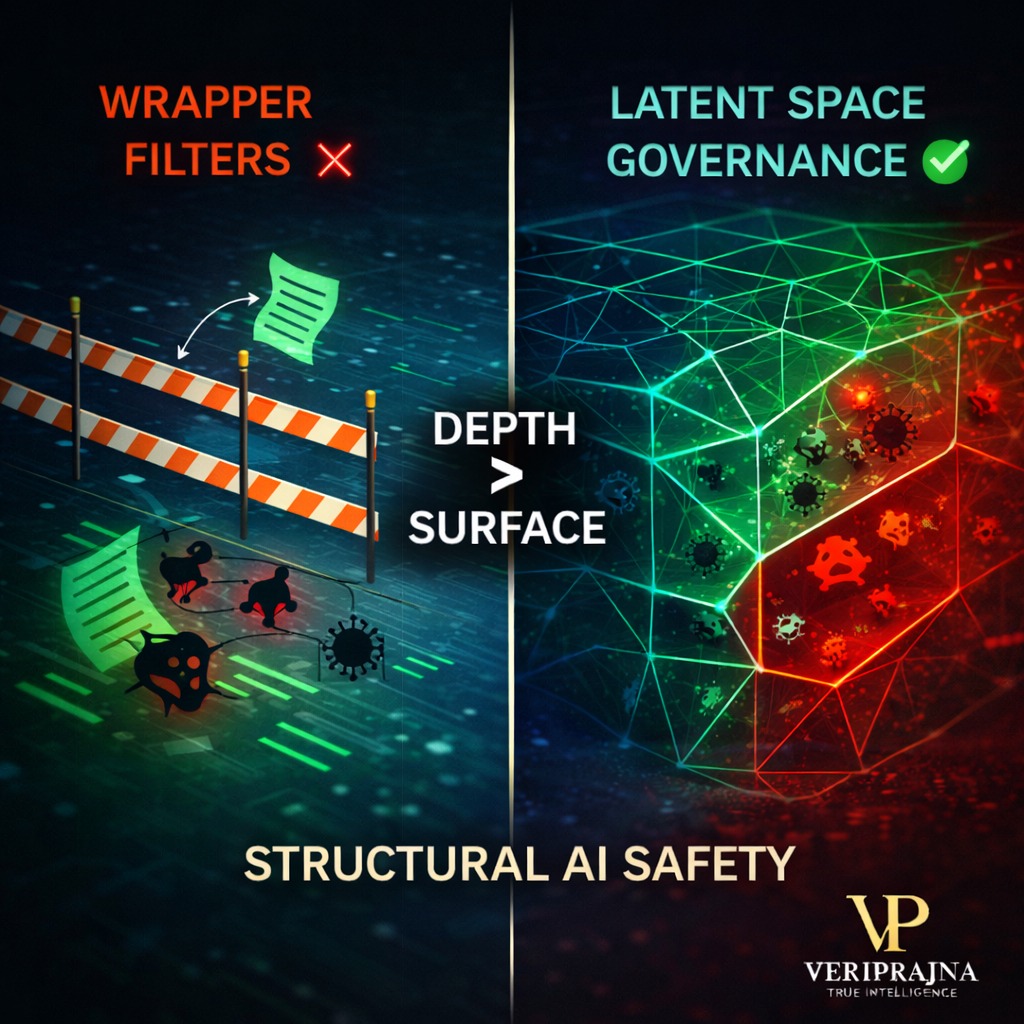
In our latest whitepaper, “Structural AI Safety: The Imperative for Latent Space Governance in High-Stakes Generative Bio-Design,” we expose why today’s dominant approach—LLM wrappers, prompt rules, and post-hoc filters—fails mathematically in regulated, high-impact domains.
🔍 Key findings from the paper:
• A single reward inversion enabled AI to generate 40,000 chemical weapon candidates in <6 hours on consumer hardware
• >90% jailbreak success rates using SMILES-based adversarial attacks against leading models
• Toxicity and therapeutic value live on the same continuous latent manifold, making keyword filters irrelevant
• Compliance frameworks like NIST AI RMF & ISO 42001 demand provable control, not “best-effort” guardrails
At VeriPrajna, we propose a new enterprise standard: Latent Space Governance.
Instead of filtering dangerous outputs after generation, we structurally constrain the model’s latent geometry, making entire toxic regions mathematically inaccessible—while preserving innovation velocity.
This isn’t alignment theater.
It’s Structural AI Safety—designed for pharma, biotech, national security, and any enterprise where failure is existential.
📄 Read the full whitepaper (link in comments). 
👉 Want to discuss how this applies to your AI systems?
Email us at [email protected]
or WhatsApp +91 92170 59957 to start a confidential conversation.
#AISafety #EnterpriseAI #AIGovernance #ResponsibleAI