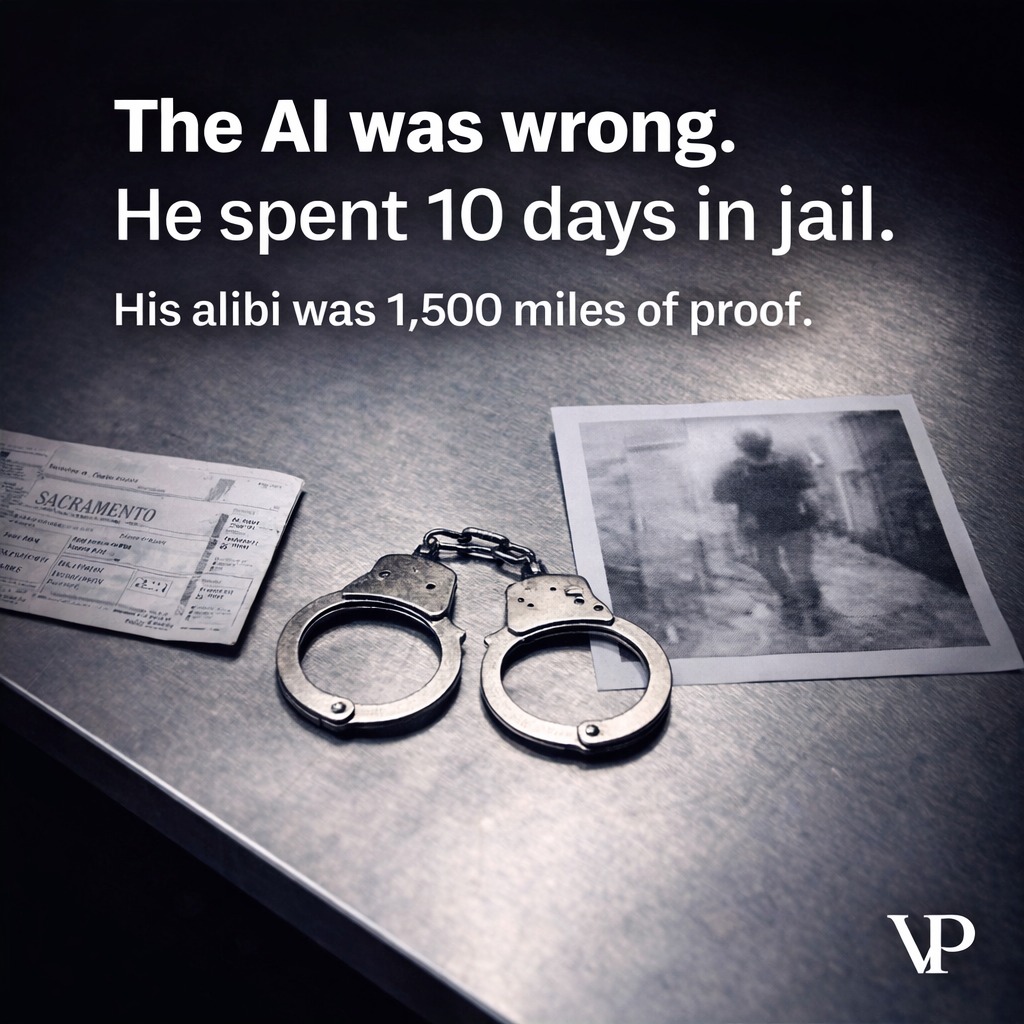
Facial recognition got a man jailed for 10 days for a crime committed 1,500 miles away.
He had proof he was in Sacramento. The system said he was in Houston. The system won — until it didn't.
This isn't a hypothetical. A grandfather was wrongfully arrested, assaulted in detention, and left with lifelong injuries because a retailer ran grainy surveillance footage through AI and handed the result to police as fact.
Meanwhile, the FTC banned another major retailer from using facial recognition for five years after thousands of false matches disproportionately targeted women and people of color.
The common thread? Both companies treated AI like a vending machine — insert image, receive truth.
That's not how any of this works.
Every AI output is a probability, not a verdict. And when organizations skip uncertainty measurement, bias testing, and human review, real people pay the price.
Our latest whitepaper breaks down what actually went wrong in both cases and what resilient AI architecture looks like instead:
→ Why most facial recognition deployments use the wrong identification model entirely
→ How uncertainty quantification turns a risky guess into a measured decision
→ The multi-agent approach that replaces "one model does everything" with specialized checks and balances
→ Where human review must sit in the pipeline — and why skipping it creates liability
The gap between "AI that works in a demo" and "AI that's safe for the real world" is where the damage happens.
Save this if you work anywhere near AI procurement, compliance, or risk 🔖
What's the biggest red flag you've seen in how organizations deploy AI?
#BiometricAI #AIriskmanagement #AlgorithmicAccountability #FacialRecognitionBias #ResponsibleAI