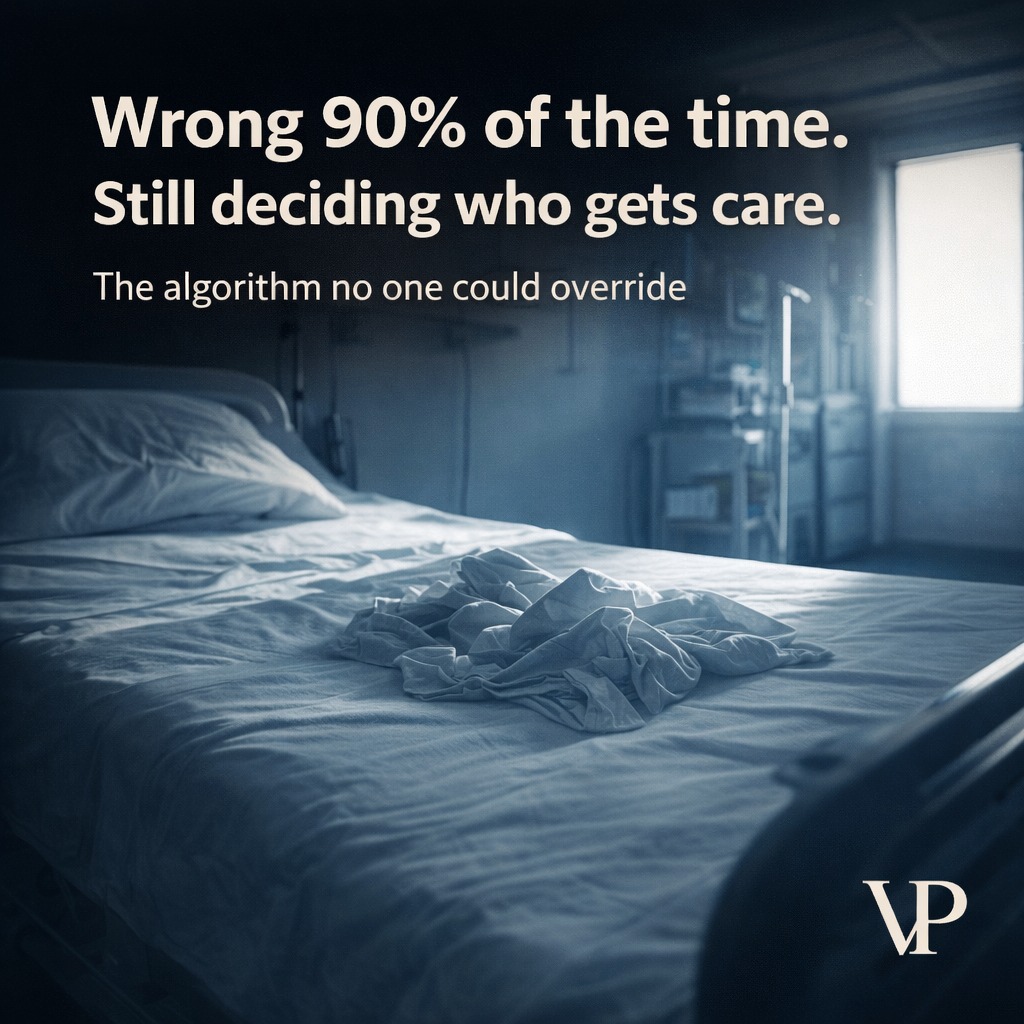
An algorithm denied elderly patients care — and was wrong 90% of the time.
That's not a hypothetical. That's what a federal court found when UnitedHealth's nH Predict system went under review.
The AI predicted when patients should be discharged. Clinicians were told to follow it — not override it. Staff who pushed back faced discipline.
The result? Denial rates for post-acute care more than doubled. Skilled nursing facility denials surged to nearly 9x their previous levels.
But here's the part that should stop you cold:
Fewer than 1 in 500 patients actually appealed. Most were too sick, too elderly, or too overwhelmed to fight back. The system profited from that silence.
This is what happens when organizations treat AI as a cost tool instead of a clinical one. When "efficiency" replaces accuracy. When no one can explain why the machine said no.
Our latest whitepaper breaks down exactly what went wrong — and what the new standard looks like moving forward.
We cover the FDA's 7-step credibility framework, the EU AI Act's high-risk classifications, and why the shift from pattern-matching to causal reasoning isn't optional anymore.
The core argument: AI in healthcare needs to answer "why," not just "what's probable."
That means explainable outputs. Confidence scoring that flags uncertainty. Governance structures where humans can override the model without fear.
Save this if you work in healthcare AI, compliance, or enterprise risk 👇
What's your biggest concern about AI making high-stakes decisions — accuracy, transparency, or accountability?
#AlgorithmicGovernance #HealthcareAI #ExplainableAI #AICompliance #EnterpriseLiability