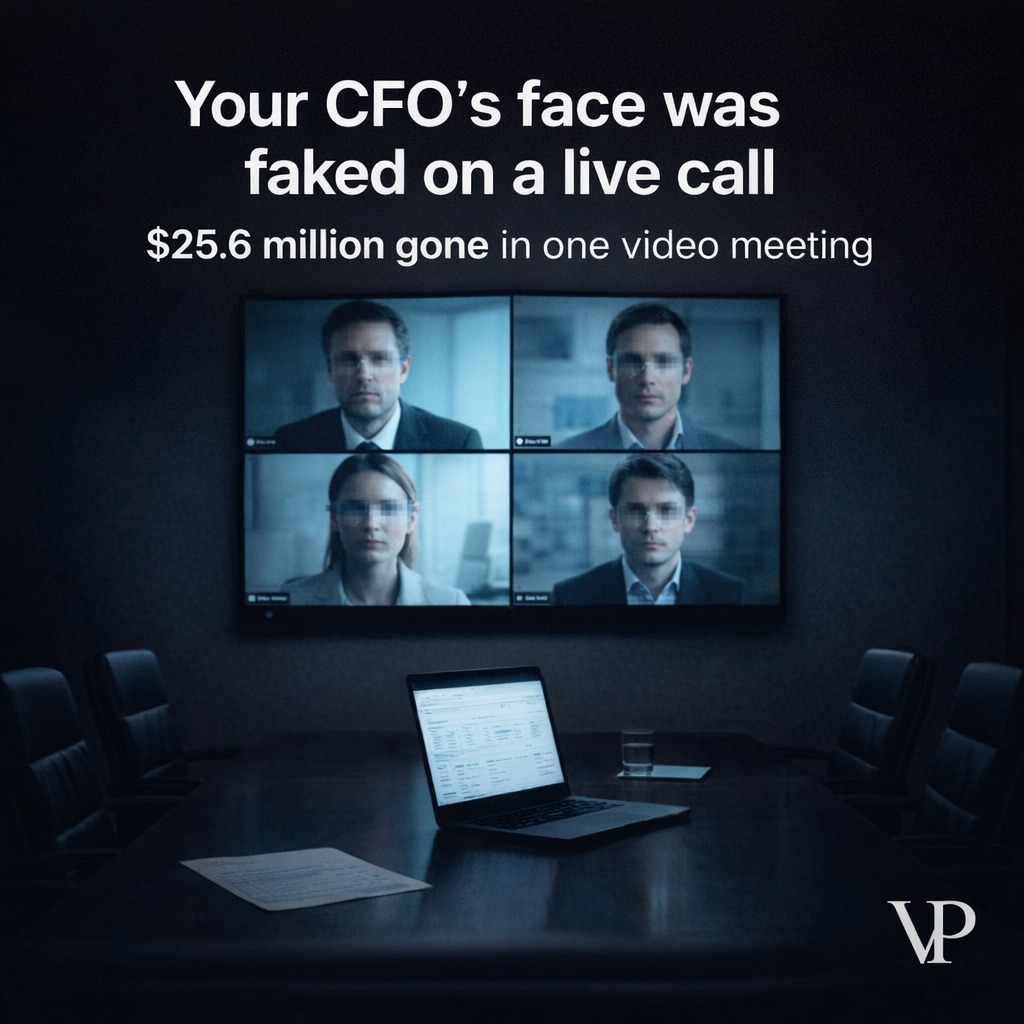
A deepfake CFO just stole $25.6 million on a single video call. No malware. No hacking. Just AI.
In February 2024, engineering giant Arup lost it all when attackers cloned their CFO and multiple executives in a live video conference.
The employee saw familiar faces. Heard familiar voices. Followed familiar instructions.
Every cybersecurity system stayed green. The breach was entirely human.
Here's what made this different from every scam before it:
→ Months of harvesting public video footage of real executives
→ AI-generated faces rendered frame by frame in real time
→ Synthetic video injected directly into the conferencing software
→ 15 separate wire transfers across five bank accounts
No firewall catches that. No antivirus flags it. The attack targeted trust itself.
This is why our team built the Deep AI framework around three layers most companies skip:
1. Sovereign infrastructure — your AI runs inside your own environment, not a third-party cloud
2. Neuro-symbolic verification — deterministic logic checks every output before it reaches a human
3. Behavioral biometrics — continuous authentication based on how someone types, moves, and navigates (nearly impossible to fake)
The era of trusting what you see and hear on a screen is over.
Companies still running sensitive operations through public AI wrappers and standard video calls are playing a game the attackers already won.
Our latest whitepaper breaks down the full forensic timeline, the technical methods behind real-time face synthesis, and the four-step resilience roadmap every enterprise security team needs right now.
Save this for your next security review 🔒
What's your company currently doing to verify identity on video calls — anything beyond just looking at the screen?
#deepfakedetection #enterprisecybersecurity #aifraud #corporategovernance #zerotrustsecurity