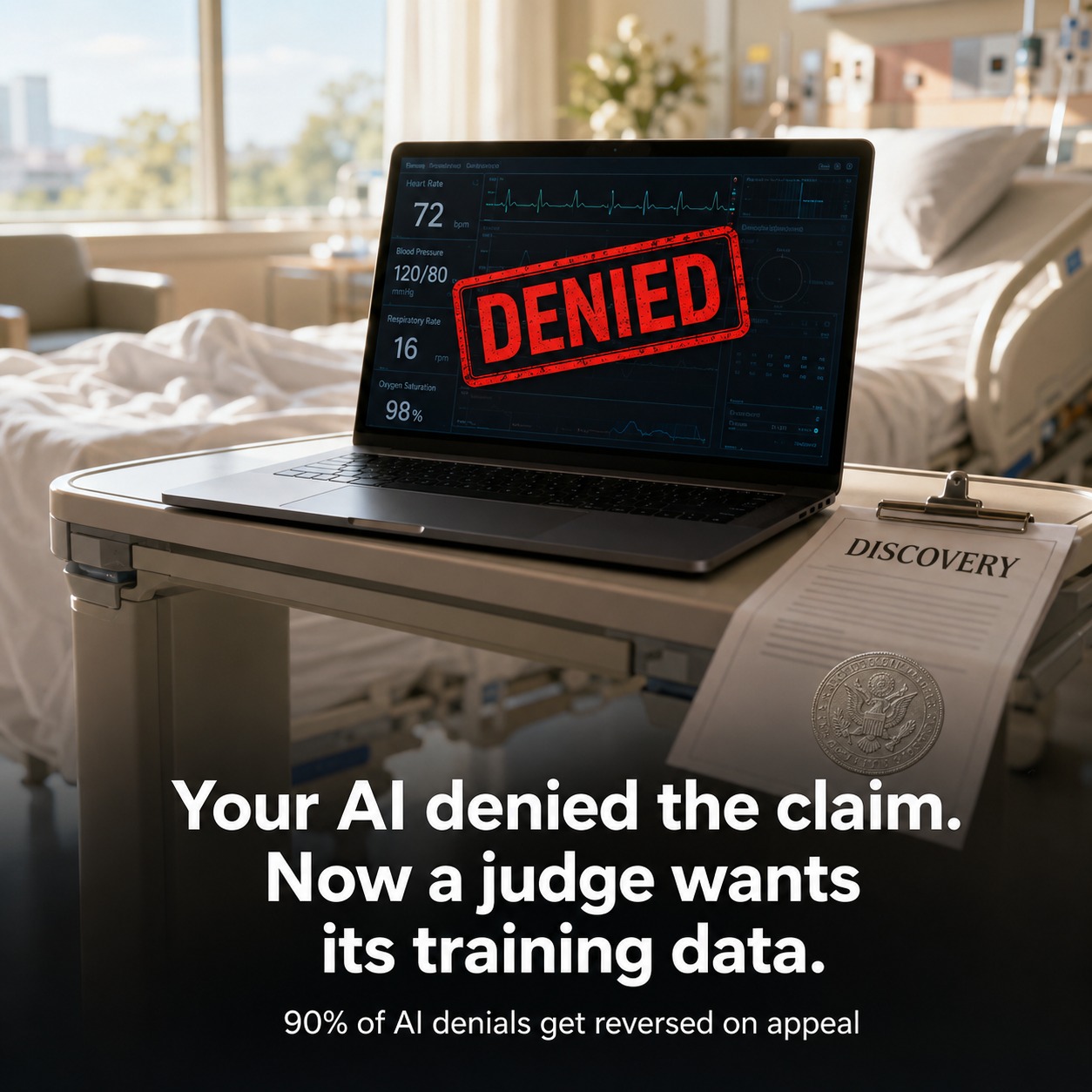
Your AI denies a claim. 90% of those denials get reversed on appeal. A federal court just signaled that's not a glitch — it's a breach of contract.
That's the core of Lokken v. UnitedHealth. The nH Predict algorithm weighted a patient's diagnosis group heavily and her actual clinical status barely at all. A woman with methemoglobinemia — a life-threatening blood disorder — was discharged on her diagnosis group's average recovery timeline, not her oxygen levels. Her family paid $16,768 out of pocket to keep her from being sent home too early.
Our team studied the mechanics, and the failure wasn't a bug. It was architecture. When NaviHealth narrowed the acceptable variance from the model's projection from 3% to 1% and disciplined clinicians who overrode it, the "human in the loop" became performative. Every denial then carried the full weight of contractual and regulatory liability.
Here's what most Medicare Advantage plans miss: your Evidence of Coverage promises in writing that coverage decisions are made by "clinical services staff" and "physicians." If your utilization management AI makes the call and a human rubber-stamps it, opposing counsel will find the gap. And after the March 2026 discovery order, your training data, validation reports, and decision logs are all discoverable.
CMS-0057-F now puts denial rates and appeal overturn rates on the public record. RADV audits use AI to flag your AI. At that point, governance isn't a dashboard you buy — it's litigation readiness you have to build.
If your algorithm can't explain a single denial, line by line, it can't defend one.
Save this if you work in MA prior authorization or claims governance. What's your plan for the first discovery request?
#MedicareAdvantage #AIGovernance #PriorAuthorization #HealthcareCompliance #AlgorithmicAccountability