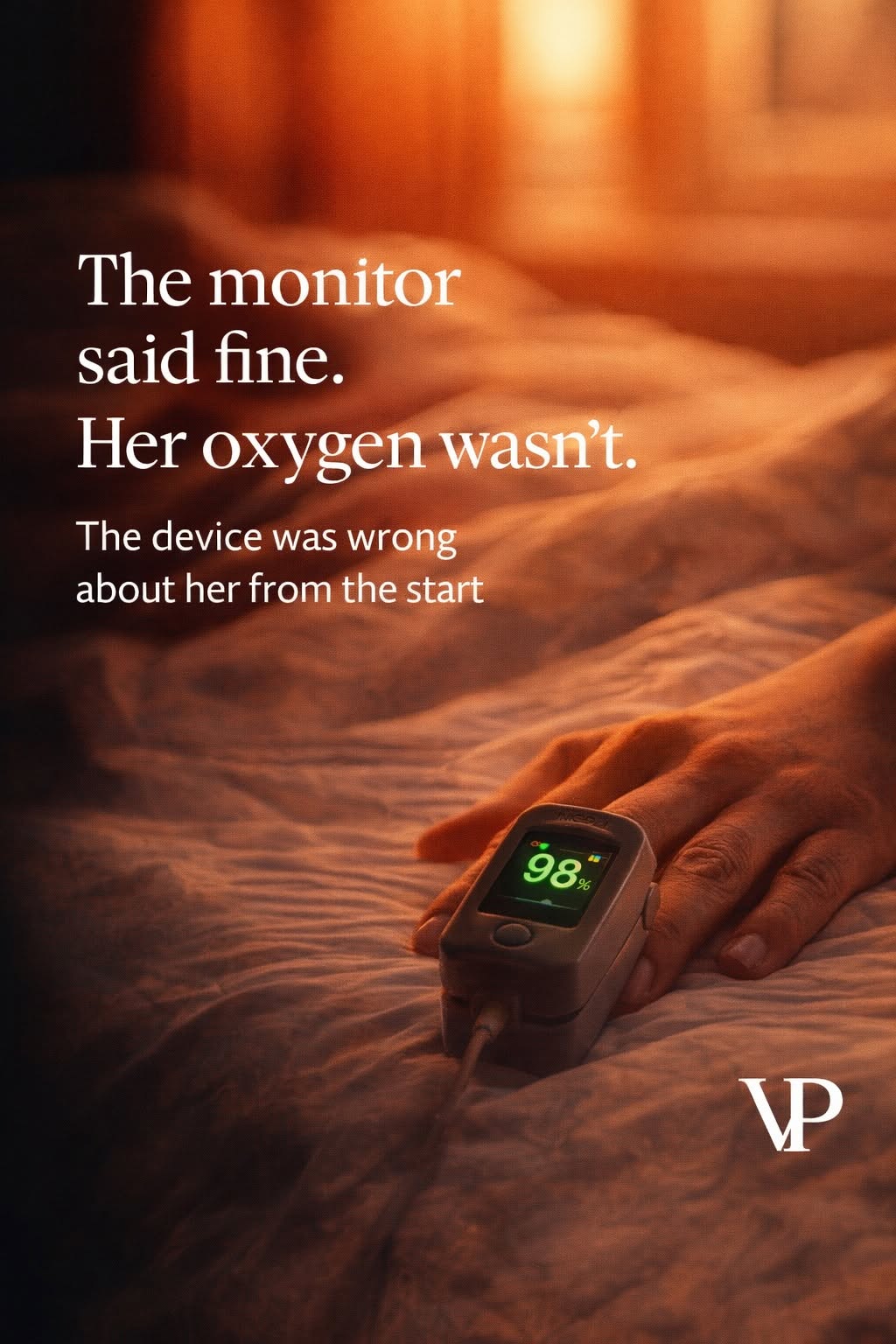
A pulse oximeter said her oxygen was fine. It wasn't.
Here's something most people don't realize: the devices hospitals use to measure blood oxygen levels work by shining light through your skin. Melanin absorbs that light too. And when those devices were calibrated mostly on lighter-skinned patients, they learned to get it wrong for everyone else.
Research published in the NEJM and BMJ found that Black patients are nearly three times more likely to have dangerously low oxygen that the monitor completely misses.
Now here's where it gets worse.
When an AI triage system uses that faulty reading as an input, it inherits the error. The algorithm never fires the alert. The care team never gets the warning. The patient waits longer for oxygen they desperately need.
This isn't a hypothetical. A 2024 Vanderbilt study found that common pulse oximeters failed to detect low oxygen in 7% of children with the darkest skin tones while missing zero cases in those with the lightest.
Our team has been digging into this because we believe the fix has to go deeper than a software update. It means building AI that cross-checks oximetry against other vital signs, flags when readings don't add up, and refuses to treat any single sensor as gospel.
The technology to do this exists right now. The question is whether healthcare systems will demand it.
Honest question for this community: did you know pulse oximeters had this limitation before reading this?
#AlgorithmicEquity #HealthAI #ClinicalBias