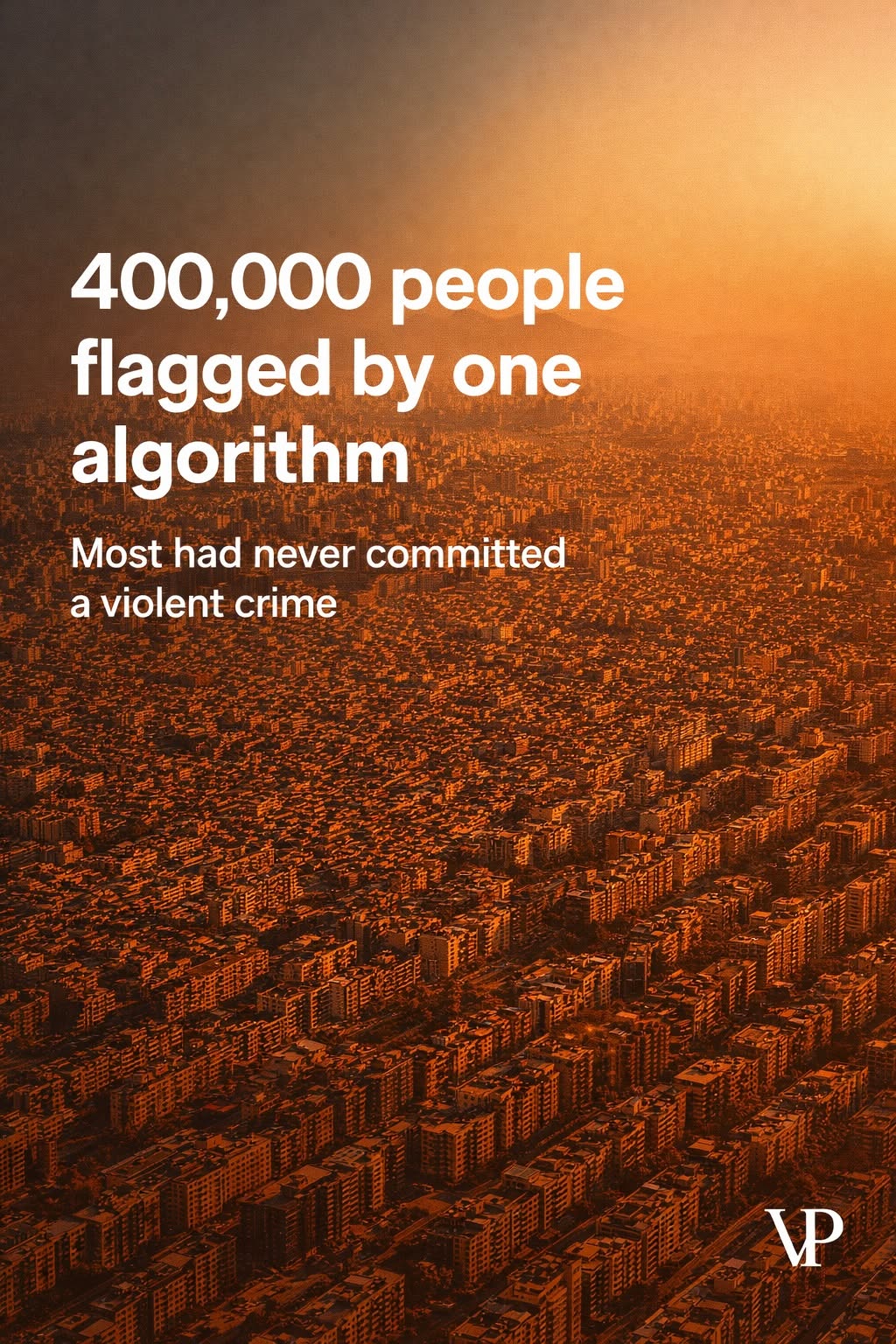
Chicago built an algorithm to predict gun violence.
It ended up flagging over 400,000 people. More than half of Black men in their twenties in the city were on that list.
The kicker? Most of them had never been arrested for a violent crime.
The system didn't predict the future. It just automated the past — turning old biases into new math.
And here's what keeps our team up at night: the same pattern is showing up in corporate AI right now.
Companies are rushing to bolt a chat interface onto a foundation model and calling it a strategy. But without understanding what's underneath — the data quality, the hidden assumptions, the logic you can't see — you're building on the same shaky ground that collapsed under those policing tools.
Our research keeps coming back to one truth: the difference between AI that earns trust and AI that destroys it isn't the model. It's the architecture around it.
That means auditing your data before you train anything. Building reasoning layers that go deeper than surface-level text generation. Making the "why" behind every decision visible and testable.
Not because regulators are coming (though they are — over 40 US cities have already moved to restrict AI tools that can't prove they're fair).
Because trust is the thing you can't rebuild once it's gone.
Genuine question for this community: if you found out a company was using AI to make decisions about you, what's the first thing you'd want to know about how it works?
#AIGovernance #AlgorithmicFairness #ResponsibleAI