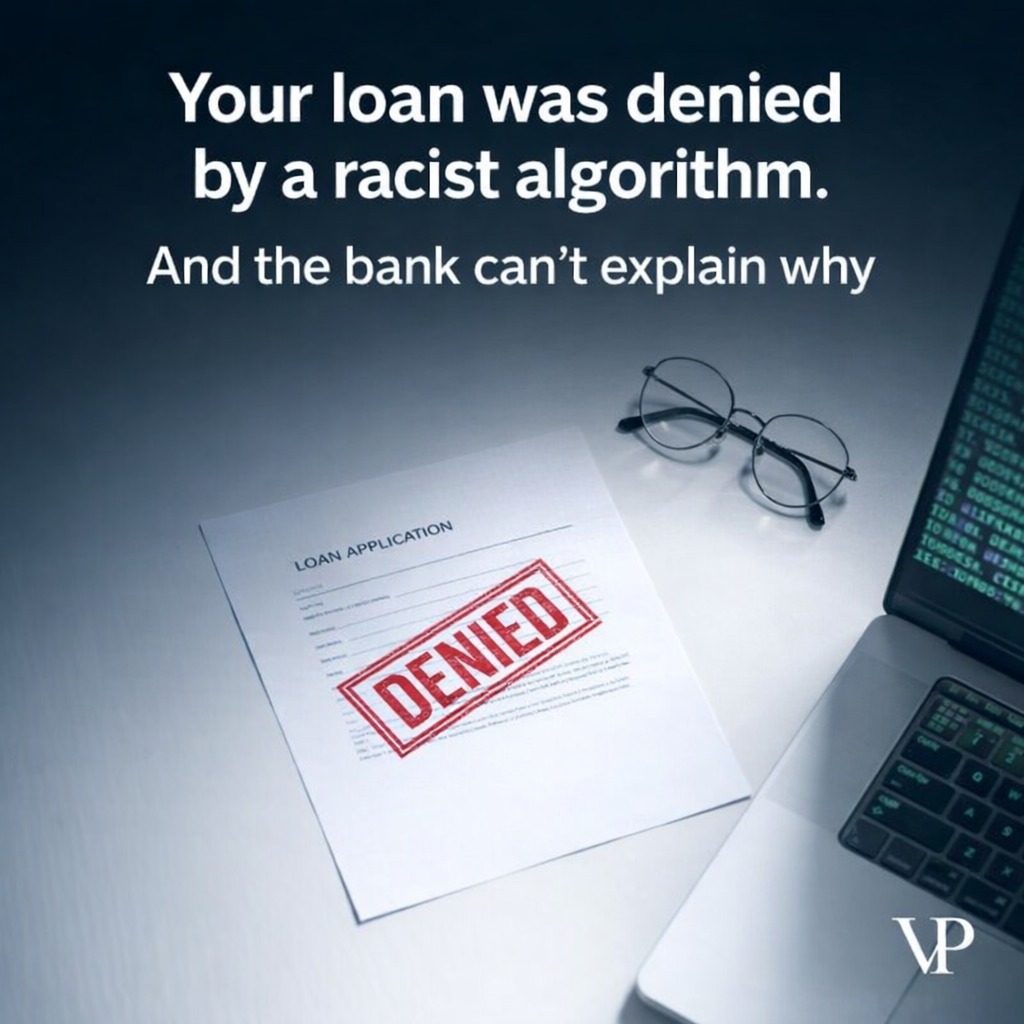
A $2.5M fine just proved "the algorithm decided" is no longer a legal defense.
This summer, a student loan lender settled with the Massachusetts AG after its AI model penalized applicants based on their school's default rate — a metric that correlates heavily with race, not individual creditworthiness.
The kicker? Internal policies required senior oversight for exceptions. Investigators found underwriters were bypassing the model with zero documentation.
Meanwhile, one of the largest credit unions in the country showed a 29-point gap between white and Black mortgage approval rates. When researchers controlled for income, debt-to-income ratio, and property value, Black applicants were still denied at more than double the rate.
These aren't edge cases. They're what happens when financial institutions bolt AI onto legacy systems without fairness engineering, explainability, or real governance.
The regulatory landscape has shifted permanently:
→ CFPB now requires specific, accurate reasons for every denial — not vague categories
→ SR 11-7 demands independent model validation and documented conceptual soundness
→ NIST AI RMF 2.0 introduced the "AI Bill of Materials" — full transparency on data sources and model components
Our latest whitepaper breaks down exactly how "wrapper" AI architectures fail under scrutiny and what a defensible Deep AI system actually looks like — from adversarial debiasing to counterfactual explanations that satisfy regulators.
Save this if you work in fintech, lending, or compliance. You'll want it as a reference.
What's the biggest gap you see between how companies talk about AI fairness and what they actually build? 👇
#AlgorithmicAccountability #AIFairness #FairLending #DeepAI #ModelRiskManagement