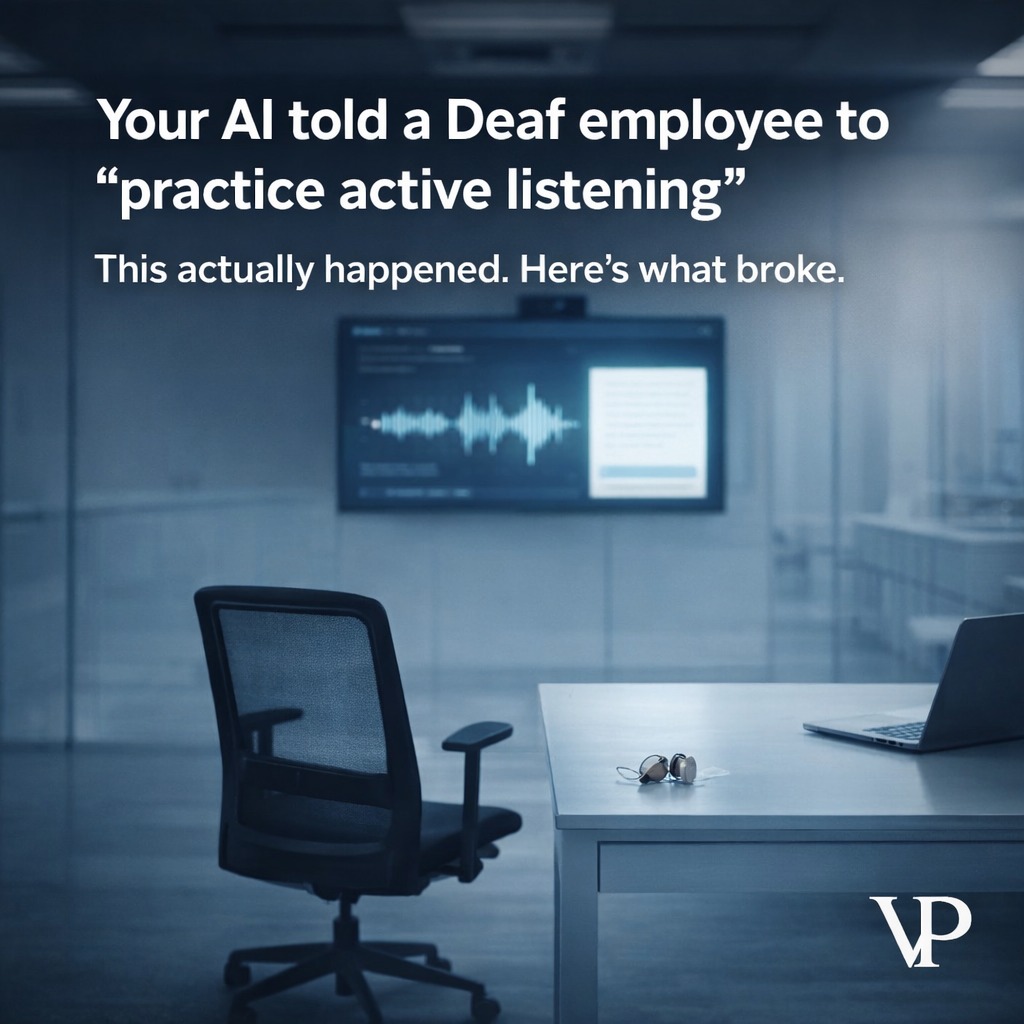
An AI hiring tool told a Deaf employee to "practice active listening." That actually happened.
In March 2025, the ACLU filed a complaint against Intuit and HireVue after an automated video interview system blocked a high-performing Deaf Indigenous woman from a promotion.
The system couldn't process her speech patterns. Its transcription failed catastrophically. And instead of flagging the error, it penalized her.
This isn't a hypothetical scenario from an ethics textbook. It's the reality of what happens when companies rely on off-the-shelf AI models never built for the complexity of real human communication.
Here's what the research shows:
Standard English speech recognition error rates sit around 10-18%. For Deaf speakers, that number can climb above 75%. At that point, any AI scoring built on top of that transcript is essentially grading noise.
Meanwhile, the regulatory landscape is catching up fast. Colorado's AI Act takes effect in 2026, requiring annual impact assessments for any AI making employment decisions. NYC already mandates independent audits. Federal agencies are watching closely.
The era of unauditable, unexplainable hiring algorithms is ending.
Our latest whitepaper breaks down what comes next: how multimodal architecture, human-in-the-loop workflows, and adversarial fairness testing create systems that actually work for every candidate, not just the ones the training data happened to include.
Because when your AI screens out qualified people based on how they sound rather than what they can do, you're not just facing legal risk. You're losing talent.
Save this if your org uses any AI in hiring or talent decisions 🔖
What's the first thing you'd audit in your company's hiring tech?
#AlgorithmicAccountability #AIBiasInHiring #ResponsibleAI #HRTechCompliance #DeepAISolutions