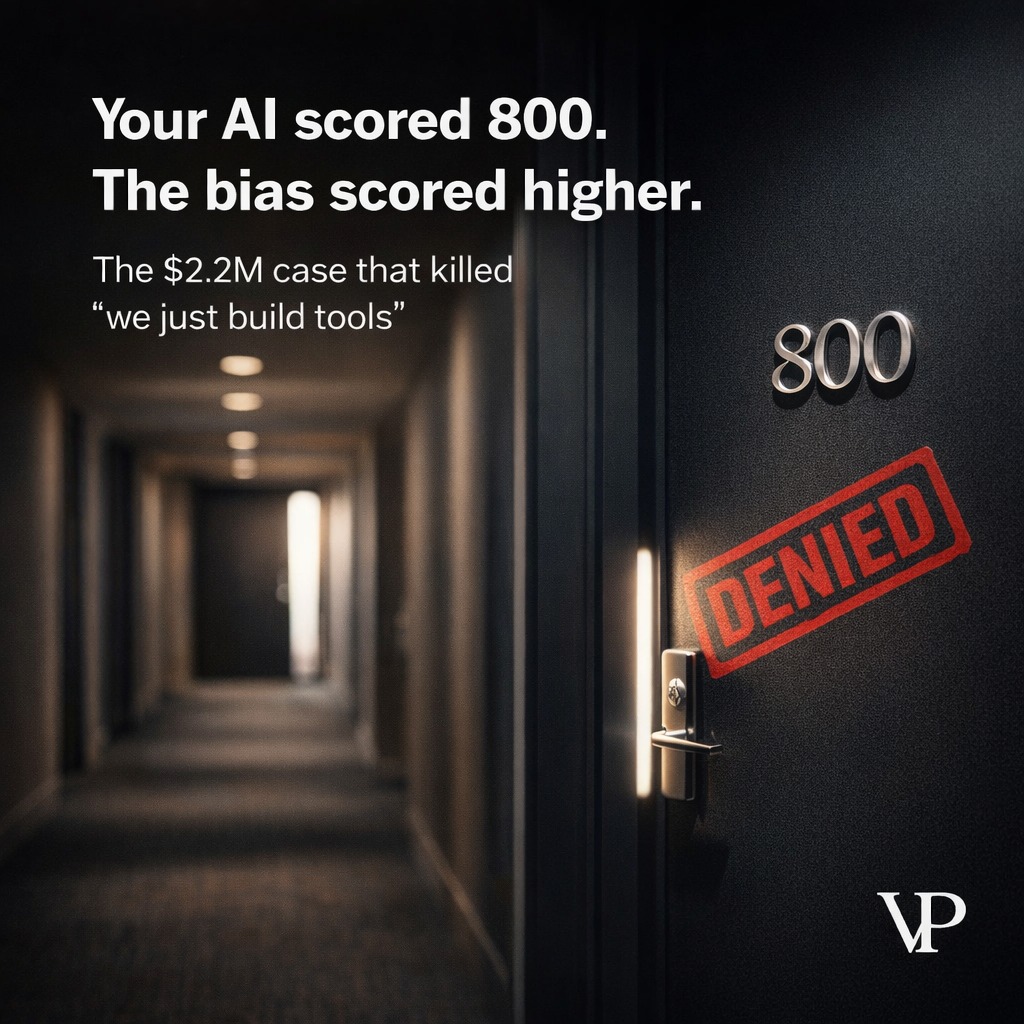
A $2.275 million satisfactory settlement just rewrote the rules for every company using AI to make decisions about people.
Here's what happened — and why it matters way beyond housing.
SafeRent Solutions built an algorithm to screen tenants. It scored applicants from 200 to 800, much like a credit score.
The problem? It leaned heavily on traditional credit history while completely ignoring guaranteed income from housing vouchers.
The result was predictable: Black and Hispanic applicants were disproportionately flagged as high risk — even when their rent was literally guaranteed by the federal government.
The court ruled something that should make every AI vendor pay attention: if a landlord relies on your score to reject someone, you share the liability. The "we just build the tool" defense is dead.
But here's the deeper lesson most people are missing.
This wasn't a broken algorithm. It worked exactly as designed. The design itself was the failure.
The model optimized for one thing — prediction accuracy — without ever asking whether its inputs carried decades of systemic bias baked into credit reporting.
HUD's 2024 guidance now makes it clear: if a less discriminatory alternative exists and you didn't look for it, that's on you.
Our team calls this the shift from bias detection to bias prevention. Building systems where discriminatory outcomes aren't just caught after the fact — they're architecturally impossible to sustain.
The companies that treat fairness as a design constraint rather than a compliance checkbox will own the next decade of regulated AI.
Save this if you work in AI, real estate tech, or compliance. You'll want to reference it.
What's one industry where you think algorithmic screening needs the most scrutiny right now? Drop it below 👇
#AlgorithmicFairness #AICompliance #ResponsibleAI #FairHousingAct #DeepAI