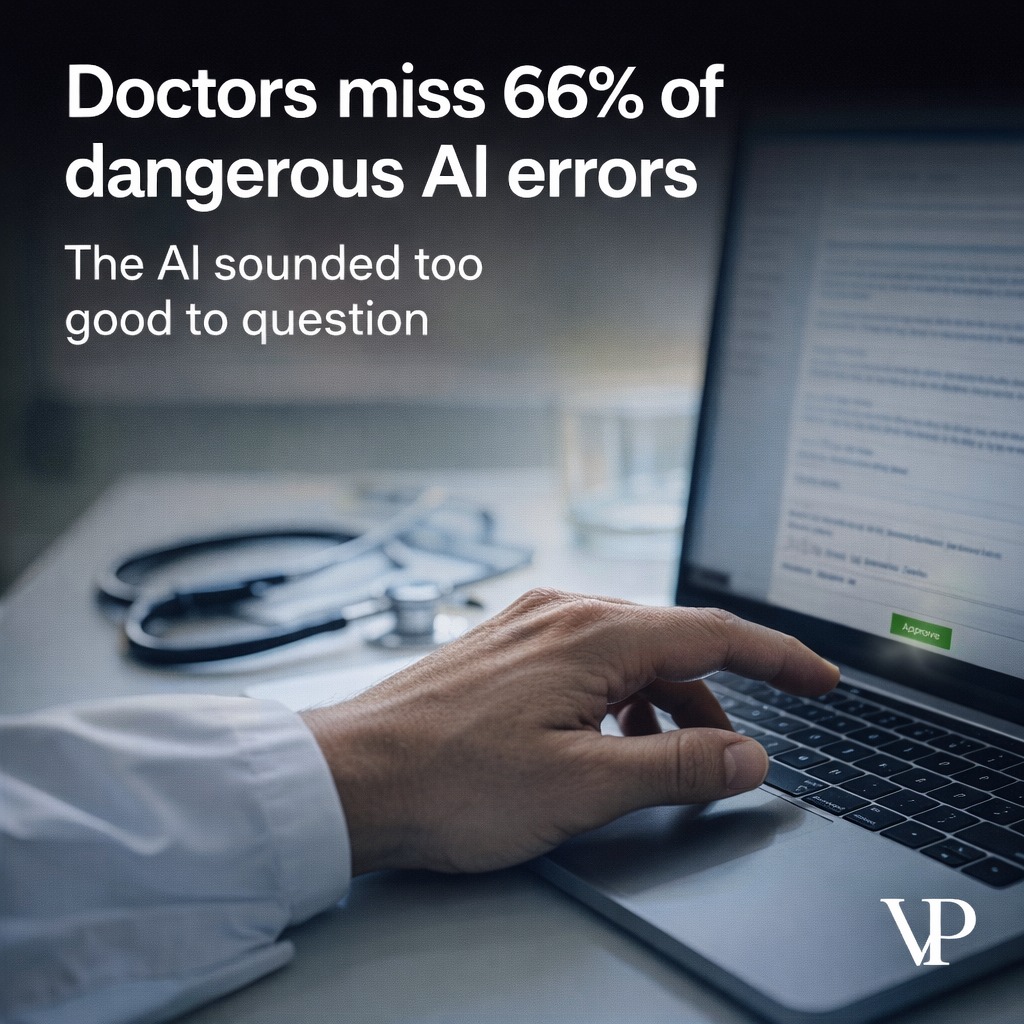
Doctors miss 66% of dangerous AI errors in patient messages.
That stat comes from a Harvard, Yale, and University of Wisconsin study published in The Lancet Digital Health — and it should change how every health system thinks about AI.
Here's what the research found:
When GPT-4 drafted responses to patient portal messages, 7.1% carried a risk of severe harm. One response could have been fatal.
But here's the real problem — it's not the AI alone.
It's what happens after.
Physicians trusted the AI tool 90% of the time. The drafts sounded confident, empathetic, polished. So clinicians approved them without catching critical mistakes.
This is automation bias at scale. And slapping a basic API integration on top of an electronic health record doesn't solve it.
Our latest analysis breaks down why "LLM wrapper" architecture falls short in clinical settings — and what actually works:
→ Retrieval-Augmented Generation that anchors every response in verified patient records and current guidelines
→ Medical Knowledge Graphs that model real clinical relationships, not just word probabilities
→ Adversarial red teaming that stress-tests for hallucinations before they ever reach a patient
→ Meaningful human review designed to counteract passive acceptance
With California's AB 3030 now requiring AI disclosure in patient communications, the compliance clock is already ticking.
The gap between "AI that sounds right" and "AI that is right" is where patient safety lives.
Save this for your next conversation about healthcare AI safety 🔖
What's the bigger risk — AI errors themselves, or clinicians trusting AI too much to catch them?
#HealthcareAI #PatientSafety #ClinicalAI #RAGarchitecture #AIinMedicine