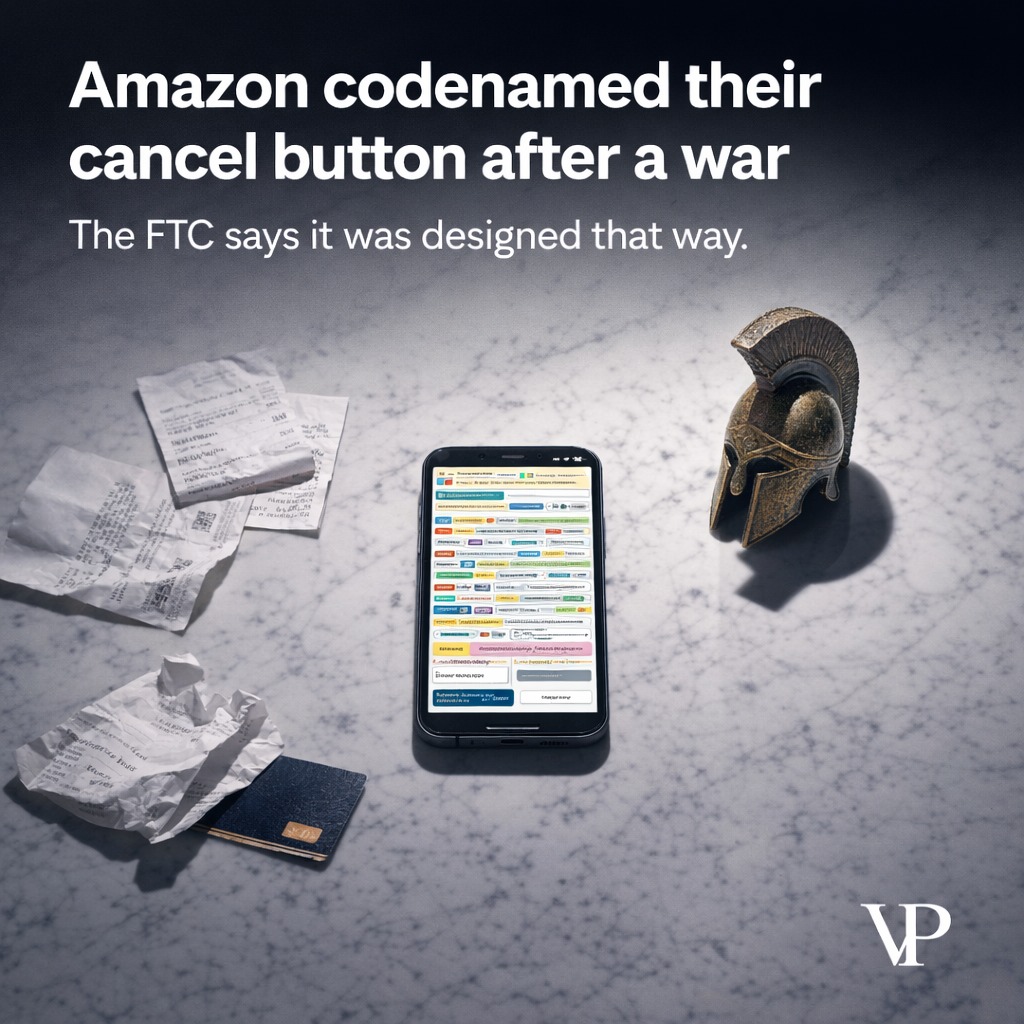
Amazon internally codenamed their cancellation flow after a Greek war epic. That tells you everything.
The FTC called it a "four-page, six-click, fifteen-option" maze designed to exhaust users into giving up. Epic Games paid $245 million for tricking players into purchases with zero confirmation screens.
This isn't retention. It's entrapment dressed up as UX.
And now it's getting worse. Conversational AI agents are being deployed as cancellation gatekeepers — programmed to guilt, shame, and emotionally manipulate users into staying. Some even reference personal details shared in previous conversations to make leaving feel like a betrayal.
The regulatory landscape is catching up fast. The FTC's Click-to-Cancel rule sent a clear signal: if your exit path is harder than your signup flow, you have a compliance problem. And even after the Eighth Circuit struck it down on procedural grounds, state-level laws in California, New York, and Maryland remain fully active — many stricter than the federal version.
Our latest research breaks down what actually works instead.
We use Causal AI and uplift modeling to identify the customers who genuinely benefit from a retention conversation versus those who should get a clean, frictionless exit. Not everyone needs a "save" offer. Some users will stay regardless. Others will leave no matter what. Targeting the wrong group wastes budget and erodes trust.
The companies building lasting subscriber relationships aren't the ones making it hard to leave. They're the ones making it worth staying.
Save this if you're rethinking how ethical design and subscriber retention actually work together 📌
What's the worst cancellation experience you've ever had?
#AlgorithmicAccountability #SubscriptionUX #DarkPatterns #RetentionStrategy #EthicalAI