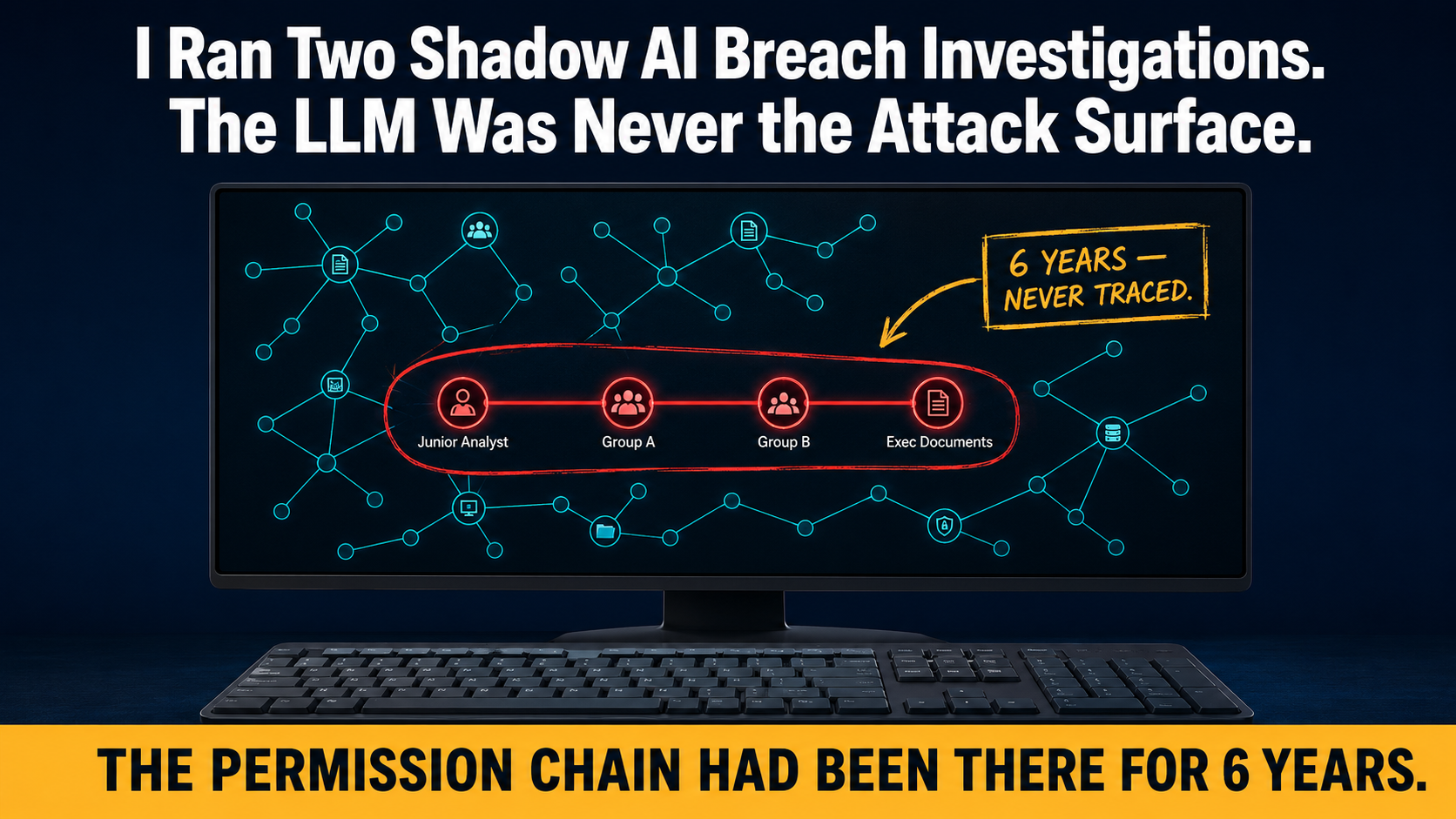
I opened the first breach investigation expecting carelessness. What I found instead was productivity.
The employee explained that ChatGPT let her do in twenty minutes what used to take a full day. She wasn't apologizing. She wasn't even defensive. The framing changed how I approached every sovereign AI engagement after. She wasn't a rogue actor — she was a high performer trying to keep up, in an environment where the official tools were 10x slower than the unofficial ones. IBM's 2025 data eventually confirmed what I'd seen: 43% of employees share sensitive work information with AI tools without employer permission, and 46% say they'll continue using them regardless of a corporate ban. You're not dealing with a compliance problem. You're dealing with a productivity infrastructure problem that the enterprise hasn't solved yet.
The ban had already lost before it was announced. Netskope tracks 317 distinct GenAI applications active in enterprise environments. You block one; the others are a 5G connection away. The $670,000 premium IBM documented for shadow AI breaches over traditional incidents, the 247-day average detection window, the 65% customer PII compromise rate — those are what the productivity-infrastructure gap costs when it goes unmanaged.
What I've spent most of my time on since then is the question of what "managed" actually requires. And the answer is almost never what the RFP says.
The Legal Meeting I Didn't Expect
The second thing that reoriented my thinking was a 30-minute legal review that I expected to be a rubber stamp.
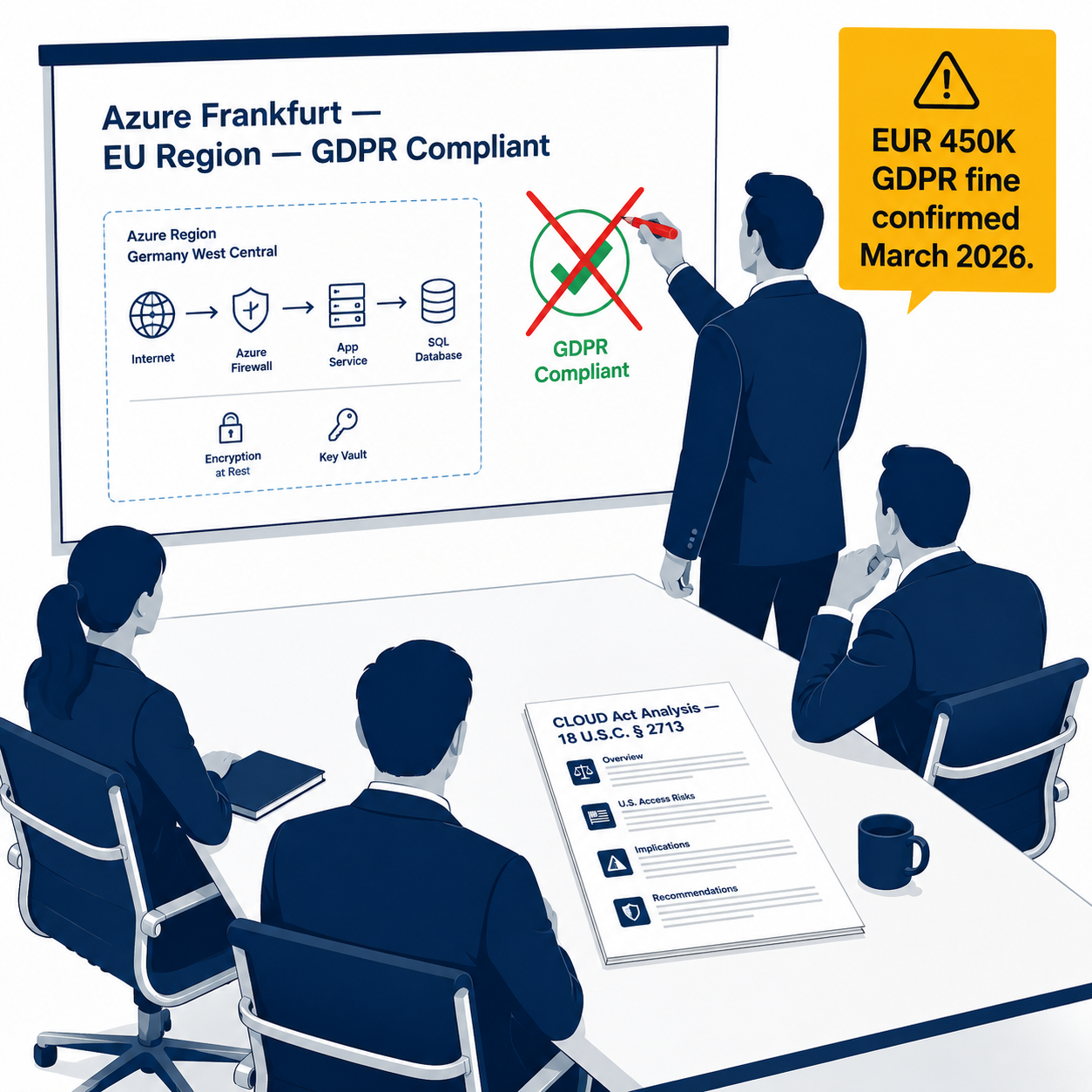
A regulated financial client had approved an Azure Frankfurt deployment for their internal AI assistant. European region, private networking, VPC endpoints, all the right box-checks. We were two weeks from kickoff. Their legal team reviewed the data processing addendum and raised a question about the CLOUD Act — specifically, whether Microsoft's status as a US-headquartered parent company created jurisdiction exposure that GDPR Article 48 required an international agreement to resolve.
That conversation killed the architecture before it started.
The underlying conflict isn't obscure: 18 U.S.C. § 2713 extends US government jurisdiction to data held by US-headquartered companies regardless of server location. GDPR Article 48 says foreign court orders are only valid under an international agreement. The two legal frameworks are in direct contradiction, and hosting in Frankfurt doesn't resolve it — it relocates the server while leaving the legal exposure in place. Austria's Data Protection Authority confirmed the enforcement interpretation in March 2026, fining a Vienna fintech EUR 450,000 for using a US-based AI API for credit scoring and calling it an unlawful GDPR transfer. The combined GDPR and EU AI Act penalty ceiling is EUR 55 million per year.
What surprised me in that meeting wasn't the legal analysis — I'd read the same arguments in privacy law journals. What surprised me was that the procurement process had gotten two weeks in without raising it. And this wasn't an outlier.
For that client, the architecture shifted to Mistral AI's infrastructure — genuinely European-headquartered, EUR 830 million raised, Paris data center built around 18,000 NVIDIA Grace Blackwell Superchips, France Ministry of Armies contract already running in production. The jurisdictional posture is categorically different from Azure Frankfurt, not marginally different. Cohere's Model Vault offers a similar private-deployment option; Cohere is Canadian-headquartered, which depending on the specific GDPR scope may or may not fully resolve the CLOUD Act concern. The honest answer is that the jurisdictional requirement needs to be settled with legal before the vendor shortlist is assembled — not after the recommendation is already on the table.
What the BloodHound Export Actually Showed
The third failure point in enterprise sovereign AI is the one I've seen stall the most projects, and it has nothing to do with the model or the jurisdiction.
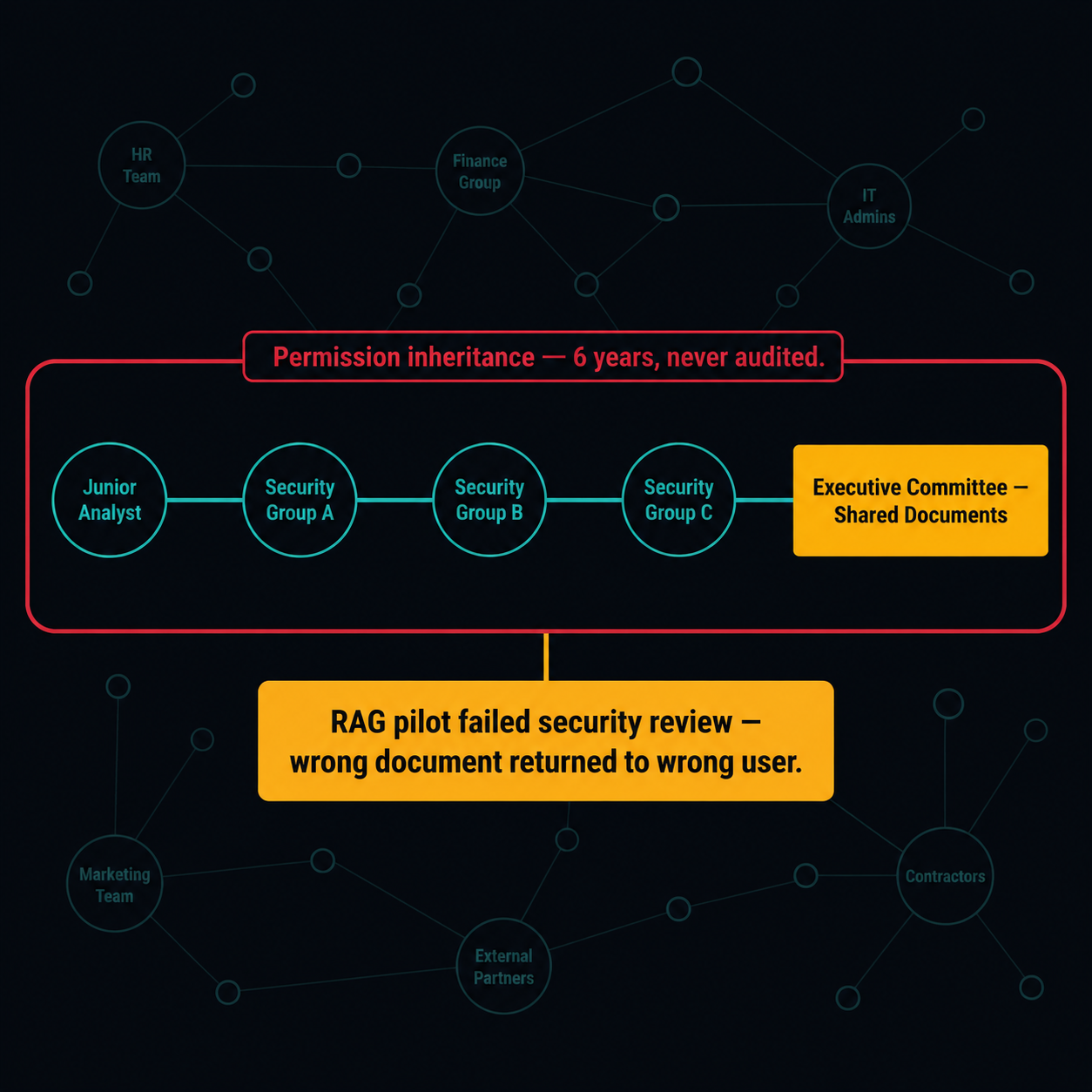
My standard starting point for any enterprise RAG engagement is a BloodHound CE export of the client's Active Directory. The first time I ran one on a prospective client's directory, the export showed a junior analyst nested three security groups deep in an inheritance chain that terminated at the executive committee's shared document library. The permission path had existed for six years. Nobody had traced it end-to-end. Nobody had a reason to — until you're about to index that document library into a vector database and ask it questions.
This is the scenario that kills enterprise RAG pilots in their security review. You deploy Llama 4 Maverick on a GPU cluster in the VPC. You index SharePoint. You run the first test query — a junior analyst asks about quarterly projections — and the retrieval system surfaces board-level financial documents. The naive fix (tag each document chunk with a flat ACL read from SharePoint) doesn't survive the actual complexity: dynamic group membership that changes faster than a vector database re-indexes, time-based conditional access policies that don't map cleanly to metadata filters, ABAC rules from Okta workflows that have no direct translation to Qdrant query syntax.
Fifteen-plus years of permission inheritance debt doesn't clean up automatically when you add an AI layer. It surfaces in the most visible possible way — wrong data to the wrong user — in the environment where you most need to demonstrate that your sovereign AI deployment is secure.
Most enterprise RAG projects don't fail because the model got something wrong. They fail because the retrieval layer got it exactly right for the wrong user.
TrueFoundry, Databricks, and Azure AI Search each have partial implementations of permission-aware retrieval. None handle the full inheritance depth that a real enterprise AD has accumulated over a decade. The solution is custom permission synchronization that understands group inheritance, handles real-time membership changes, and enforces document-level access without introducing latency that breaks the user experience. It's the component I scope most carefully at the start of an engagement — and the one that most consistently expands once the actual directory structure is mapped.
What I've learned is that the BloodHound CE export is diagnostic, not just a setup step. If the export reveals clean ABAC policies and consistent OU structure, the permission phase is a six-to-eight week engineering problem. If it reveals what I found in that first client — inherited access paths that nobody has owned for years — the phase needs to be scoped entirely before a timeline goes to the board.
The Vendor Choice I Keep Getting Asked About
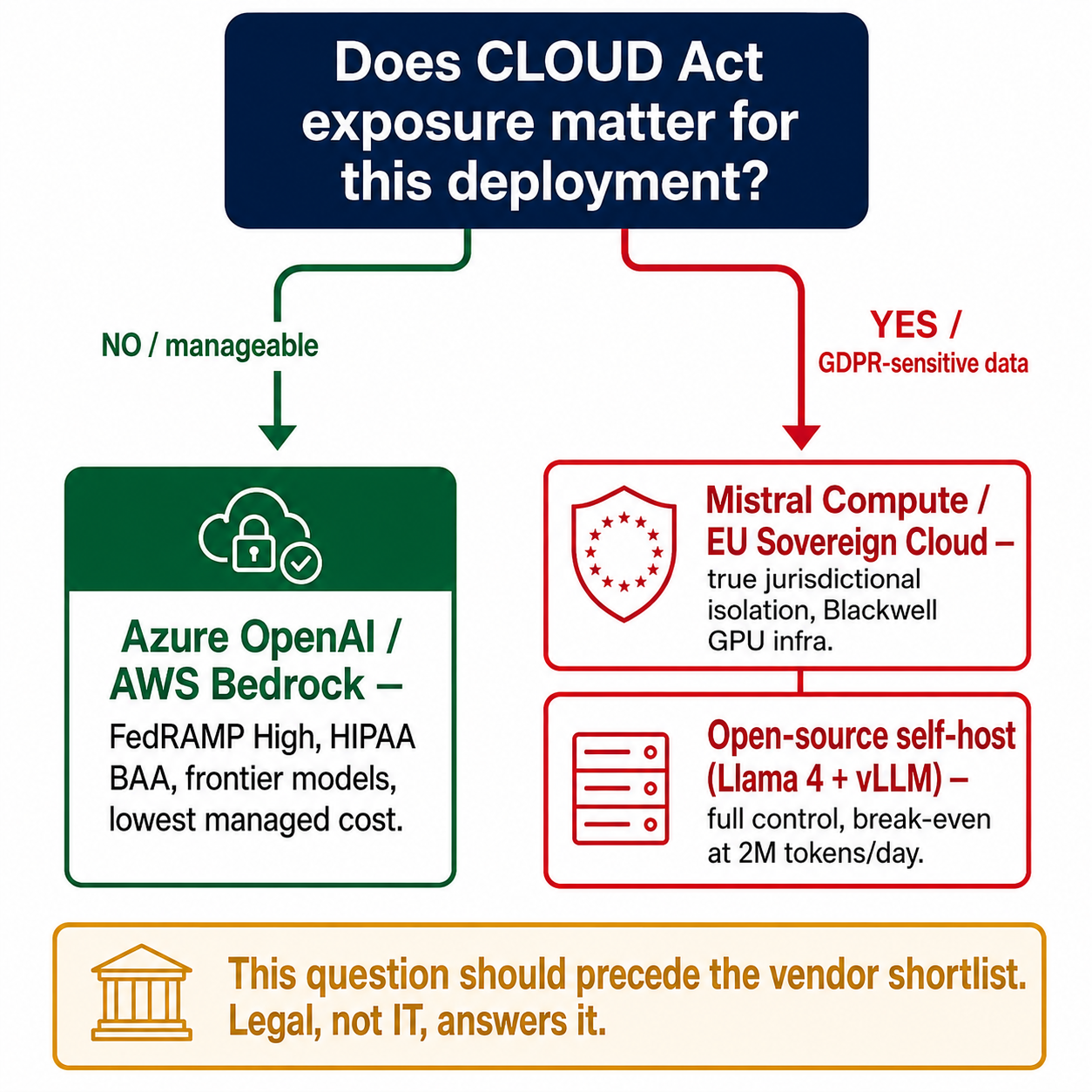
I get one vendor question more than any other: "Azure or Mistral?" But the question that should come first is whether the CLOUD Act posture matters for the specific data flows the deployment will touch.
When it doesn't — when the data going through the AI system is outside GDPR scope, or when legal has made a deliberate risk decision — Azure OpenAI and AWS Bedrock are genuinely strong options. FedRAMP High, HIPAA Business Associate Agreements, SOC 2 Type II, EU data residency. The compliance portfolio is real and hard to match. Frontier model access (GPT-4o, Claude) is a genuine capability advantage. For organizations that have done the legal analysis and concluded the CLOUD Act exposure is manageable, this is a defensible path.
When GDPR-sensitive data is in scope and CLOUD Act exposure isn't acceptable, the field narrows to EU-sovereign infrastructure. Mistral is well-funded and production-proven. Scaleway and OVHcloud have built out serious GPU infrastructure — Scaleway now has the first European availability of NVIDIA Blackwell B300 GPUs. The tradeoff is model ecosystem lock-in and smaller managed-service footprints than the hyperscalers. Open-source self-hosting (Llama 4 Maverick with vLLM on NVIDIA NIM microservices) provides maximum control — at around $0.013 per 1,000 tokens self-hosted versus $0.15–$0.60 for GPT-4o mini via API, the economics work at roughly 2 million tokens per day when you account for the 2–3 dedicated MLOps engineers the infrastructure requires. One fintech I'm familiar with brought monthly AI spend from $47,000 to $8,000 through hybrid self-hosting, but they were above the break-even threshold and already had the team.
What I've stopped doing is leading with the model or the GPU platform. I lead with the legal question, then the token volume math, then the AD inheritance audit. The vendor shortlist follows from those three answers — it doesn't precede them.
The Part Agentic AI Changes
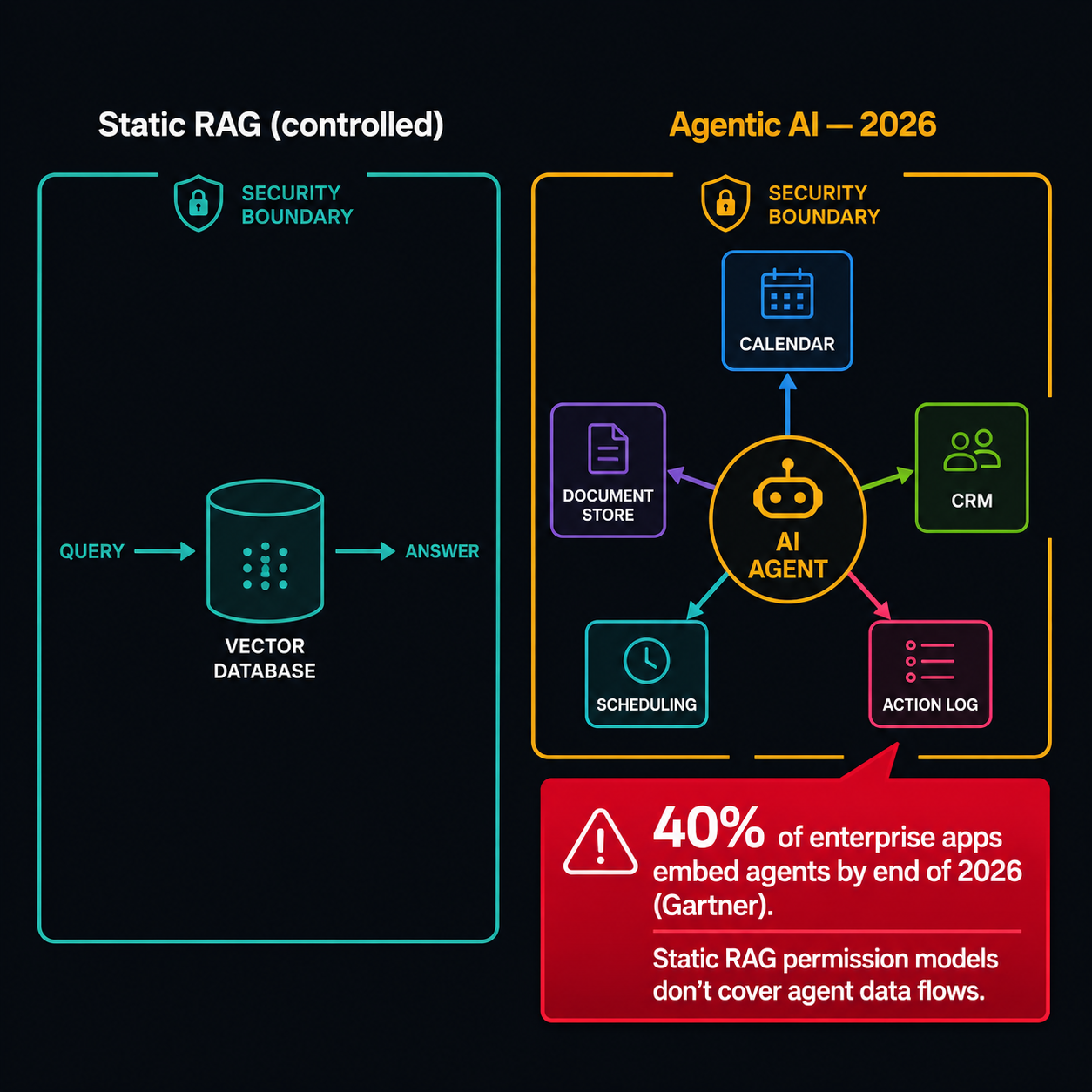
Most of the sovereign AI engagements I worked on over the past two years were scoped around static RAG — a query comes in, the retrieval layer runs, an answer goes out, the session ends. That architecture is still the right starting point for most organizations. But the assumption that it describes the endpoint is wrong.
Gartner projects that 40% of enterprise applications will embed AI agents by end of 2026, up from under 5% in 2025. An agent with legitimate access to a calendar, a CRM, and a document store creates data flows that a static permission model was never designed to audit. The agent isn't attacking anything — it's doing exactly what it was authorized to do. But what it was authorized to do wasn't specified at the level of precision that matters when the actions become automatic.
The identity security implications are already showing up in acquisition data: CrowdStrike's $740M acquisition of SGNL (January 2026), Check Point's acquisition of Lakera for runtime prompt injection defense. Security leaders report that 92% lack full visibility into AI agent identities, and 86% don't enforce access policies for AI agents. The OpenClaw crisis in 2026 — 135,000 GitHub stars, 21,000+ exposed instances, malicious marketplace exploits in an AI agent platform — was a preview of what happens when agent-level access controls are treated as a future problem.
My thinking on this has shifted: the organizations that invested in deep permission mapping for their static RAG deployment are the ones whose architectures survive the agentic expansion without a rework. The teams that treated the permission layer as a future problem are the ones that will hit it again, at higher stakes, when their agents start taking actions.
What I Tell Teams Starting This
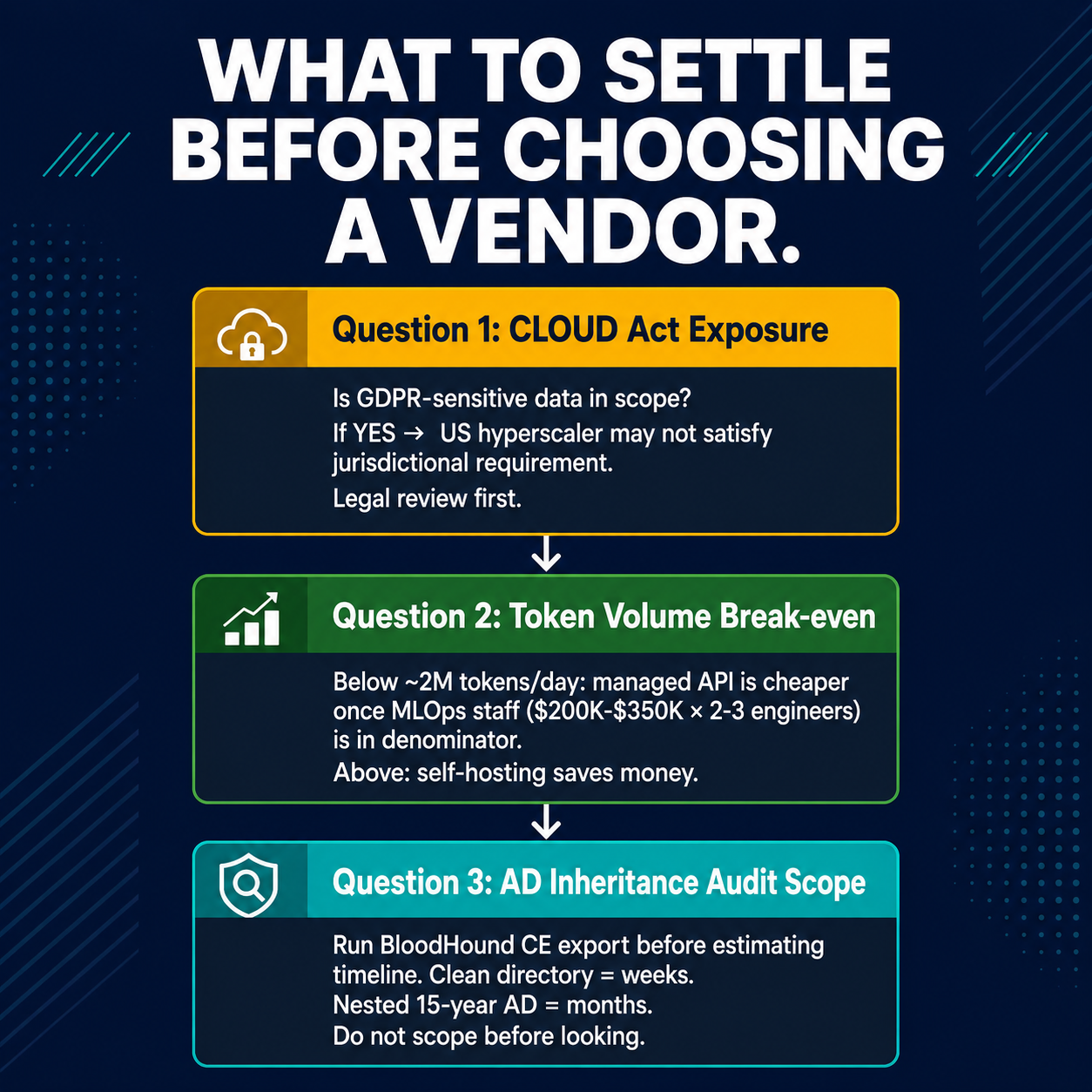
What I tell every team at the start of a sovereign AI engagement is the same: the AD permission audit will take longer than your initial estimate, and you'll find something unexpected. The Sovereign AI & Private LLM Deployment page captures the full architecture decision framework we've built from these engagements, but that's the thing that would have saved time in the earliest ones.
The expected finding is orphaned security groups and outdated distribution lists. The unexpected finding — the kind that expands a six-week scope — is permission inheritance chains that cross organizational units and haven't been owned by anyone since the OU structure was reorganized. You don't know which one you have until you look. Running the BloodHound CE export at the start of scoping, before the timeline goes to stakeholders, is the single change that most improves project predictability on the permission side.
The guardrails layer — NeMo Guardrails (Colang 2.0), Lakera now part of Check Point, Protect AI's open-source LLM Guard — addresses the inference layer. It doesn't address the retrieval layer. Prompt injection defense and PII output filters are necessary. They don't catch the case where the retrieval system returns the right answer to the wrong user. Both problems need separate solutions.
What I still find myself working through — and haven't fully resolved — is how to communicate the AD phase scope to boards that have been told sovereign AI is a model and infrastructure decision. The permission infrastructure is the work that makes or breaks the deployment. It's also the work that's hardest to explain to someone who hasn't seen a BloodHound CE export.
That's the conversation I'm most interested in having with other practitioners in this space: not which model to deploy, but how to scope the permission work before the project plan is set.