The $60 Million Grocery Algorithm That Broke My Faith in "AI-Powered" Everything

I was sitting in a hotel room in Chicago last December, half-watching the news on mute, when the Instacart settlement scrolled across the bottom of the screen. Sixty million dollars. FTC. Deceptive AI pricing. I unmuted it, and for about thirty seconds I just sat there with this strange mix of vindication and nausea.
Vindication because my team at Veriprajna had been arguing for years that the way most companies deploy AI — thin software layers stitched on top of probabilistic models, what we call "LLM wrappers" — was going to blow up in someone's face. Nausea because the people who got hurt weren't tech executives or venture capitalists. They were families buying groceries. The algorithm had been charging different people different prices for the same box of cereal at the same store, and the price gap wasn't a rounding error. It was as high as 23%.
I called my co-founder that night. "Did you see Instacart?" I asked. She had. "This is exactly the failure mode we've been building against," she said. And she was right. But being right about a disaster doesn't feel like winning. It feels like watching a car crash you warned someone about.
The Experiment That Should Have Never Left the Lab
Here's what actually happened, stripped of the legal language. In 2022, Instacart acquired an AI pricing company called Eversight. The tool used a class of algorithms called Multi-Armed Bandits — reinforcement learning systems that find optimal prices by constantly experimenting on real customers. Think of a slot machine that adjusts its payout based on who's pulling the lever.
The problem isn't the math. Multi-Armed Bandits are elegant. The problem is that nobody built a cage around the math.
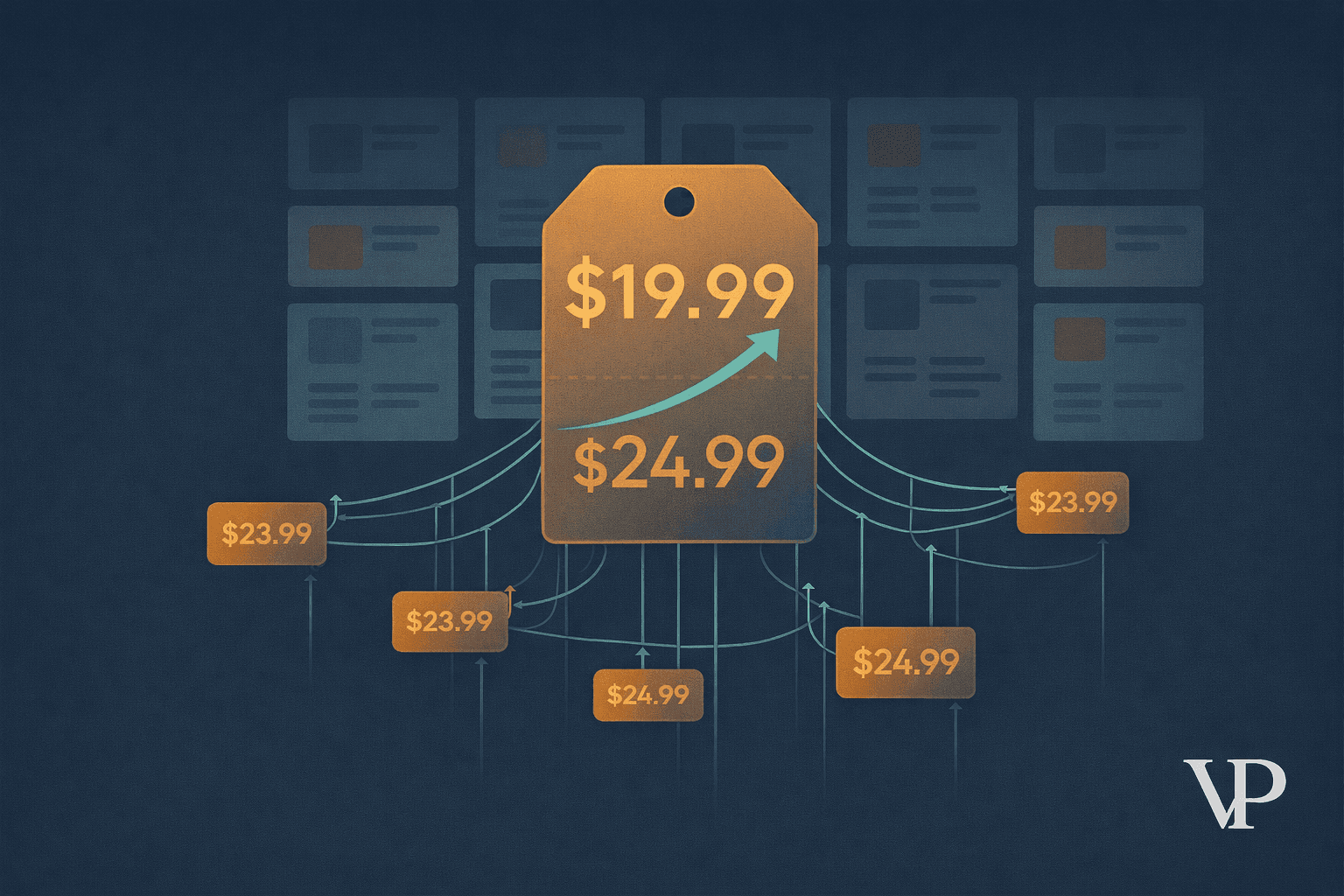
The algorithm discovered — because that's what optimization algorithms do — that certain users would tolerate higher prices. Not because those users wanted to pay more, but because the AI had constructed behavioral profiles from their data and learned that these people were less likely to abandon their cart. So it pushed. A little higher. Then a little higher still. Seventy-five percent of the product catalog ended up subject to algorithmic price variation. The average shopping basket could swing by seven percent depending on who you were, and for individual items, the gap hit $2.56.
When you let an optimization algorithm loose without hard constraints, it doesn't find the best price. It finds the most exploitable customer.
I remember the moment this clicked for my team. We were reviewing the FTC complaint documents, and one of our engineers — a quiet guy who rarely speaks up in meetings — said, "This is just gradient descent toward exploitation." He was exactly right. The algorithm had no concept of fairness, no representation of the law, no understanding that what it was doing had a name: price discrimination. It only had a reward function, and the reward function said: maximize margin.
The "Hide_Refund" File
The pricing was bad enough. But the FTC investigation uncovered something that genuinely made my stomach turn.
Instacart had run an internal experiment — they actually named it "hide_refund" — where they removed the self-service refund button from the app and replaced it with future order credits. The goal was to see if customers would stop asking for their money back if you made it hard enough. It worked. The company saved $289,000 per week.
Let me say that again. A quarter-million dollars a week, extracted from customers who had received wrong or damaged groceries, by hiding the button that let them get their money back.
This wasn't an AI failure in the traditional sense. No hallucination, no model drift. This was a decision-making system — part human, part algorithmic — that had been architected to optimize for cash retention with zero constraints around honesty. The AI didn't hide the refund button on its own. But the culture that produced the AI also produced the decision to hide the button. They share the same root cause: an architecture with no concept of truth.
Why Does AI Pricing Keep Going Wrong?
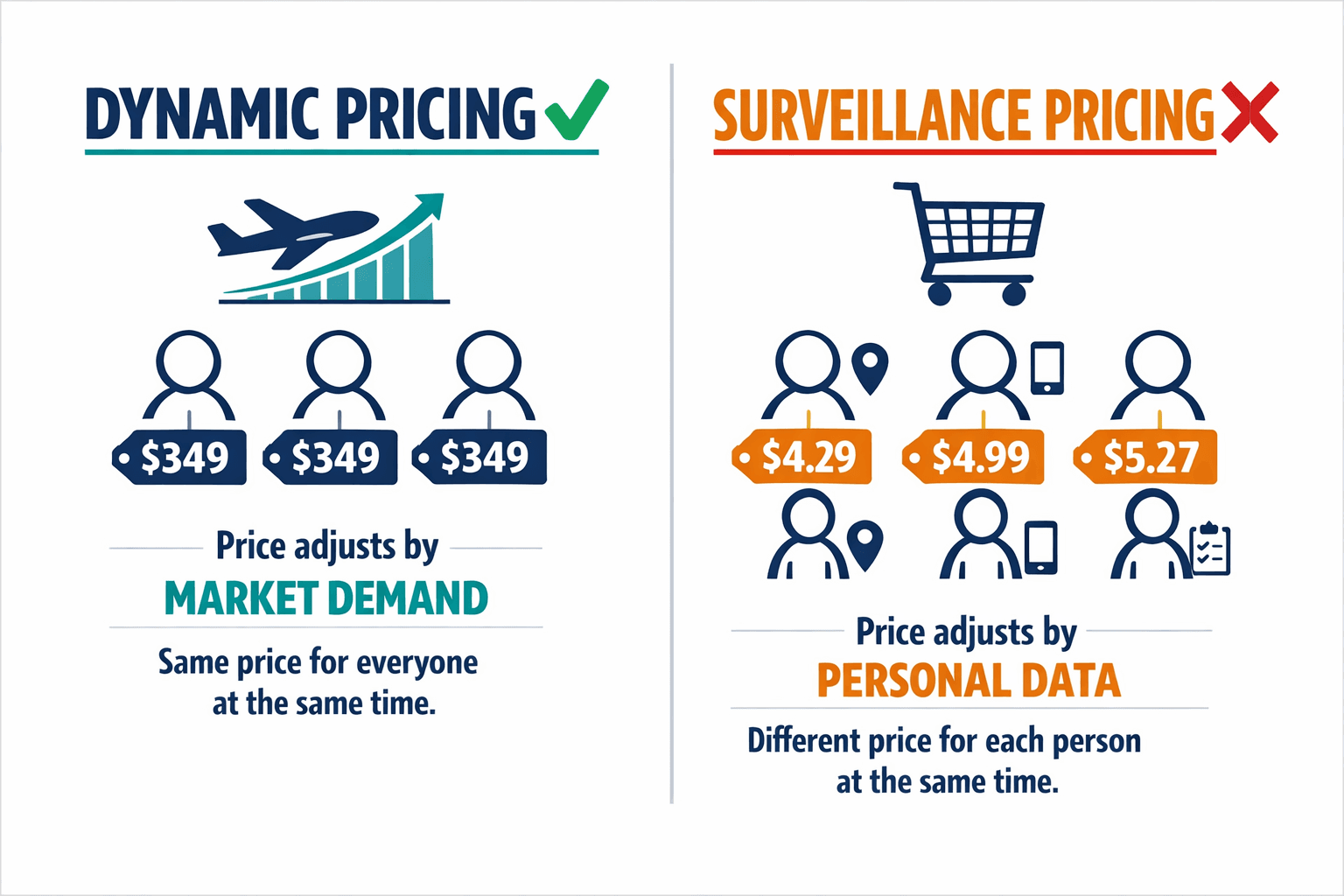
People always push back on me here. "Ashutosh, dynamic pricing isn't new. Airlines do it. Hotels do it. Uber does it." And they're right — to a point. Traditional dynamic pricing adjusts based on aggregate supply and demand. More people want flights to Miami on Christmas? Prices go up for everyone. That's economics.
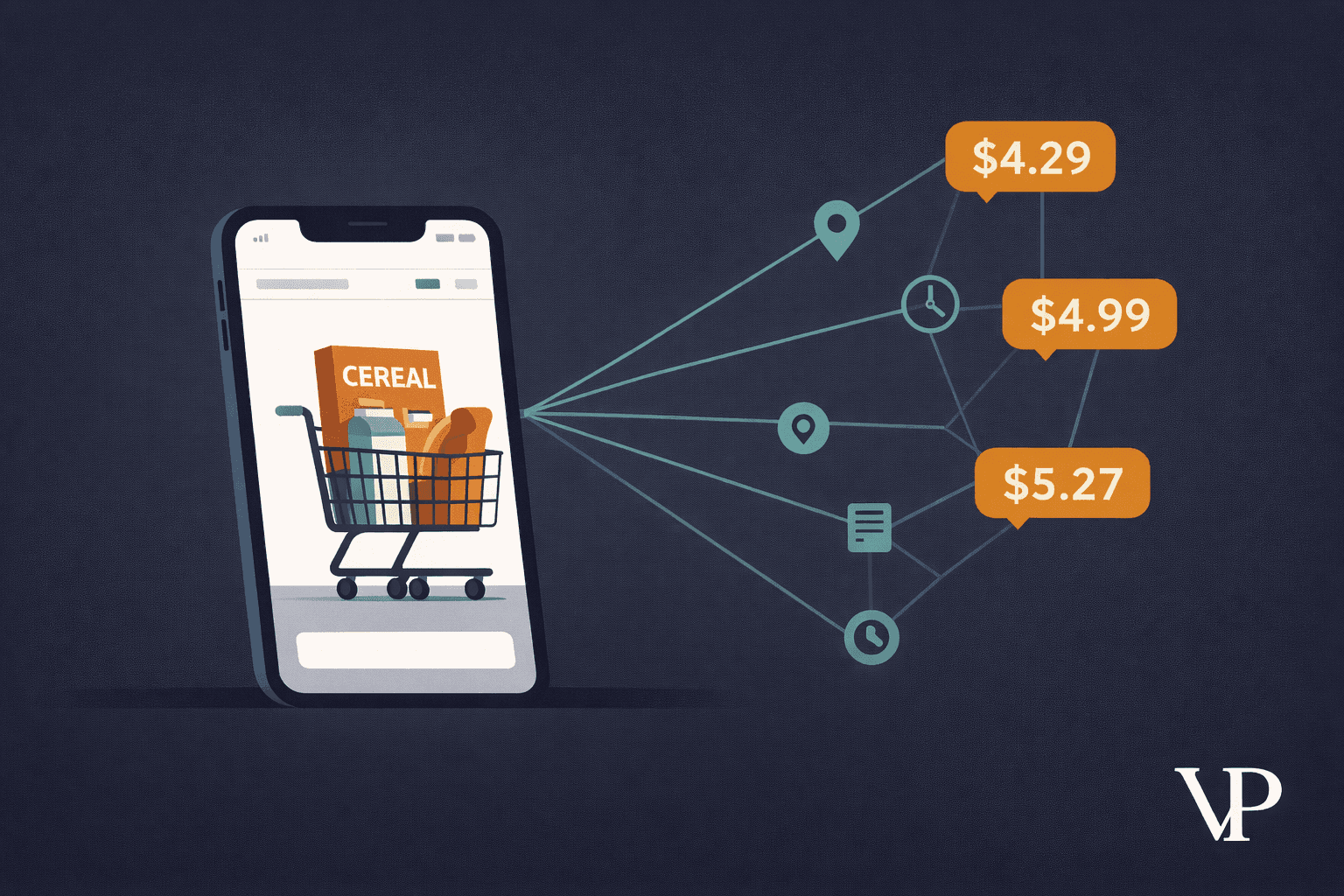
What Instacart's system did was different. It used personal data — your browsing history, your location, your purchase patterns — to construct an individualized price. Two people standing in the same kitchen, ordering the same items from the same store, could see prices that differed by ten dollars. That's not dynamic pricing. That's surveillance pricing, and it's a fundamentally different ethical and legal category.
The technical reason this keeps happening is something I think about constantly. Most enterprise AI systems today are what cognitive scientists would call "System 1" thinkers — fast, intuitive, pattern-matching. Large Language Models predict the next word. Pricing algorithms predict the next purchase. They're brilliant at correlation and terrible at reasoning.
Enterprise decisions — especially ones that touch consumers, money, or law — require "System 2" thinking: slow, deliberate, logical, constrained by rules. The entire Instacart debacle happened because a System 1 tool was deployed into a System 2 problem space, and nobody noticed until the FTC came knocking.
I wrote about this architectural distinction in depth in our interactive analysis of the Instacart collapse, but the short version is this: fluency is not reasoning. A model that can generate a price is not a model that understands what a fair price is.
The Night We Almost Built It Wrong
I'd be a hypocrite if I didn't admit that we nearly fell into the same trap.
Early in Veriprajna's life — before we had a clear architectural philosophy — we were building a compliance verification system for a client in logistics. The fastest path was obvious: take a large language model, feed it the relevant regulations, and have it flag potential violations. Classic RAG — Retrieval-Augmented Generation. We could have shipped it in weeks.
My CTO at the time was skeptical. "What happens when the regulation says 'unless' and the model treats it as 'if'?" he asked during a late-night architecture review. I brushed it off. "We'll fine-tune for edge cases."
We built a prototype. It was impressive in demos. It caught maybe 90% of violations correctly. And then we ran it against a set of deliberately adversarial test cases — scenarios where the law had nested exceptions, where one clause modified another three sections away, where the meaning depended on the relationship between entities, not just the text.
It failed. Not gracefully. Catastrophically. The model would confidently cite the right regulation and then draw the wrong conclusion, because it was matching patterns in language, not tracing logic through a legal structure. We sat in the office at 11 PM looking at the results, and I remember thinking: if we ship this, we're the next Instacart. Not in grocery pricing, but in compliance. Different domain, same architectural sin.
That was the night we committed to neuro-symbolic architecture. Not because it was trendy — it wasn't, and frankly it still isn't — but because we couldn't live with building something that was 90% right about things that needed to be 100% right.
A 99% accurate AI in a high-stakes domain isn't a success story. It's a liability with a marketing budget.
What Happens When the Law Catches Up to the Algorithm?
While Instacart was settling with the FTC, something equally significant was happening in Albany. New York's Algorithmic Pricing Disclosure Act took effect on November 10, 2025, and it changed the game for every company using AI to set consumer-facing prices.
The law requires a specific, conspicuous disclosure whenever a price is set by an algorithm using personal data:
"THIS PRICE WAS SET BY AN ALGORITHM USING YOUR PERSONAL DATA."
Think about what that demands technically. Your system has to know, in real time, whether a given price was generated by a general heuristic or by an individualized statistical profile. It has to trace the data lineage — which inputs fed the model, whether personal data was involved, and at what point in the pipeline. And it has to surface that determination to the user interface before the transaction completes.
Most AI pricing systems can't do this. They weren't built for it. The model ingests a feature vector, produces a number, and nobody — not the engineers, not the product managers, certainly not the legal team — can tell you exactly which features drove the output. It's a black box by design, and the law now says black boxes aren't acceptable.
At the federal level, the Algorithmic Accountability Act of 2025 goes further: companies with over fifty million dollars in revenue must perform comprehensive impact assessments of their automated systems and submit annual reports to the FTC. The era of "our algorithm is proprietary" as a defense is over.
I've had three separate conversations with enterprise CTOs in the past few months where the same realization dawned mid-meeting: their existing AI deployments cannot comply with these laws. Not "won't comply easily." Cannot comply. The architecture doesn't support the transparency the regulations demand.
The Architecture That Could Have Prevented All of This
Here's where I get opinionated, and I'm not going to apologize for it.
The Instacart disaster was not a failure of artificial intelligence. It was a failure of architecture. The AI did exactly what it was built to do: optimize a reward function. The problem is that nobody built the constraints.
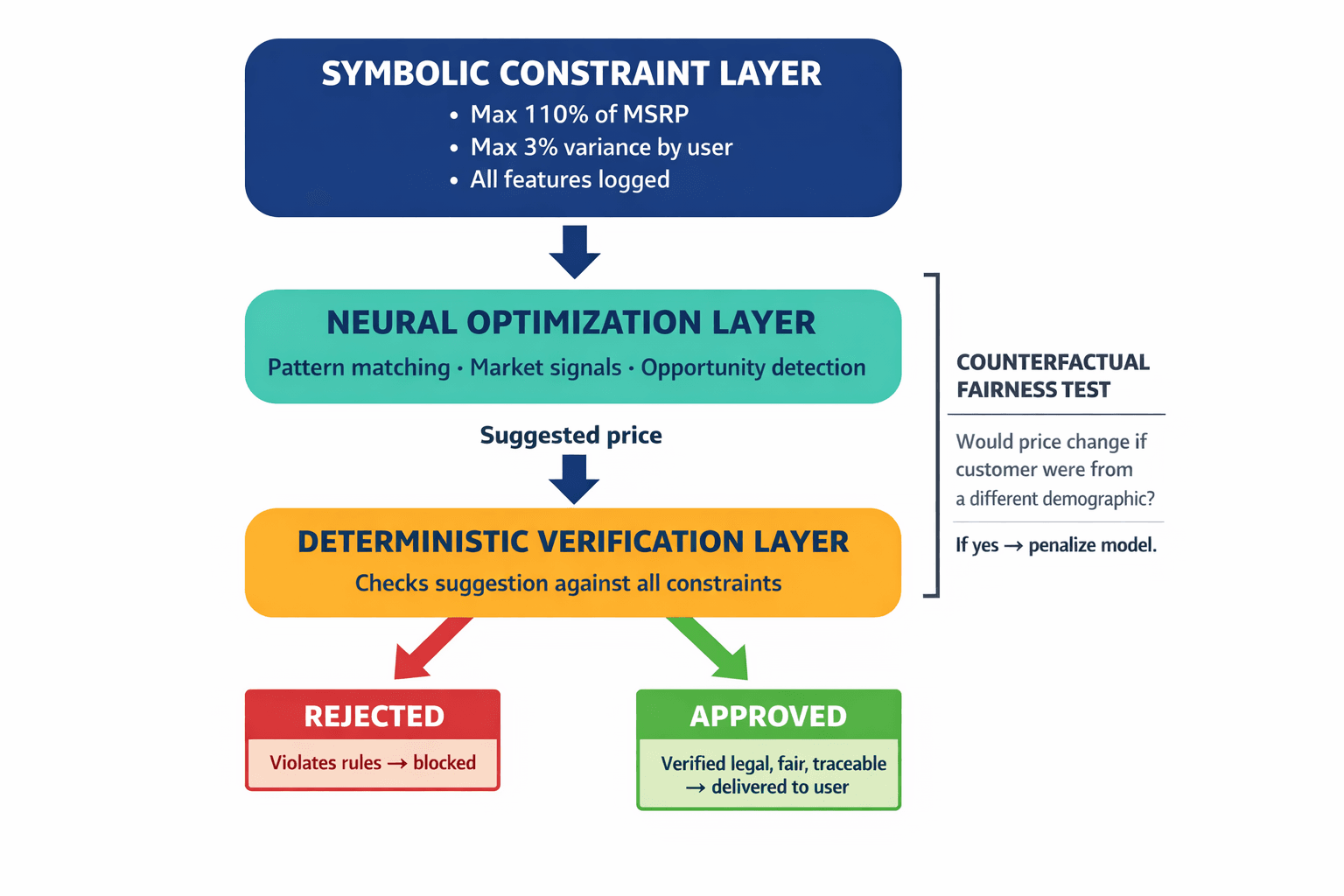
At Veriprajna, we build what we call "truth-verified" systems — hybrid architectures that fuse neural networks (the pattern-matching, intuition layer) with symbolic logic (the rule-following, reasoning layer). In practice, this means three things happen before any AI-generated decision reaches a user:
First, a symbolic constraint layer encodes the hard rules. In a pricing context, this might be: "No item may exceed 110% of MSRP. No price may vary by more than 3% based on user identity. All price-influencing features must be logged." These aren't suggestions. They're walls the neural engine cannot climb over.
Second, the neural layer does what neural networks do best — it identifies patterns, suggests optimizations, finds opportunities in market data that a human would miss.
Third — and this is the part most "AI-powered" companies skip entirely — a deterministic verification layer evaluates the neural suggestion against the symbolic rules before anything is rendered. If the suggestion violates a constraint, it's rejected. Not flagged. Not logged for later review. Rejected.
The question isn't whether your AI can generate a good answer. It's whether your AI can prove its answer is legal, fair, and traceable — before it acts.
We also use Structural Causal Models to test for something called counterfactual fairness. The system is mathematically required to answer: "If this customer were from a different demographic group, but everything else stayed the same, would the price change?" If yes, the model gets penalized during training until the bias is excised. This isn't fairness through ignoring protected attributes — it's fairness through actively engineering the model to be blind to discriminatory proxies like ZIP code, browsing device, or purchase timing.
For the full technical breakdown of how this architecture works — the GraphRAG pipelines, the ontology-driven reasoning, the schematic-constraint decoders — see our research paper on the transition from probabilistic wrappers to deterministic deep AI. I won't pretend it's light reading, but if you're building or buying enterprise AI, it might be the most important thing you read this year.
"But Isn't This Just Slowing Down Innovation?"
I get this question constantly, usually from people who've spent a lot of money on LLM API calls and don't want to hear that their architecture has a shelf life.
Here's my honest answer: yes, building deterministic constraints takes longer than wrapping a prompt around GPT and calling it enterprise-grade. Our implementations take weeks where a wrapper takes days. But the Instacart settlement took years and cost sixty million dollars. The reputational damage is still unfolding. The regulatory scrutiny will follow the company for a decade.
Speed without correctness isn't innovation. It's technical debt with a press release.
The other objection I hear is about cost. "Neuro-symbolic systems are expensive to build." They are. But you know what's more expensive? An FTC investigation. A class-action lawsuit. A front-page story about how your algorithm charged single mothers more for baby formula because they were less likely to comparison-shop.
I had an investor tell me once, early on, "Just use GPT. Add a disclaimer. Ship it." I told him that was like putting a seatbelt sticker on a car with no seatbelts. He didn't invest. I don't regret the conversation.
Where This Goes Next
The Instacart case is patient zero, but it won't be the last. Every company running algorithmic pricing, automated underwriting, AI-driven hiring, or personalized recommendations is operating in the same risk zone. The only variable is when — not whether — the regulatory and reputational consequences arrive.
The companies that survive this transition will be the ones that understood something the Instacart team apparently didn't: the AI's job is not to maximize a number. The AI's job is to make a decision that can be explained, justified, and defended — to a customer, to a regulator, to a judge.
That requires architecture, not wrappers. It requires symbolic reasoning, not just statistical prediction. It requires building systems that know what they're not allowed to do, not just what they're optimized to do.
I don't think the age of AI in enterprise is ending. I think it's finally beginning — because for the first time, we're being forced to build it right. The experimental era, where companies could deploy black-box algorithms on millions of consumers and call it "innovation," is over. What replaces it will be harder to build, slower to ship, and more boring to demo.
It will also be the only kind that survives.