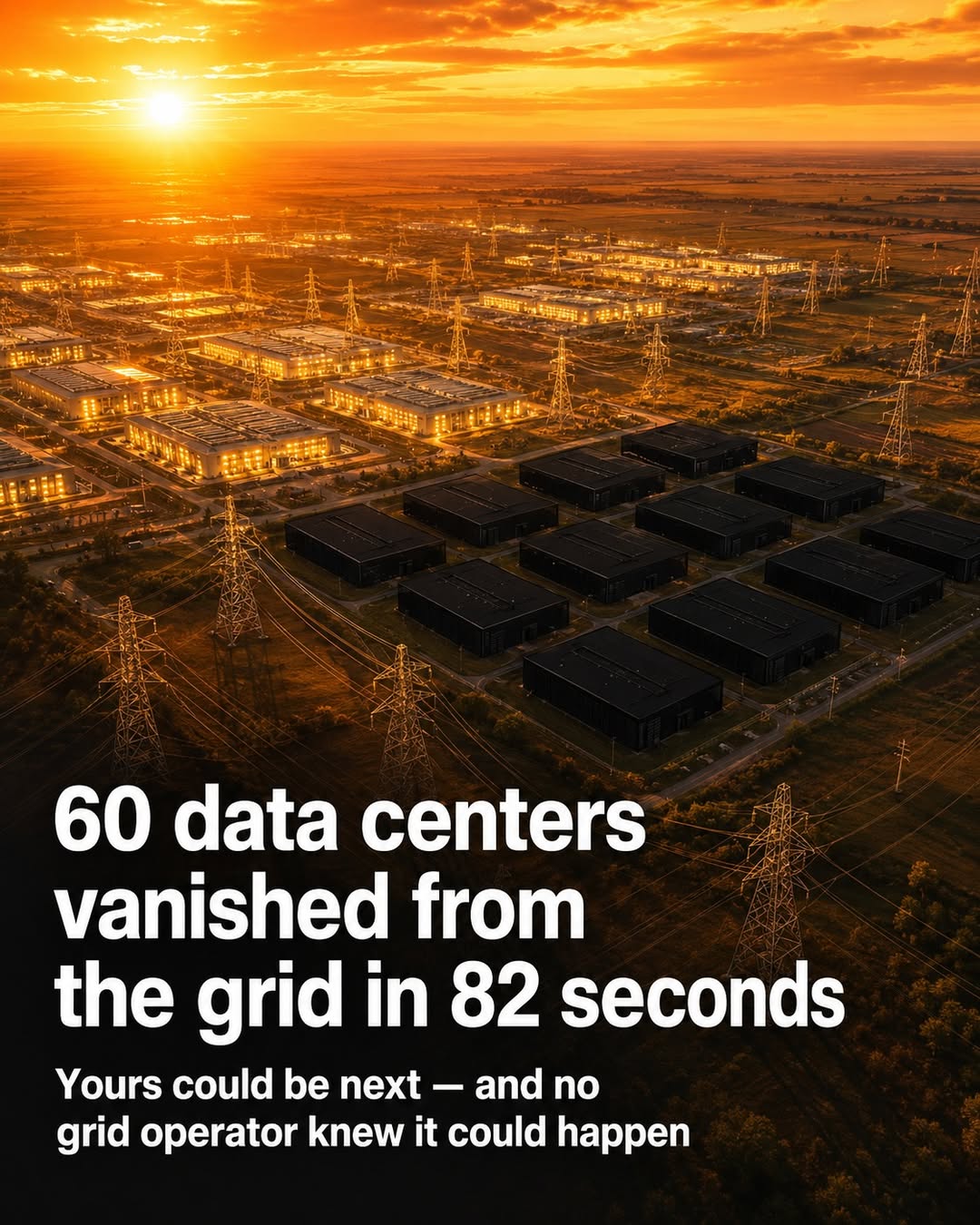
On July 10, 2024, about 60 Virginia data centers dropped 1,500 MW in 82 seconds — and no grid operator knew it could happen.
A lightning arrestor failed on a 230 kV line near Fairfax. As the grid tried to reconnect, it created six voltage dips — each inside the normal ±10% range.
Most data center UPS systems run a "three-strike" rule: three voltage disturbances in a minute, and the whole facility cuts to diesel backup. That reclosing sequence tripped the threshold across dozens of sites at once.
The worrying part: Eaton, Vertiv, and Schneider count those disturbances differently — some per-phase, some aggregate. No transmission operator had visibility into how any of them would react. So 1,500 MW vanished, and operators had to ramp down 600 MW of gas and a 300 MW nuclear unit. Recovery wasn't automatic — each site took hours to reconnect by hand, burning thousands of gallons of diesel.
NERC is now writing its first reliability standards for these loads, and PJM capacity prices have run from $28.92 to $329.17/MW-day in two cycles — a 100 MW facility's annual capacity bill went from $1.1M to $12M. The operators who survive prove their facility helps the grid, not threatens it.
That proof is what we build: vendor-neutral demand response, capacity-market optimization, and UPS ride-through documentation for multi-tenant colocation.
Does your team actually know how your UPS counting logic behaves during a multi-contingency event?
#DataCenters #GridReliability #DemandResponse