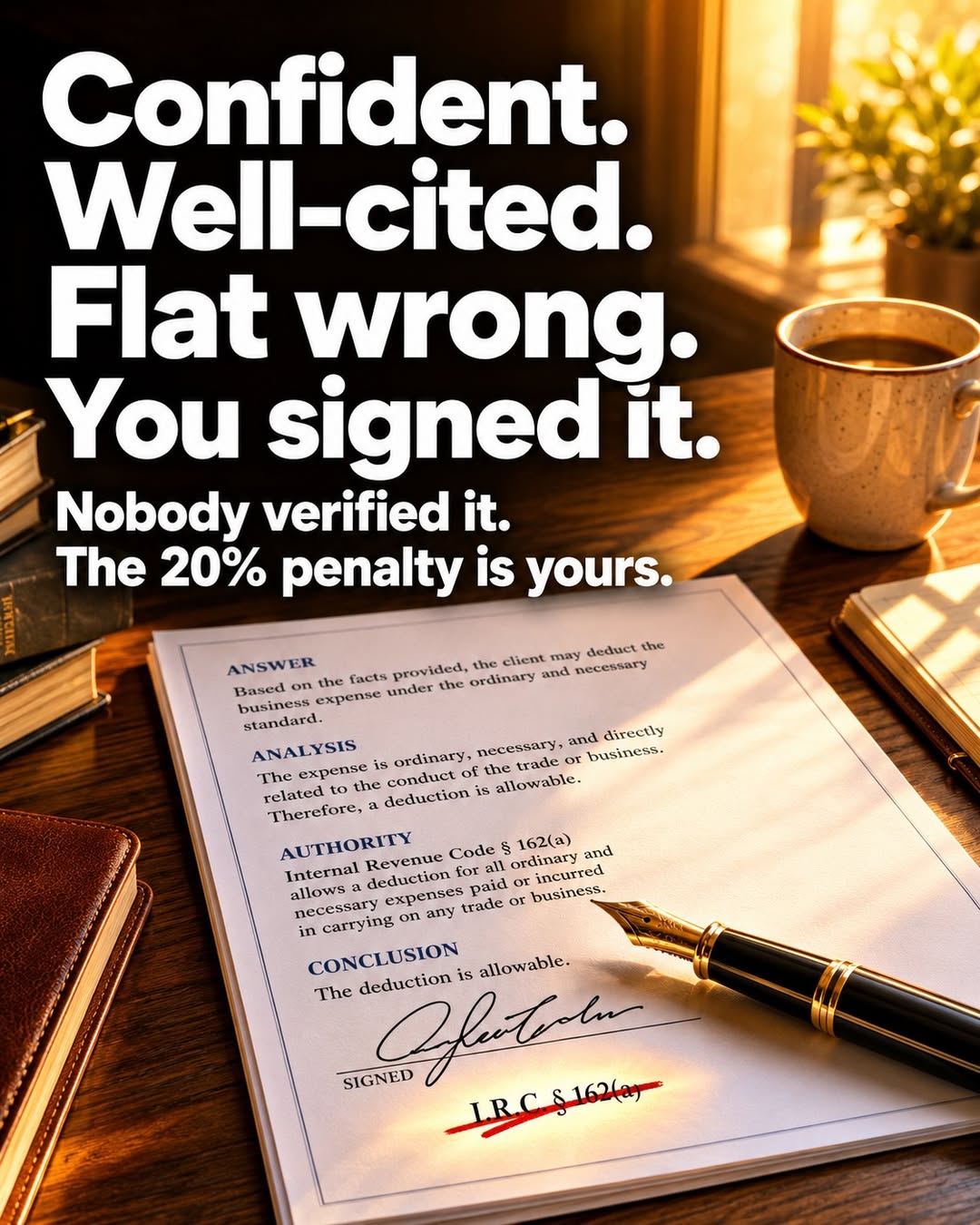
H&R Block's own website calls the new car-loan interest deduction "above-the-line." The tax code says otherwise.
The OBBBA deduction for qualified vehicle loan interest sits in Section 63(b)(7) — below the line. It reduces taxable income, not AGI. But thousands of blog posts and content farms repeat the "above-the-line" version. So when an AI model trained on that content answers the question, it reproduces the error confidently — clean grammar, plausible-looking citation, wrong answer.
And the comfort metrics don't help. A leading tax-AI tool touts a disagree rate under 1 in 700 — but that measures how often users disagree, not how often it is right. A user who does not know the answer cannot disagree with a wrong one.
Why one misclassification is expensive: above-the-line vs below-the-line cascades through at least five downstream calculations — AGI, AGI-coupled state taxes, Medicare IRMAA premiums, the 7.5% medical-deduction floor, and student-loan income-driven repayment. That is one provision. The tax code has thousands.
When the AI gets it wrong, the 20% accuracy penalty applies to the human who signed the return — not the algorithm that drafted it.
Every platform is racing to prepare returns faster. Almost none verify the AI's output against the actual statute. The preparation problem is being solved; the verification problem is not.
If you work in tax — what is the most confident, best-cited AI tax answer you have caught being flat wrong?
#TaxTech #AIGovernance