Three AI Tax Platforms Got the OBBBA Deduction Wrong. The IRS Penalty Is 20%.
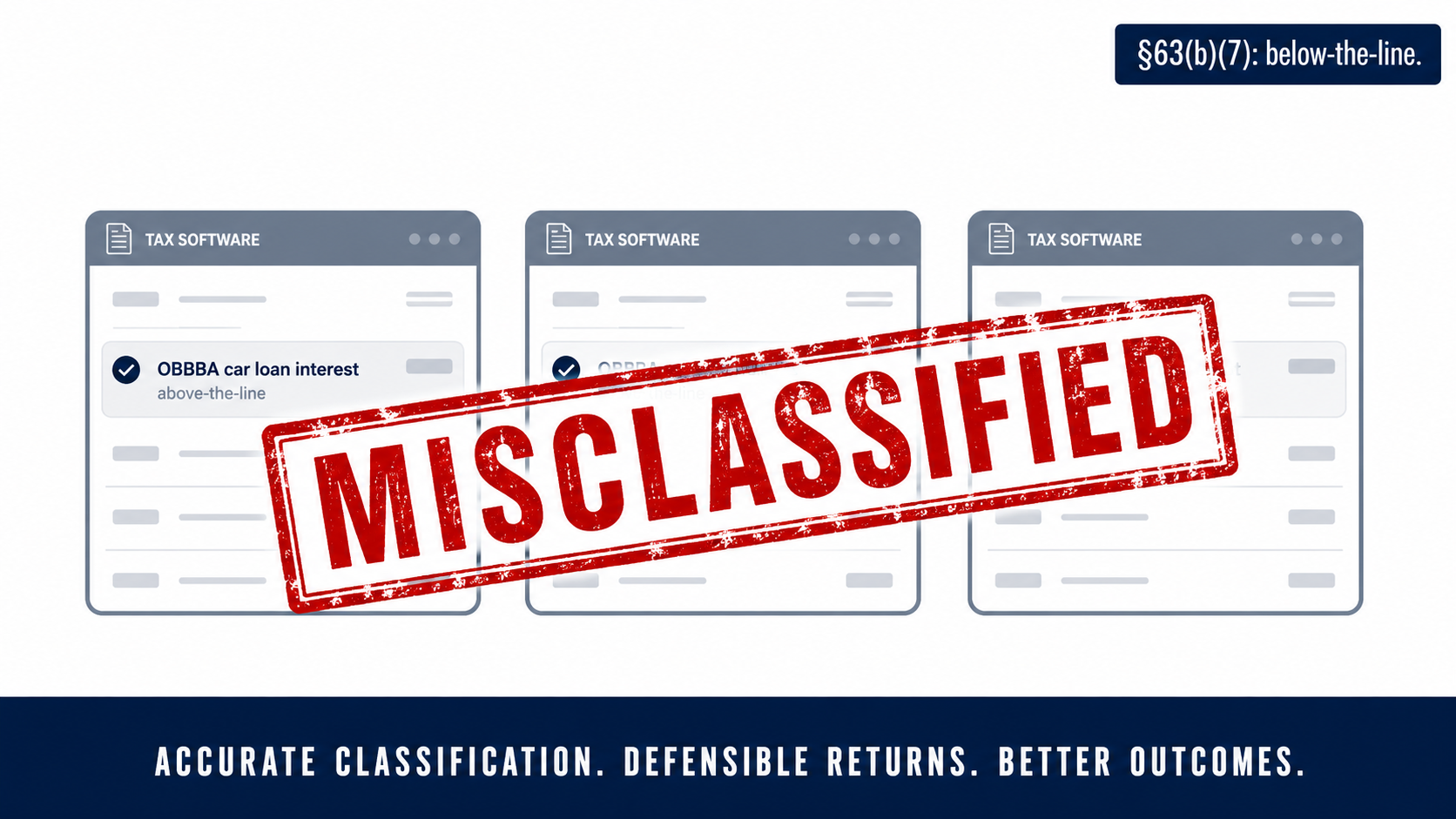
The OBBBA car loan interest deduction is classified in Section 63(b)(7) as below-the-line. It does not reduce adjusted gross income. H&R Block's AI still classifies it as above-the-line in production. So do at least two other major tax software platforms. The consensus error — where every tool gives the same wrong answer because the training data itself is wrong — is not a hypothetical risk. It is running in live tax workflows right now.
This is the problem that accelerated our work on Tax Compliance AI Verification at Veriprajna. Not that AI can't prepare tax returns — Thomson Reuters CoCounsel, Wolters Kluwer CCH Axcess Expert AI, and Intuit ProConnect are all demonstrably faster than manual preparation. The question is what happens downstream, when the audit letter arrives.
Why Preparation Speed Created a New Verification Risk
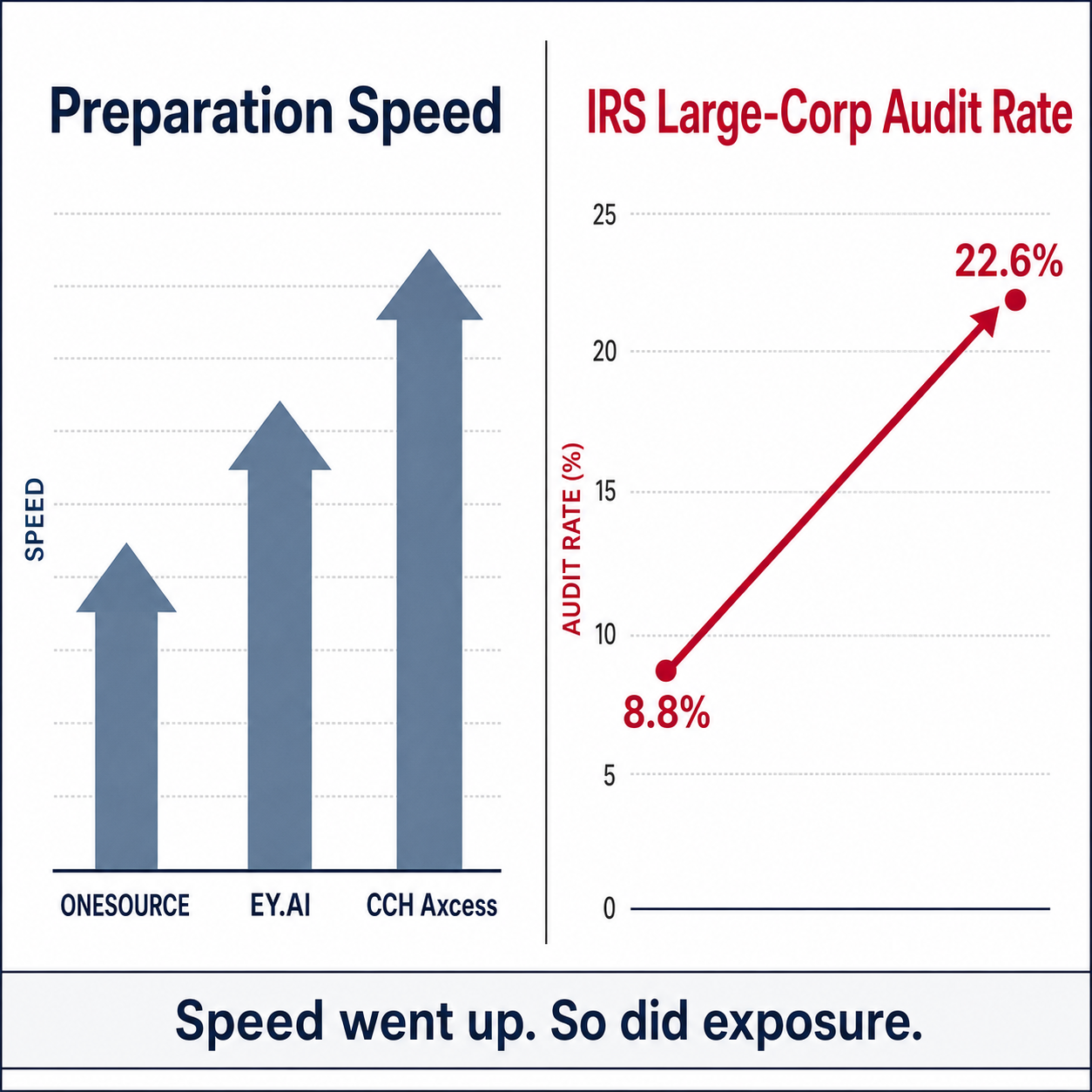
The IRS is increasing its large corporate audit rate from 8.8% to 22.6%. An accuracy-related penalty is 20% of the underpayment. A fraud penalty is 75%. At those rates, a single misclassified deduction on a $200 million return isn't a filing error — it's a material liability event.
The market has responded to compliance complexity by building preparation tools. Thomson Reuters launched ONESOURCE Sales & Use Tax AI in January 2026, claiming 65% reduction in routine reporting time. CCH Axcess Expert AI is now embedded across 10,000 firms covering 95 of the Top 100 US accounting practices. EY built EY.ai for tax on IBM's watsonx platform, targeting 80% automation of foreign tax compliance. Every major vendor is competing on how fast AI can get a return ready.
None of them are building the verification layer.
Blue J's probabilistic research engine is the closest thing — a disagree rate below 1 in 700 against primary source rulings is genuinely strong. But probabilistic confidence on a high-stakes position, where an accuracy penalty is 20% and fraud is 75%, requires a different standard. When an ASC 740 FIN 48 uncertain-tax-position is on the workpaper, "74% likely deductible" is not a defensible audit posture.
The Privilege Problem Most Firms Haven't Absorbed
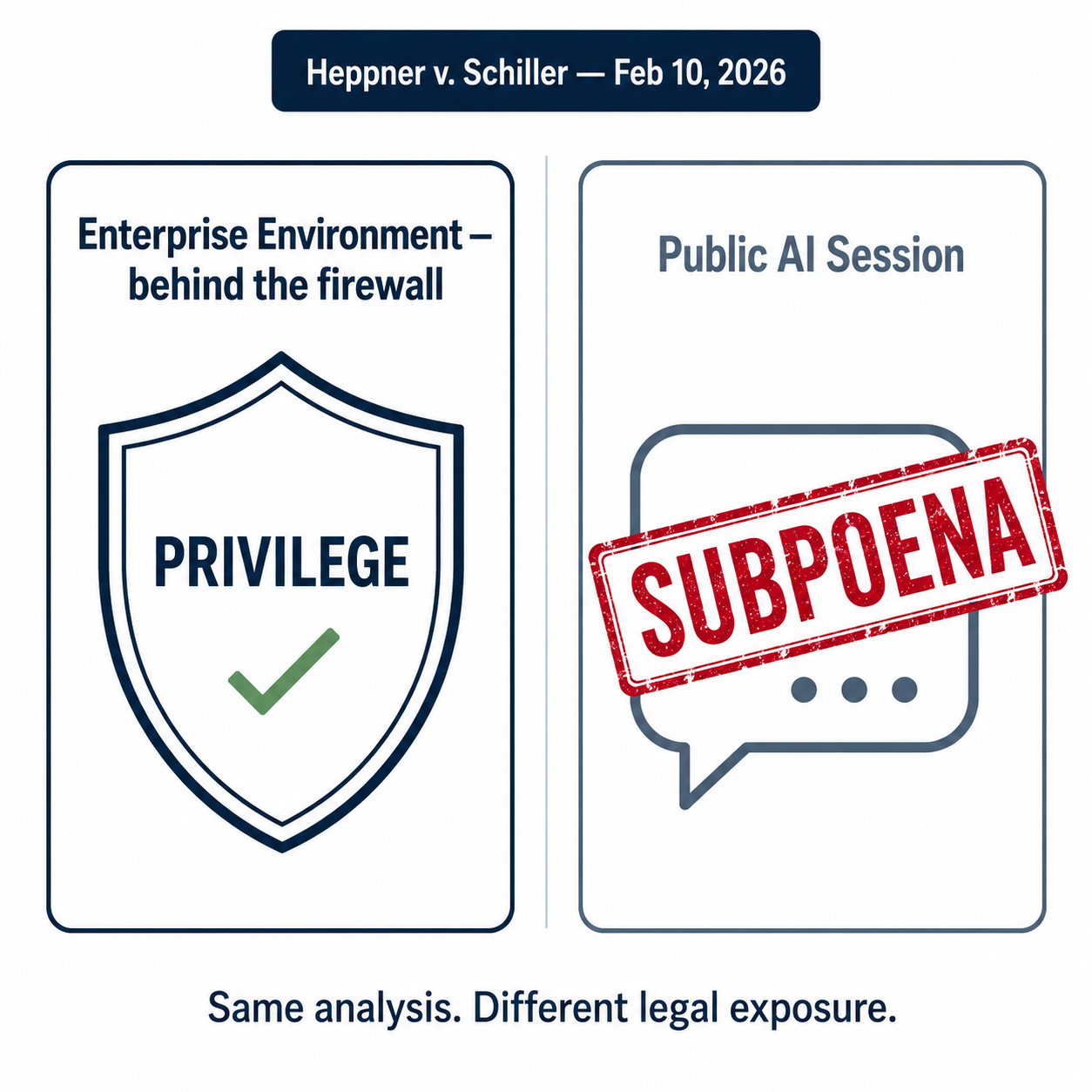
Judge Rakoff's February 10, 2026 ruling in Heppner did something the tax compliance market hasn't fully repriced yet: using a public AI tool for tax analysis waives attorney-client privilege. The communication is subpoenaable.
A firm running CCH Axcess for return preparation and then verifying positions through a public ChatGPT or Claude session has already exposed its privilege. Fifty percent of UK accountants are now aware of businesses suffering direct financial losses from incorrect AI advice. Approximately 800 AI citation error cases have been logged across 25 countries through late 2025 — cases where errors were caught after they mattered, not before.
IRM 10.24.1, IRS AI governance policy formalized in February 2026, classifies AI outputs that serve as the principal basis for decisions with legal or material effect as "high-impact," requiring enhanced human oversight. The IRS is building AI governance infrastructure for its own workflows. Most taxpayers it will audit are not.
What a Verification Layer Actually Does
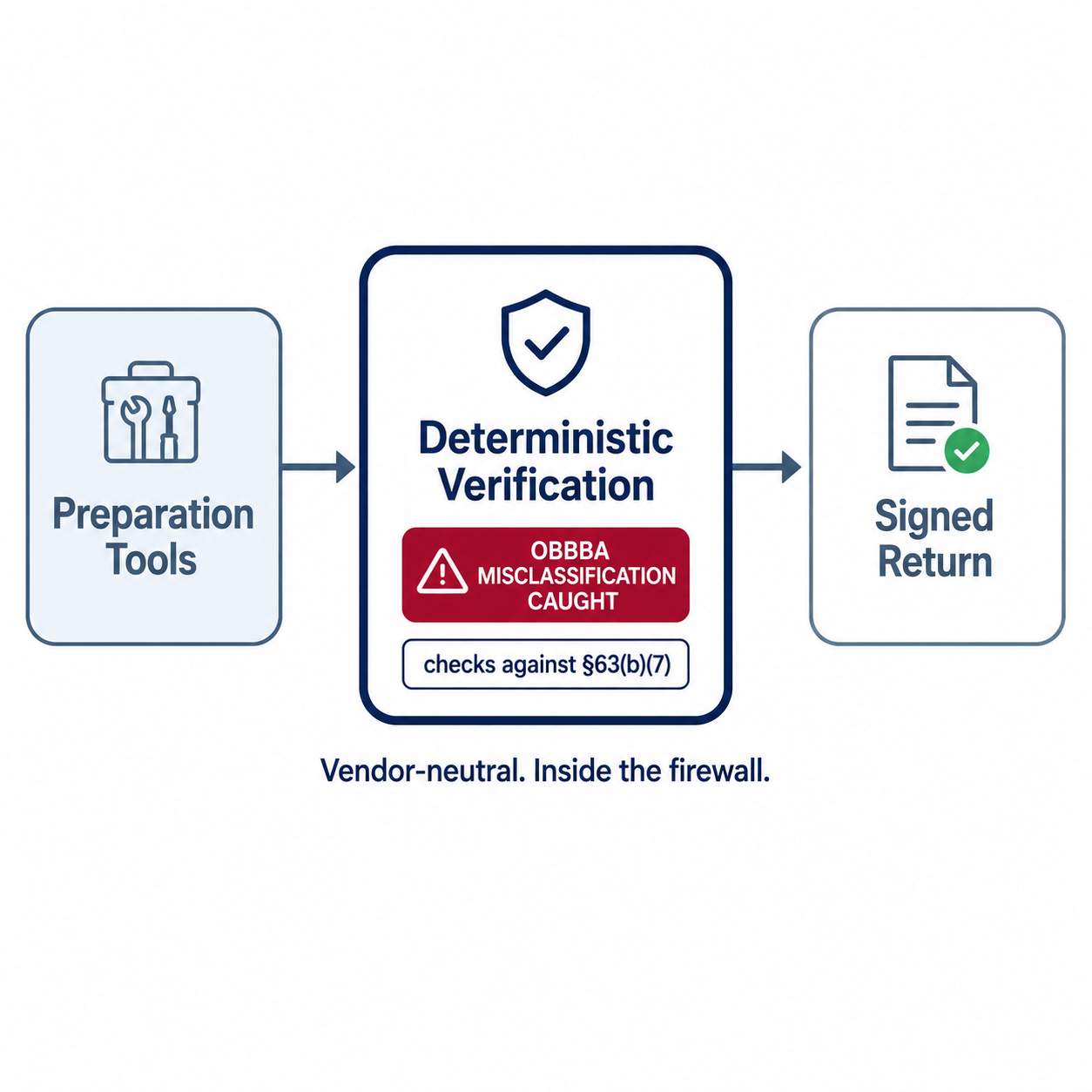
The preparation tools aren't going away — they shouldn't. Returning to fully manual compliance at $126 billion annually in business tax costs, 11.6 billion labor hours on federal compliance forms, and 420 average annual tax code changes is not an option. The staffing crisis — declining accounting graduates, a retirement wave at senior levels — makes manual verification at scale structurally impossible.
What we built is a vendor-neutral verification layer that sits on top of any preparation workflow. Our system runs deterministic checks against primary source tax law — not a language model's probabilistic rendering of what tax law probably says, but the actual statutory text and regulatory guidance against which a specific position is being evaluated. The OBBBA car loan deduction is below-the-line because Section 63(b)(7) says it is. If a preparation tool says otherwise, the verification layer catches it before the return is filed.
Critically, the architecture is privilege-safe. The system runs entirely in the client's enterprise environment — no public model endpoints, no data leaving the firewall. Post-Heppner, that distinction is a legal compliance question, not a preference.
The firms most exposed to the verification gap are the ones running AI fastest without a corresponding investment in what checks the AI. When IRS audit rates more than double, the cost of that gap becomes visible in 30-day letters and penalty computation worksheets rather than in IT budgets.
The bottleneck in tax AI shifted from preparation to verification the moment audit rates started climbing. Faster tools create faster exposure if the verification infrastructure doesn't keep up.
Where the Vendor Landscape Leaves Clients
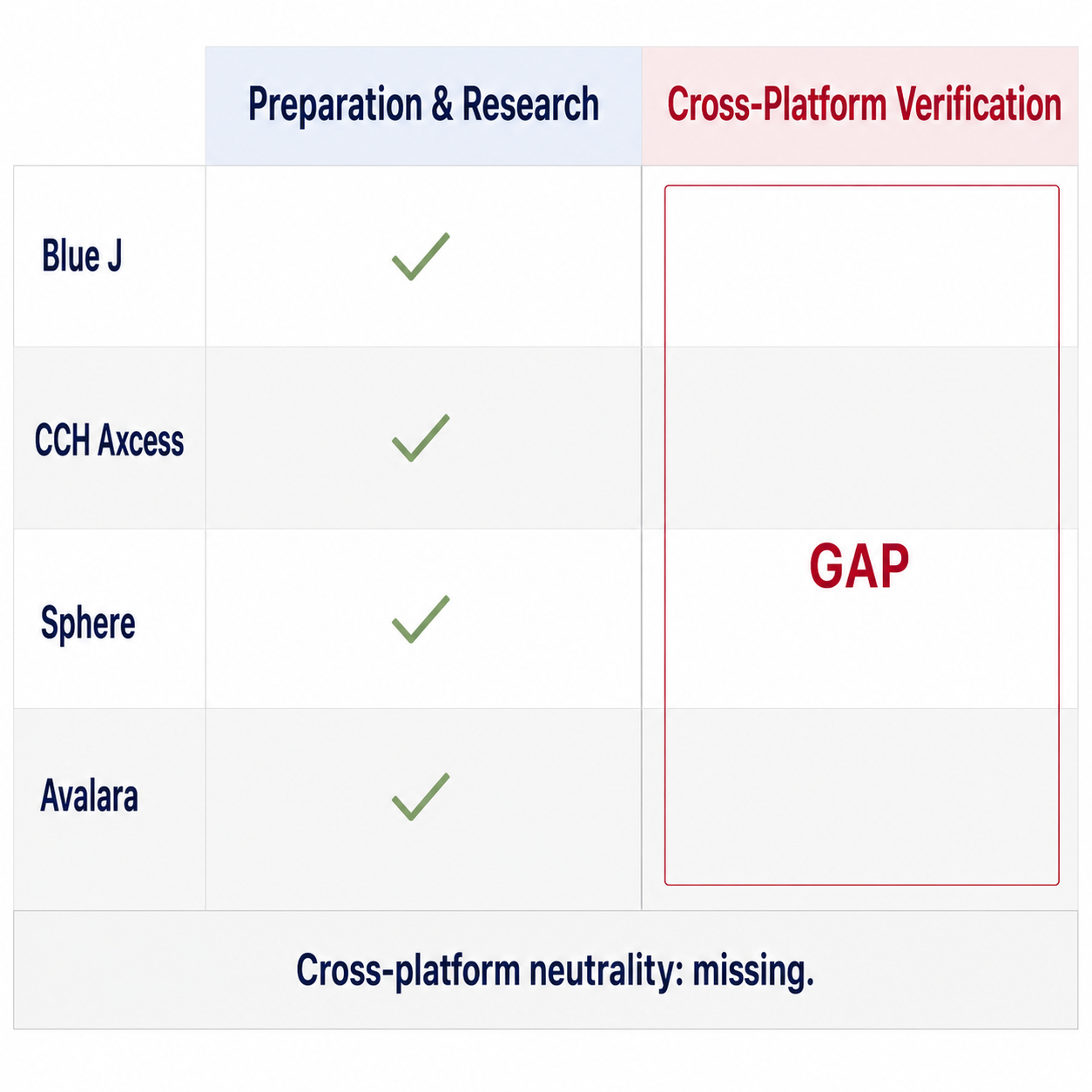
The new entrants understand specific slices of the problem. Blue J's Series D raised $122 million to scale RAG-based research across 220+ jurisdictions via its IBFD partnership — their disagreement rate is real. Alongside them, Sphere ($21 million, a16z) and Avalara — which took a $500 million BlackRock investment to build agentic compliance infrastructure with MCP servers and domain-specific SLMs — are competing on preparation speed and research depth.
None of these compete with Veriprajna's verification layer — they're preparation and research tools. What's absent from the market is a firm that can audit the output of all of them, deterministically, without being tied to any one platform's ecosystem. Thomson Reuters verifies Thomson Reuters. Wolters Kluwer verifies Wolters Kluwer. Cross-platform neutrality requires a different kind of system, built specifically to sit above the ecosystem rather than inside one.
The 78% of companies running four to seven ERP systems — Phoenix Strategy Group's figure — don't have a single-vendor tax workflow. They have a composite. The verification gap is widest precisely where the data is most fragmented.
If you're managing tax compliance across multiple ERPs and at least some AI-assisted preparation, the OBBBA misclassification story is worth understanding in the context of your specific position library. If your workflow includes any of the platforms misclassifying OBBBA, the conversation worth having is what sits above them. The Tax Compliance AI Verification page is the starting point.