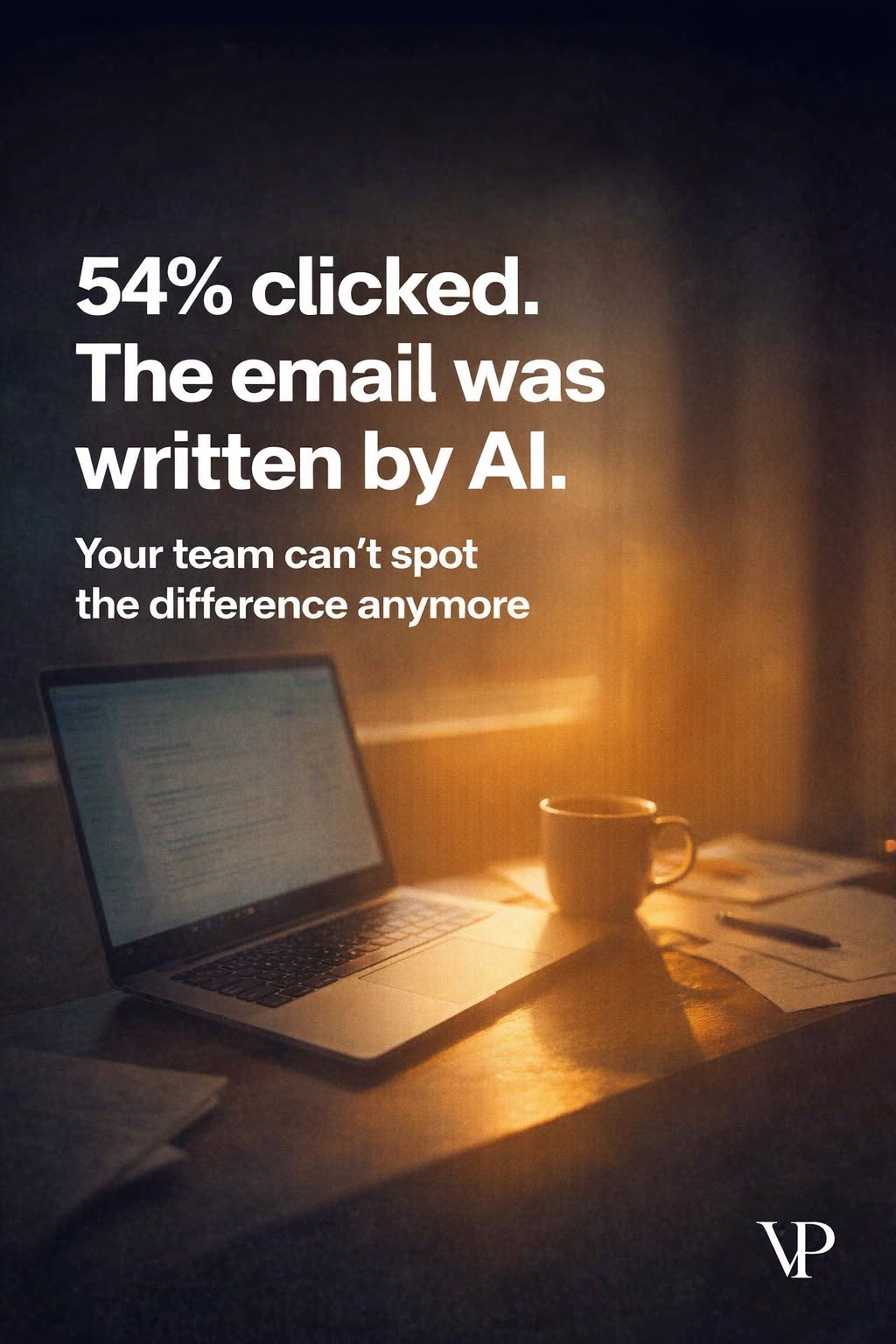
AI-written phishing emails now fool more than half the people who receive them.
That stat stopped us in our tracks.
Here's what changed → attackers used to make obvious mistakes. Bad grammar, weird formatting, generic greetings. Your gut could catch it.
Not anymore.
Generative AI wiped out every telltale sign. The emails now sound exactly like your coworker, your vendor, your CFO. And they can be created in minutes instead of hours.
It gets worse. Voice cloning needs just a few minutes of recorded audio to replicate someone convincingly. Earnings calls, podcast appearances, conference talks — all fair game. One European energy company lost $25 million after a finance officer followed instructions from a cloned executive voice on a live call.
This is the world our team has been deep in while building our latest research on what we call "Sovereign Intelligence" — the case for running hardened AI systems inside your own infrastructure instead of depending on third-party tools you can't fully control.
Because here's the uncomfortable truth: most enterprise AI today runs on thin layers over someone else's model, on someone else's servers, under someone else's legal jurisdiction.
When the threats are this sophisticated, the defenses need to be just as deeply embedded.
We broke all of this down in our new whitepaper — the threat data, the architecture, the economics.
Curious what you think though → what's the bigger risk for most companies right now: the AI-powered attacks coming at them from outside, or the AI tools they've adopted internally without fully understanding the exposure?
#SovereignIntelligence #DeepAI #CyberSecurity