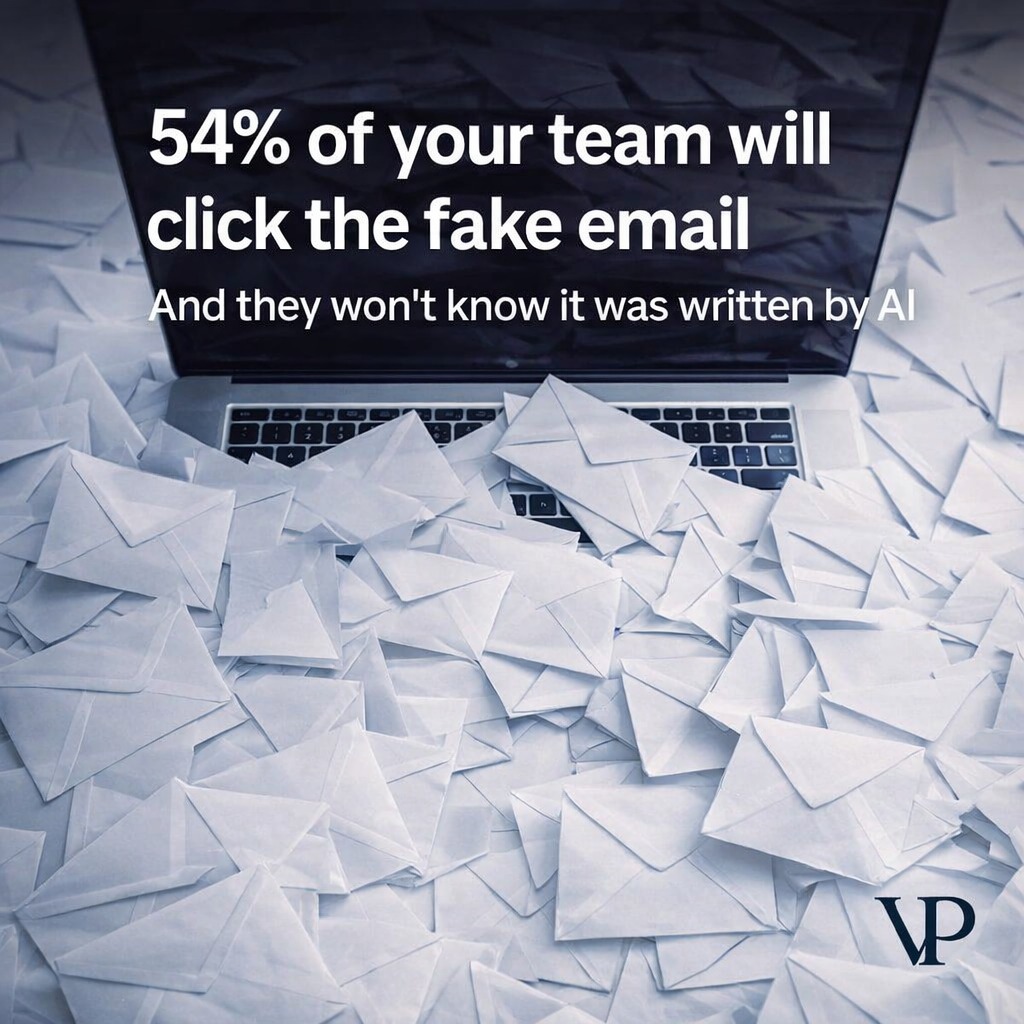
AI-generated phishing emails now hit a 54% click-through rate. Traditional ones? Just 12%.
The game changed fast.
Since 2023, AI-powered phishing attacks have surged over 1,265%. And the old giveaways — bad grammar, sketchy formatting — are gone. Today, more than 82% of phishing emails contain AI-written content that mirrors real corporate communication perfectly.
Here's what makes it worse: a campaign that used to take 16 hours to build now takes 5 minutes. Attackers aren't just faster. They're generating unique variations for every single person on a target list. No two emails look alike, which means traditional filters can't catch them.
Meanwhile, deepfake voice cloning needs just 3-5 minutes of recorded audio to replicate someone's voice. Vishing attacks using this tech jumped over 1,600% in early 2025.
The enterprise security perimeter isn't a firewall anymore. It's language. It's trust. It's whether your team can tell real from synthetic.
That's why our latest whitepaper makes the case for Sovereign Intelligence — deploying private, hardened AI systems inside your own cloud environment instead of relying on thin API wrappers that send sensitive data to third-party servers.
We break down the full threat landscape, the architecture behind private enterprise AI, and why data sovereignty is now a security requirement — not a nice-to-have.
Save this if you're building or securing AI systems in 2025 🔒
What's the biggest AI-driven security risk your organization is watching right now?
#EnterpriseCybersecurity #SovereignAI #DeepfakeDefense #PrivateLLM #AISecurityStrategy