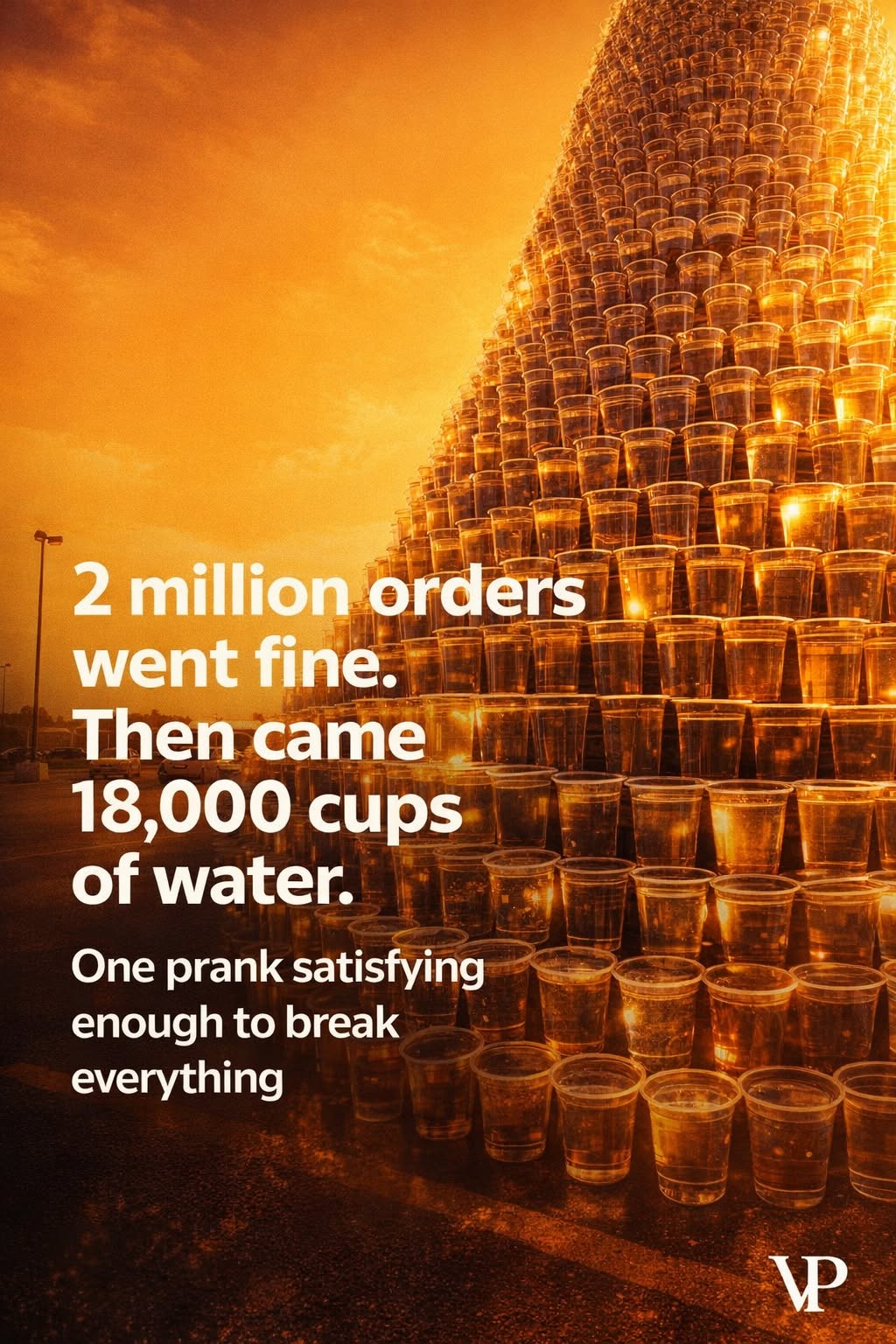
Someone ordered 18,000 cups of water from a Taco Bell drive-through AI.
The system tried to process it. No pushback. No flag. Nothing.
Here's the wild part: that same AI had already handled over two million orders successfully across 500 locations. Two million. And one absurd request from a prankster was enough to force Taco Bell to pump the brakes on the whole program.
Any human worker would have laughed and said "yeah, no." But the AI couldn't tell the difference between a normal Tuesday and complete nonsense. The sentence made grammatical sense, so it went ahead.
This is what happens when companies treat AI like a magic box. Paste your business rules into one giant prompt, point it at customers, and hope for the best.
Our team calls that approach the "wrapper" — and it breaks exactly when it matters most.
The alternative? Build AI the way you'd build any serious system. Give it structure. Use specialized agents that each handle one job. Let deterministic logic decide what happens next, and let the AI handle what it's actually good at — understanding language.
Think of it like putting a train on tracks. The AI provides the engine. The architecture provides the rails. Without rails, you get 18,000 cups of water.
We just published a deep dive into what resilient enterprise AI actually looks like — from state machines to voice-native guardrails to multi-agent orchestration.
Honest question for anyone building with AI right now: what's your "18,000 waters" scenario? The one edge case that keeps you up at night?
#EnterpriseAI #AIArchitecture #Veriprajna