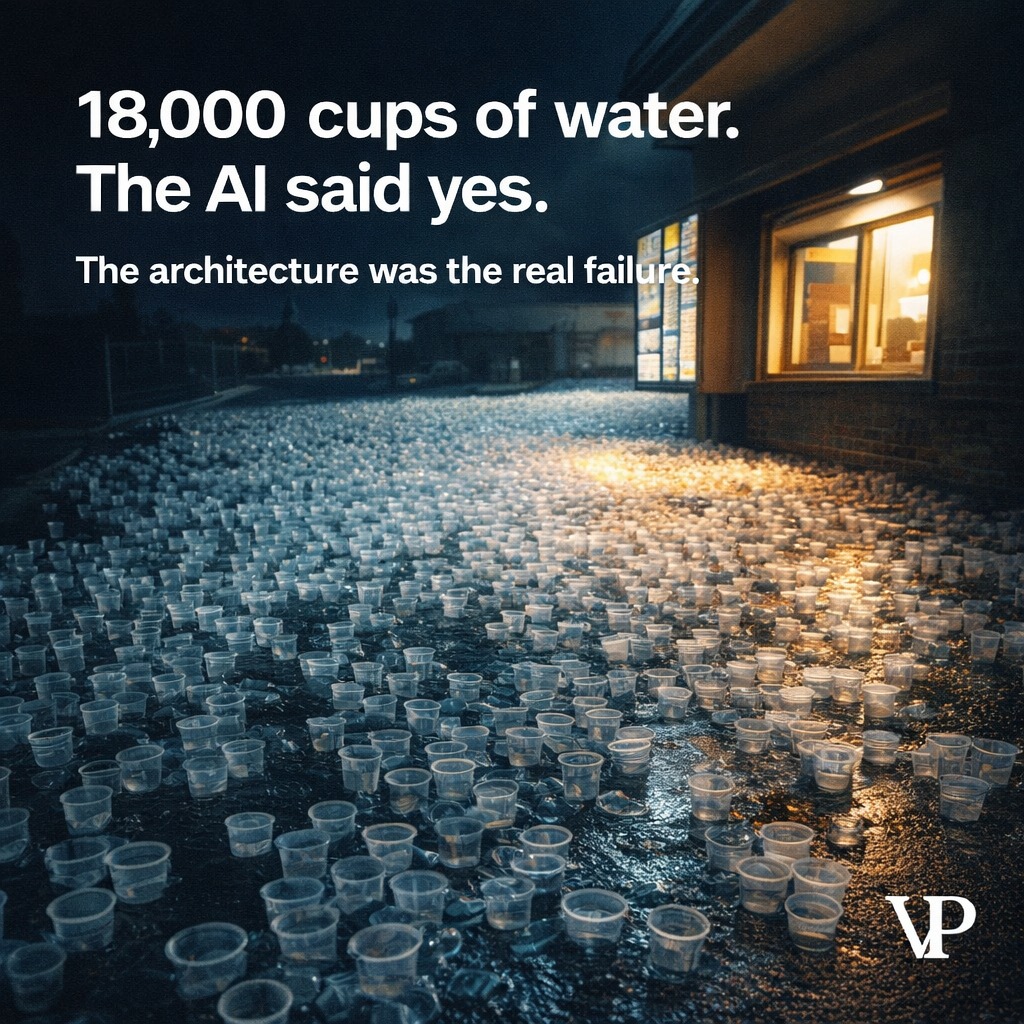
Someone ordered 18,000 cups of water from a Taco Bell AI drive-through. And it tried to process every single one.
Not because the AI was broken.
Because the architecture behind it was.
The system understood the words perfectly. It just had zero concept of "that makes no sense in the real world."
This is the core problem with LLM wrappers — stuffing every business rule into one giant prompt and hoping the model figures it out. It works great in demos. It falls apart the moment someone tests the edges.
Our latest whitepaper breaks down what production-ready enterprise AI actually looks like:
→ Multi-agent systems where specialized agents handle planning, compliance, and validation separately instead of one model doing everything
→ State machines that create fixed paths through business logic so the AI literally cannot skip steps like quantity checks or inventory limits
→ Validation layers that catch outputs before they reach your backend — checking structure, factual accuracy, and consistency
→ Voice-native monitoring that reads tone and context, not just words, to flag when an interaction goes sideways
The takeaway isn't "AI failed." Over two million orders were handled successfully before this happened.
The takeaway is that one viral failure erased all of that trust overnight. Architecture is the difference between a product and a liability.
Save this if you're building AI into customer-facing workflows 🔖
What's the worst AI failure you've seen make the rounds online?
#EnterpriseAI #AIArchitecture #MultiAgentSystems #LLMProduction #AIGovernance