What if your most critical health monitor is the one people never wear?
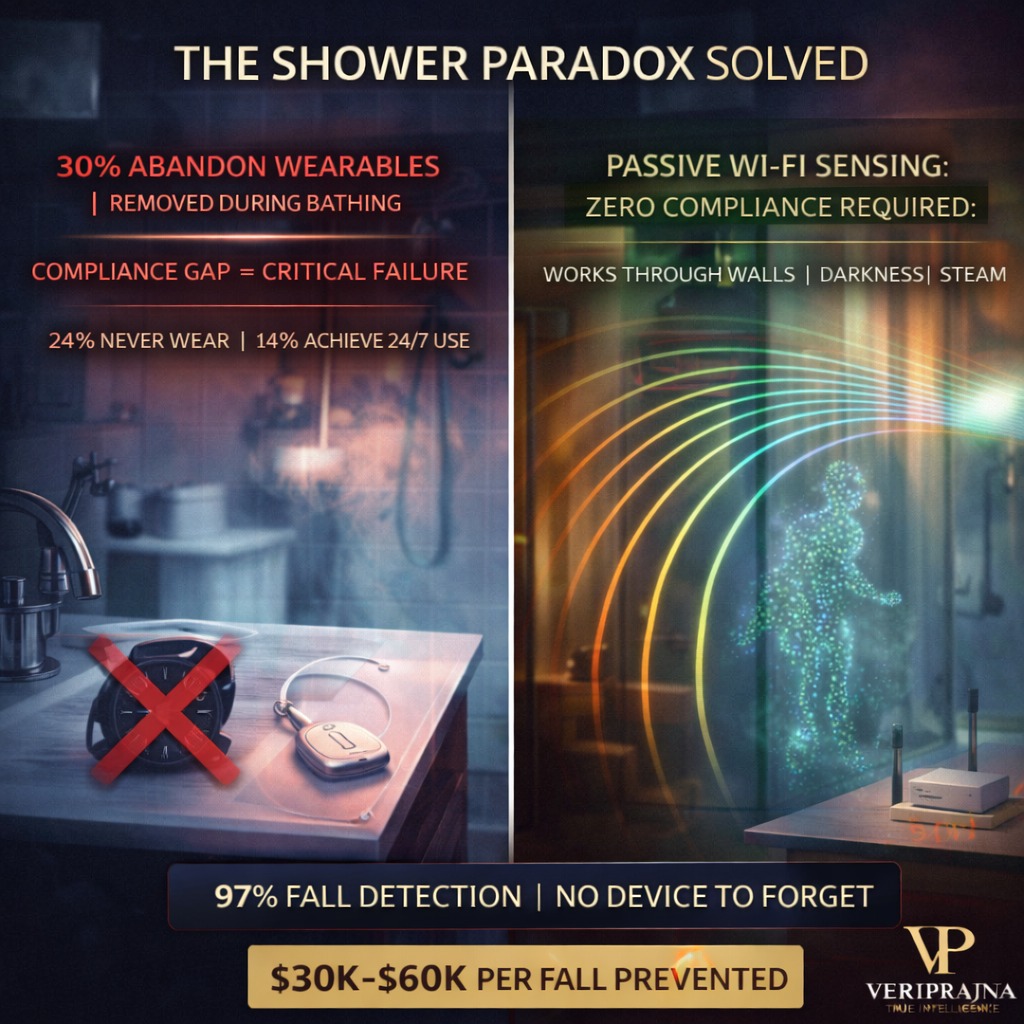
30% of users abandon wearables within 6 months—and in emergencies like bathroom falls, they’re often not worn at all. That’s not a tech gap. It’s a compliance crisis.
The global care ecosystem is facing a brutal imbalance: rapidly aging populations, shrinking caregiver capacity, and monitoring systems that fail exactly when they’re needed most. Traditional “active monitoring” assumes compliance—remembering to wear, charge, and trigger a device. Real-world data proves otherwise:
• ~30% of users stop using wearables within 6 months
• Only ~14% achieve true 24-hour adherence
• Bathrooms—the highest fall-risk zones—are where wearables are most often removed
📉 The result? A dangerous illusion of safety.
In our latest whitepaper, The Invisible Guardian, Veriprajna outlines a fundamental shift:
➡️ From device-centric monitoring to space-centric intelligence
➡️ From wearables and cameras to passive Wi-Fi sensing + Deep AI
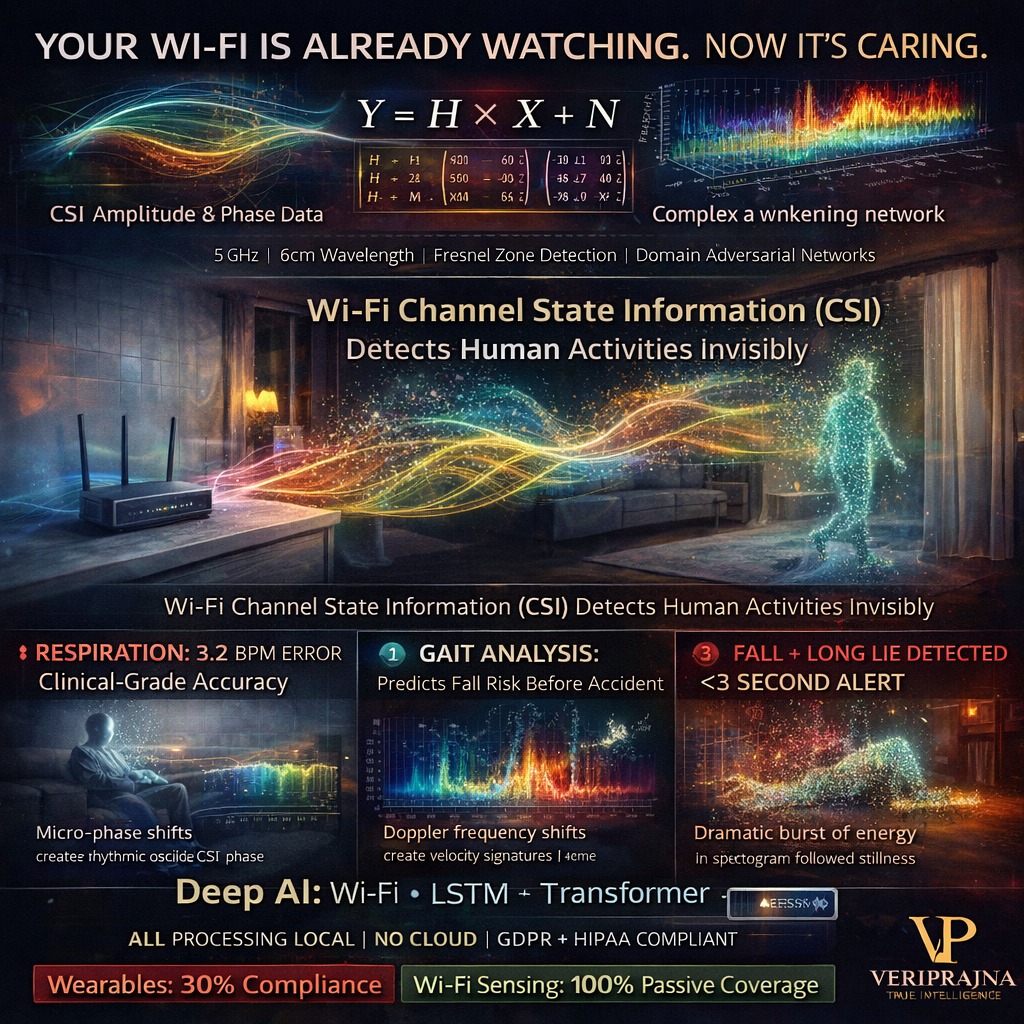
Using existing Wi-Fi infrastructure and advanced signal intelligence (CSI), it’s now possible to detect falls (>97% sensitivity), monitor respiration (correlation >0.92 with clinical belts), analyze sleep quality, and identify pre-fall gait deterioration—without wearables, cameras, or user interaction.
No charging.
No stigma.
No visual surveillance.
Enterprise-grade privacy, edge AI processing, and regulatory-aligned design (GDPR/HIPAA ready).
This isn’t incremental innovation—it’s a structural redesign of ambient care.
📄 Access the full whitepaper to explore the physics, AI architectures (CNNs, LSTMs, Transformers), and enterprise deployment models.
🔗 Whitepaper link is in the comments.
📩 Want to discuss implementation or pilot opportunities?
Email us at [email protected] or message us on WhatsApp: +91 92170 59957 to start a conversation with our AI and sensing specialists.
#AmbientIntelligence #HealthcareAI #WiFiSensing #AgingInPlace #EnterpriseAI