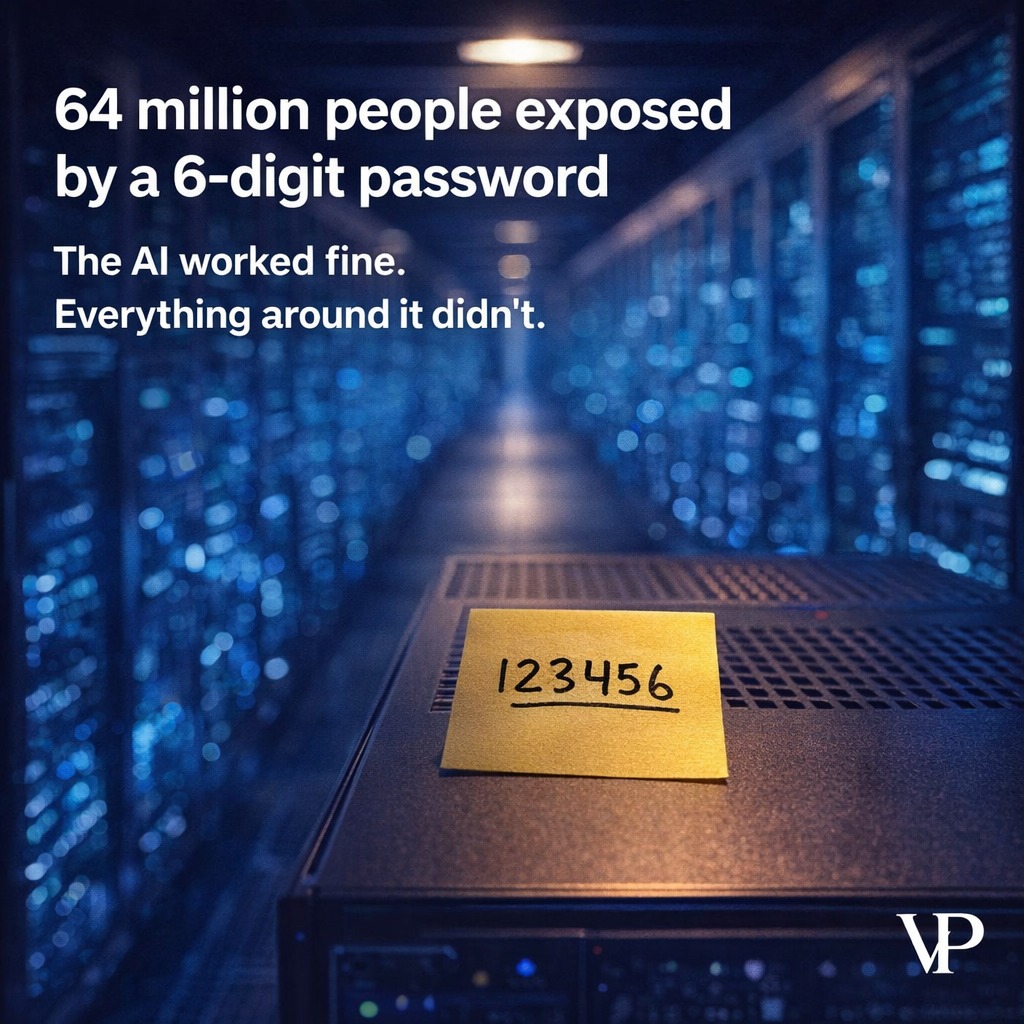
64 million job seekers exposed — because of a password you could guess in one try.
The McDonald's AI hiring breach wasn't some elite cyberattack. It was a default admin password ("123456") and an unpatched API flaw. That's it.
A Fortune 100 company's entire recruitment pipeline — names, phone numbers, chat logs, even personality test results — left wide open because basic security was skipped.
This is what happens when AI gets bolted on instead of built in.
Most enterprise AI today runs on a "wrapper" model: a thin interface sitting on top of infrastructure that nobody stress-tested. The AI works fine. Everything around it is exposed.
Here's what our latest analysis breaks down:
→ Why the breach happened at two separate failure points
→ How stolen developer credentials from a single laptop in Vietnam cascaded across multiple Fortune 500 clients
→ The real harm of leaked psychometric data (you can't reset your personality like a password)
→ A 5-layer defense framework for enterprise AI that assumes the model itself is a black box
→ The 90-day security roadmap every CXO needs before 2026 regulations hit
The hardest part? Leaked personality assessments and behavioral screening scores follow people forever. Research shows breach victims report anxiety, sleep disruption, and lasting trust erosion — especially when the exposed data reveals something as intimate as how an algorithm scored their character.
AI governance isn't optional anymore. The EU AI Act classifies recruitment AI as high-risk. GDPR and CCPA penalties are scaling. By 2026, this becomes table stakes for market participation.
The era of "good enough" security for AI systems is over.
Save this breakdown and send it to someone building with AI right now 👇
What's the weakest security link in your organization — the tech or the people managing it?
#AISecurity #AgenticAI #DataBreachPrevention #EnterpriseAI #AIGovernance