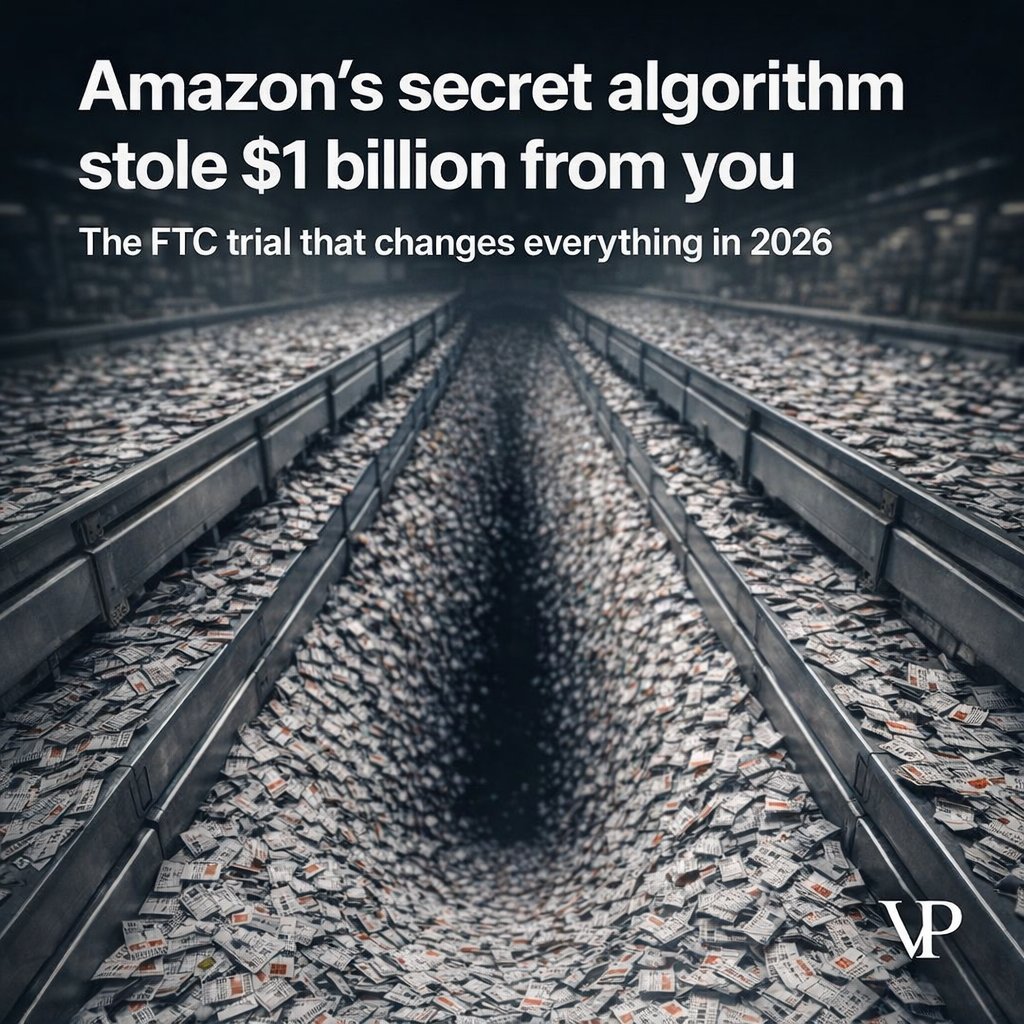
Amazon built a secret pricing algorithm that pulled in over $1 billion in excess profit.
Here's what every enterprise deploying AI needs to learn from it before October 2026.
Project Nessie didn't just optimize prices. It studied competitor algorithms, identified their automatic price-matching rules, then deliberately raised prices knowing rivals would follow.
No backroom deal. No handshake. Just code teaching itself to coordinate a market — silently.
The FTC is taking this to trial in October 2026. And the ripple effects are already reshaping how regulators view every AI-powered pricing tool in production today.
What's changing right now:
→ Colorado's AI Act (June 2026) requires impact assessments for high-risk systems including pricing tools
→ California's updated antitrust law now explicitly targets shared pricing algorithms
→ New York already requires businesses to disclose when algorithms set consumer prices
The uncomfortable truth for most enterprises? If you're running pricing logic through a third-party API you can't fully audit, you're carrying regulatory risk you probably haven't measured yet.
Our research keeps pointing to the same conclusion: the companies that will navigate this safely are the ones building auditable, sovereign AI architectures — systems they actually own, can explain to a regulator, and can prove aren't drifting into harmful patterns.
Not wrappers. Not black boxes. Infrastructure you control.
We broke down the full technical and legal picture in our latest whitepaper — the mechanics behind Project Nessie, the 2026 regulatory shifts, and what a defensible AI architecture actually looks like.
Save this if your team is deploying any form of algorithmic decision-making 🔖
What's your biggest concern with AI pricing tools — the legal exposure or the lack of transparency?
#AlgorithmicPricing #EnterpriseAI #AIGovernance #AntitrustLaw #AICompliance