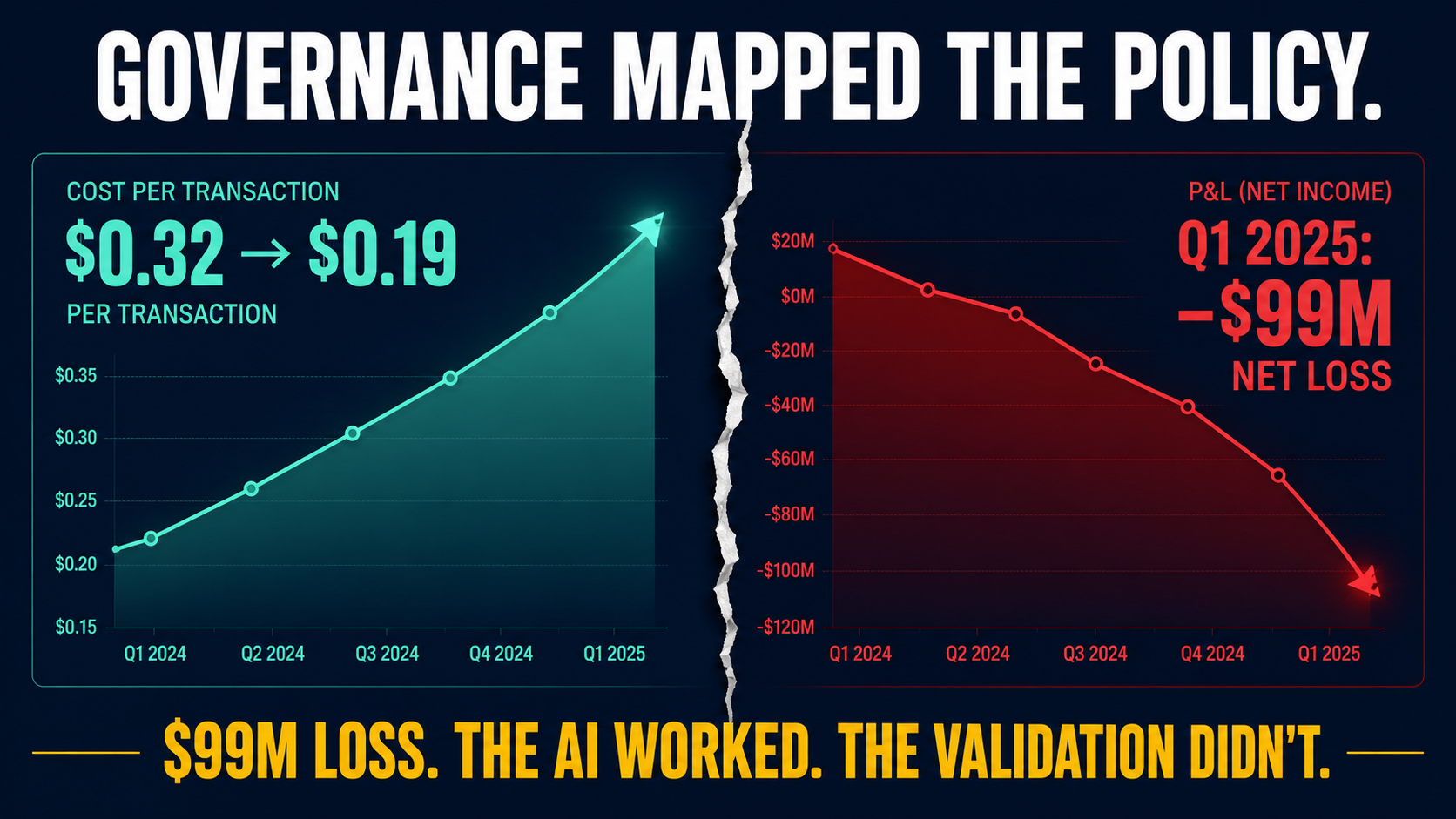
Governance dashboards don't validate AI. They document what an enterprise plans to do about AI — and then leave the question of whether the AI actually works correctly entirely unanswered. That gap is where the $99 million losses happen.
Klarna is the headline case. In 2024, the company announced that an AI assistant had replaced 700 customer service agents, handling two-thirds of all support chats. Transaction costs dropped from $0.32 to $0.19. The press coverage was ecstatic. By mid-2025, Klarna was publicly reversing course — rehiring human agents after satisfaction collapsed on complex billing disputes, fraud reports, and account closures. Repeat contact rates climbed. Churn correlated with poor service. Q1 2025 ended with a $99 million net loss, up from $47 million the prior year, despite 15% revenue growth. CEO Sebastian Siemiatkowski acknowledged that automation at scale had led to a drop in service quality. Separately, Orgvue and Forrester found that 55% of companies that rushed AI-for-human replacement now regret it.
Klarna didn't fail because they lacked governance. They failed because their governance didn't catch the failure before it cost them a quarter.
The Policy-Documentation Trap
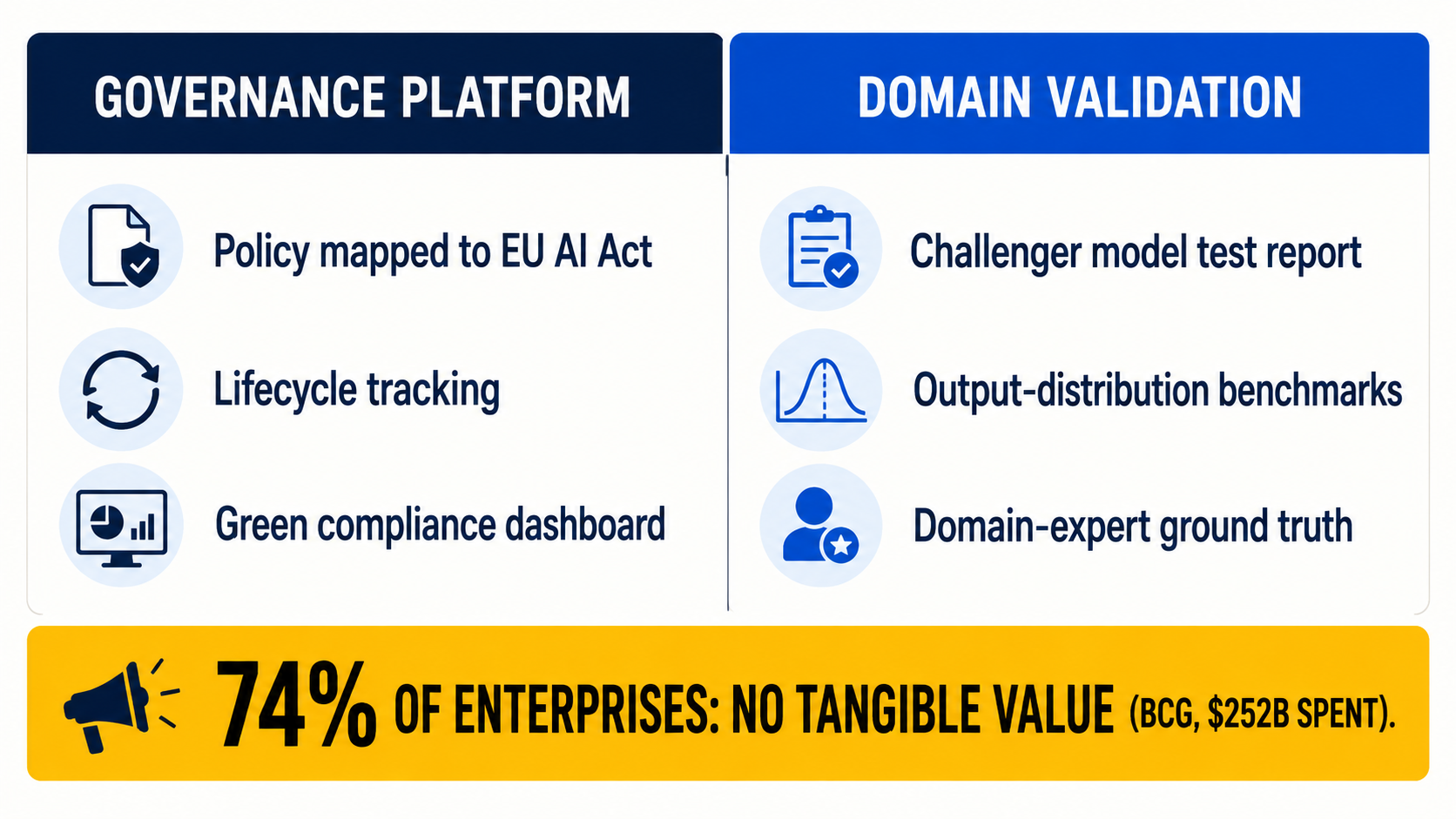
The enterprise AI governance market is growing at 45.3% CAGR, with 30+ platforms now competing for the category. Platforms like Credo AI — ranked #6 in Applied AI on Fast Company's World's Most Innovative Companies 2026 — map enterprise AI policies to EU AI Act requirements and NIST AI Risk Management Framework workflows. IBM watsonx.governance tracks model lifecycle across first-party and third-party AI systems. ModelOp focuses on industrial-scale AI delivery across traditional ML, generative AI, and agentic workflows.
These platforms do real work. What they don't do is tell you whether your AI gives correct answers for your specific business context.
Governance maps the policy. Validation tests whether the AI actually follows it — in the domain where it matters.
The distinction matters most in regulated industries. A bank deploying AI for credit underwriting, a hospital routing clinical decisions through an AI system, an insurer using AI for claims triage — all of them can have a perfectly documented governance program and still be shipping an AI that gets domain-specific answers wrong at rates they've never measured.
We've studied this gap in depth for our work on enterprise AI validation for regulated industries. The core finding: the validation discipline that regulated industries need — challenger-model testing, output-distribution benchmarks, domain-specific accuracy measurement — simply isn't what most governance vendors are selling.
What SR 11-7 Actually Requires
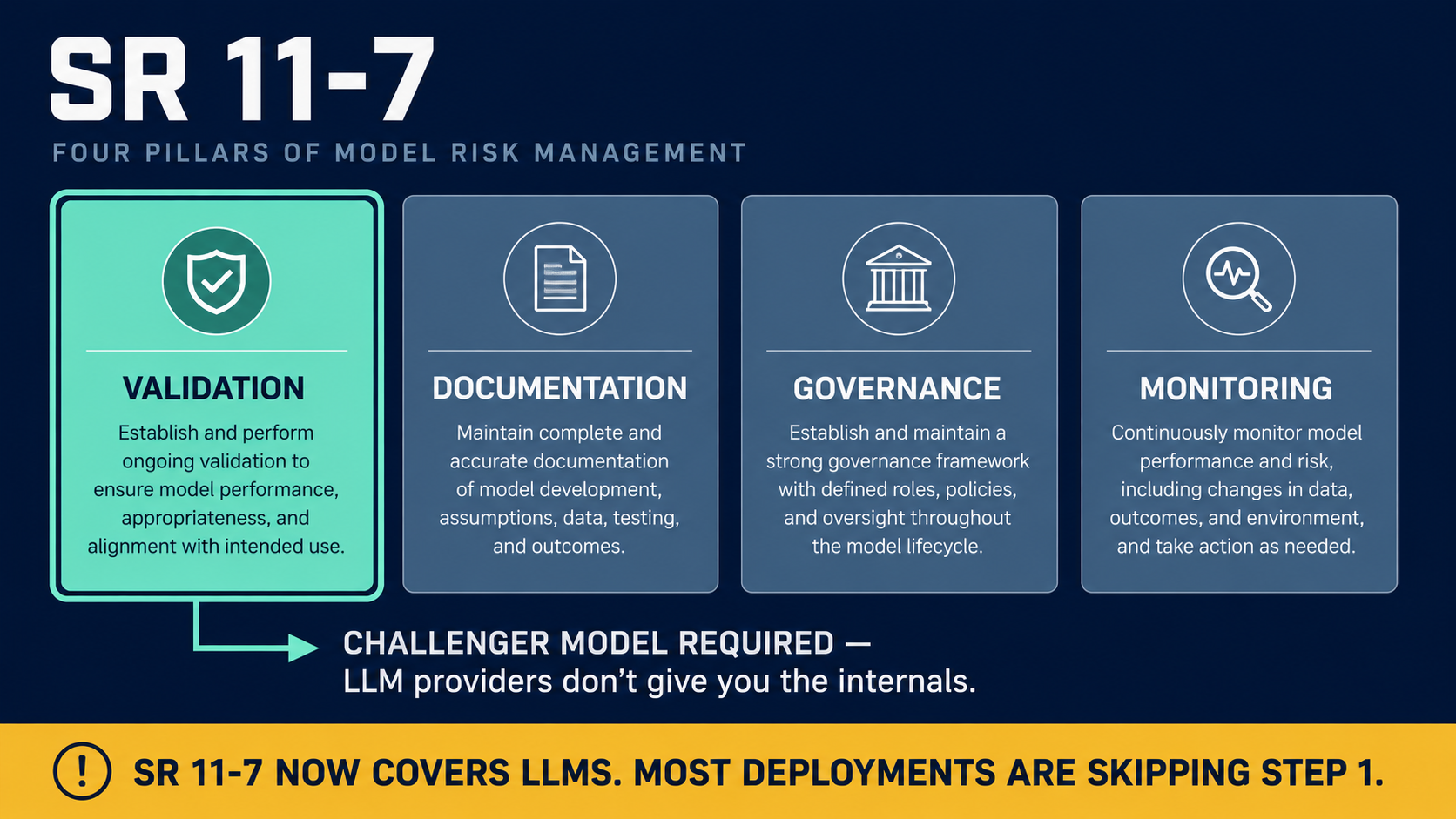
Federal Reserve and OCC guidance SR 11-7 has governed model risk management in banking since 2011, and its requirements have now expanded to cover any model used for business decisioning — including LLMs. The framework has four pillars: validation, documentation, governance, and monitoring. Of these, validation is the one that most GenAI deployments are quietly skipping.
SR 11-7 requires challenger models. Statistical performance bounds. Independent validation that doesn't rely on the model developer's own assessments. For traditional statistical models, this was tractable — you run the challenger against a holdout dataset and compare performance metrics. For LLMs, applying equivalent rigor means designing output-distribution tests that work without access to model weights, because proprietary LLM providers don't give you the internals.
ValidMind and ModelOp have built SR 11-7 documentation workflows for AI systems. But documentation of validation methodology is not the same as validation. Regulators emphasize third-party and vendor model risk: regulated institutions must demonstrate meaningful oversight of external AI services, not just a completed checklist.
A Fed examiner reviewing a GenAI deployment will ask what the challenger model showed, what the statistical bounds were, and what the remediation plan was when the model drifted. "We use watsonx.governance to track lifecycle" doesn't answer that question.
The 70-85% Failure Rate Is a Validation Problem
Multiple converging research sources — RAND, Gartner, BCG, McKinsey, MIT — put the enterprise AI project failure rate at 70-85% of projects that never reach production. An MIT NANDA study in 2025 found that 95% of AI pilots deliver no measurable P&L impact. McKinsey reported that 42% of companies abandoned most of their AI initiatives in 2025, up from 17% in 2024. BCG found that 74% of companies show no tangible value from AI investments despite $252.3 billion in collective spending in 2024.
The failure rate isn't a technology problem. It's a measurement problem. Enterprises are deploying AI without first establishing what "working correctly" means in their domain — and without testing against that definition before production.
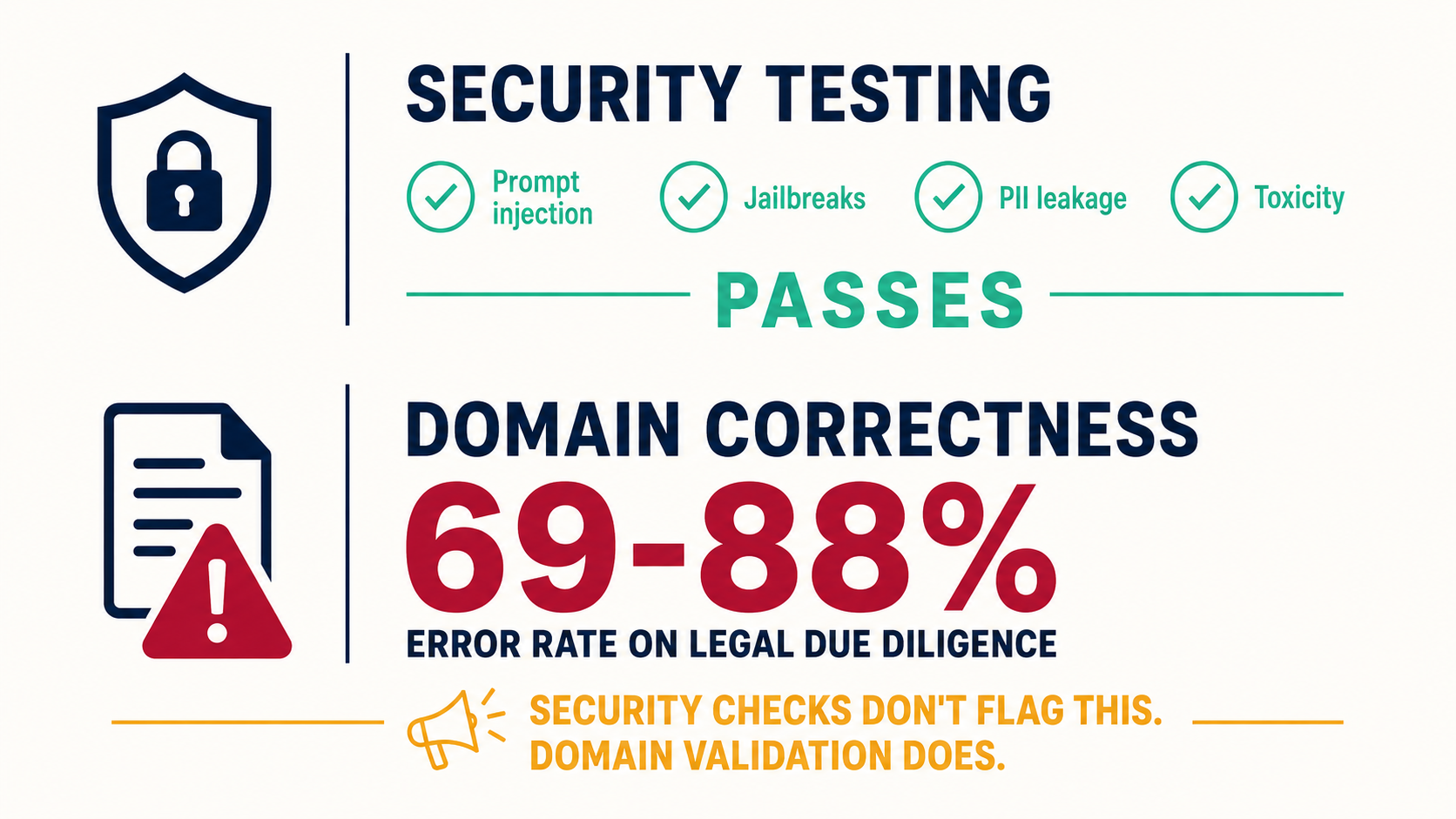
This is distinct from security testing. Red-teaming tools like Garak, PyRIT (Microsoft), and Promptfoo catch jailbreaks, prompt injection vulnerabilities, and unsafe outputs — legitimate and important work. But they test for safety, not for domain correctness. An AI that passes every security check can still be wrong on 69-88% of legal due diligence tasks — the error-rate range documented across AI benchmarks on specialized legal work. It can hallucinate regulatory citations that attorneys file in federal court, triggering $100,000+ in sanctions. It can get insurance underwriting decisions wrong in ways no security scanner would flag.
Arthur AI's real-time monitoring catches drift, toxicity, and PII leakage. These matter. None of them tell you whether your AI is analyzing a complex insurance claim correctly.
Agentic AI Raises the Stakes
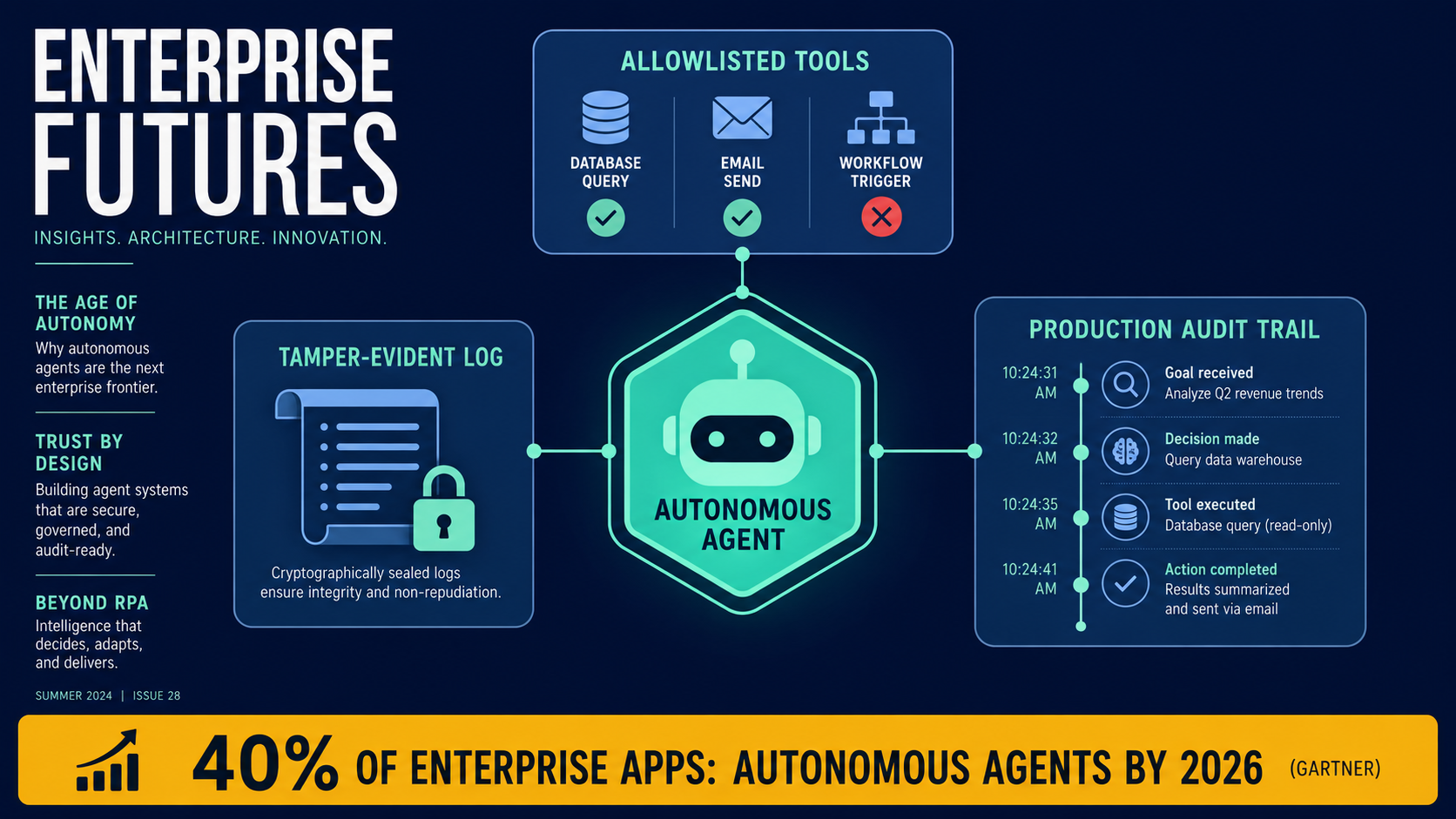
The validation challenge is about to get significantly harder. Gartner projects that 40% of enterprise applications will embed autonomous AI agents by end of 2026. Only about one-third of organizations currently report meaningful maturity in agentic AI governance — a gap that's globally consistent across McKinsey's 2026 research.
The risk isn't just "did the AI say the right thing." It's "did the AI do the right thing." Agents that can modify databases, execute financial transactions, or trigger downstream workflows need a validation regime that tests behavior across real task sequences, not just output quality on isolated prompts. Current monitoring platforms are built around traditional model monitoring paradigms — they weren't designed for autonomous multi-step action.
Cisco's $400 million acquisition of Robust Intelligence in late 2024 signals how seriously the security-adjacent part of this problem is being taken. The platform maps AI vulnerabilities to OWASP and MITRE ATLAS standards — a genuine contribution to the attack-surface problem. But OWASP and ATLAS are security frameworks. They address attack surfaces, not business-logic correctness.
The accountability gap for agentic AI is a bounded-autonomy problem: which tools and tasks is the agent allowed to touch, and what logging exists to reconstruct what it did if something goes wrong? PagerDuty's 2026 research found that organizations lose $1 million or more per hour during AI incidents. Without tamper-evident audit trails, incident response teams reconstruct what an AI did from application logs that were never designed for forensic use.
EU AI Act: The Compliance Clock Is Running
The EU AI Act's most significant enforcement date is August 2, 2026, when high-risk AI system requirements and transparency obligations under Article 50 take effect. Penalties for prohibited AI practices reach EUR 35 million or 7% of global annual turnover. High-risk AI non-compliance carries fines up to EUR 15 million or 3% of global turnover.
The distinction regulators draw here matters: Article 9 risk-management obligations apply before deployment, not at audit time. An enterprise with a governance dashboard showing green compliance status — but without domain-specific validation testing — has documentation of a process it hasn't actually completed. Finland became the first EU member state with fully operational AI Act enforcement powers in January 2026. Others are following.
Most enterprises treating the Act as a checkbox exercise will discover the gap when an examiner asks for Article 9 risk-management system documentation — not the policy describing the process, but evidence that ongoing monitoring is actually happening.
The Shadow AI Multiplier
Governance platforms and validation frameworks both assume the enterprise knows which AI systems are in use. Shadow AI makes that assumption increasingly fragile.
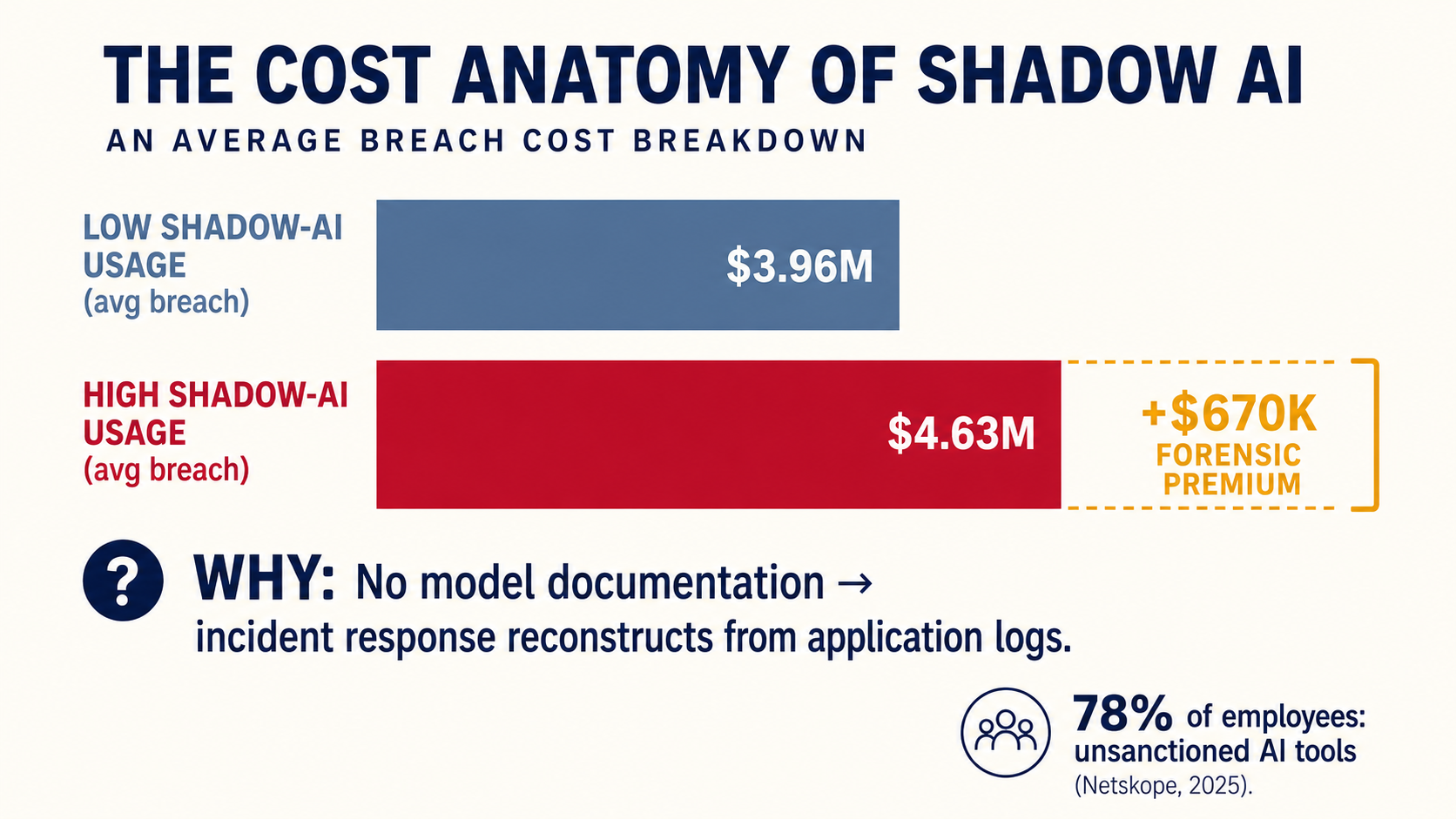
Gartner's 2025 research found that 69% of organizations suspect or have evidence of employees using prohibited public GenAI. Netskope's data shows 78% of employees using AI tools not sanctioned by their employer, with 77% sharing sensitive or proprietary information with ChatGPT. Samsung and Amazon both discovered proprietary code had been uploaded to public AI tools before policies were in place.
Shadow AI breaches cost an average of $4.63 million — $670,000 more per breach than organizations with low unsanctioned AI usage — because incident response teams have no model documentation to reconstruct what the AI processed.
The validation and shadow AI problems are connected. Enterprises that build rigorous domain-specific validation discipline for sanctioned AI create a baseline of what correctly-operating AI looks like in their environment — which makes shadow AI usage easier to detect when its outputs appear in downstream workflows.
What Serious Validation Actually Looks Like
Serious enterprise AI validation isn't a governance dashboard with a validation tab. It's a practice with distinct components: pre-deployment accuracy testing against domain-specific ground truth, challenger model comparison, continuous production monitoring that goes beyond drift detection, tamper-evident audit trail logging, and independent third-party validation for regulated environments where vendor-provided documentation isn't sufficient.
The EU AI Act and SR 11-7 both require independent validation, but most enterprises lack a clear path to it. LLM providers don't open their model internals. Governance platform vendors aren't positioned to independently validate output accuracy from their clients' AI systems. The independence requirement creates a structural gap that a separate validation engagement fills.
This is the specific practice we've built at Veriprajna: deterministic AI validation for regulated enterprises — domain-specific accuracy testing, structured for SR 11-7 and EU AI Act Article 9 documentation requirements, with the audit trail architecture that regulated environments require.
Three Questions That Surface Where You Actually Stand
Before evaluating platforms or engaging a validation partner, three questions reveal the real exposure.
Start with the domain-specific error rate — not what the vendor benchmark says, but what your AI produces when tested on your actual use cases, your data, against domain-expert ground truth. Most enterprises can't answer this question precisely. If you can't, you don't have validation; you have a governance program that assumes the AI works.
Audit trail architecture is the second common gap. When something goes wrong in production — a wrong underwriting decision, a hallucinated regulatory citation, an agentic action that shouldn't have been taken — can you reconstruct what the AI output was, who approved it, and at what timestamp? If incident response would have to piece this together from application logs never designed for forensic use, the post-mortem will be incomplete at best and indefensible to a regulator at worst.
The third is the independence question. For any model where SR 11-7 or EU AI Act Article 9 applies, the documentation question isn't whether you have a governance dashboard — it's whether you can show an independent challenge to the vendor's own testing. Internal sign-off on a proprietary provider's benchmarks doesn't satisfy the examiner's question. What does the challenger model show?
The enterprises that will have productive conversations with examiners in 2026 and 2027 are the ones already asking these questions internally. If your team is navigating how to build a validation practice that survives regulatory scrutiny — not just a governance program that looks complete from the outside — we'd be glad to compare notes on what the rigor looks like in practice.