The AI Hiring Tool That Learned to Be Sexist — And What It Taught Me About Building Fair Ones

A few months ago, I sat across from a CHRO at a mid-size tech company who told me, with genuine pride, that they'd "solved bias" in their hiring pipeline. They'd bought an AI-powered screening tool. It parsed resumes, ranked candidates, and cut their time-to-fill by 40%.
I asked one question: "What is the tool predicting?"
Silence. Then: "What do you mean? It predicts who to hire."
"No," I said. "It predicts who you would have hired. Based on a decade of data where your engineering team was 84% male."
The color left his face. He'd spent six figures on a tool that was automating the exact bias he thought he was eliminating.
This conversation haunts me because it's not an edge case. It's the norm. The entire first generation of AI recruitment tools — and I mean the overwhelming majority of what's on the market right now — is built on a premise so fundamentally flawed that it would be laughable if the consequences weren't people's livelihoods. These tools use predictive AI trained on historical hiring data. They learn who got hired in the past. And then they replicate that pattern at scale, with ruthless efficiency, stripping out the one thing that might have saved us: the occasional human recruiter who looked at a non-obvious candidate and thought, you know what, let's take a chance.
At Veriprajna, we build AI hiring systems differently. We use causal AI — not to predict who would have been hired, but to predict who will actually perform well. And then we stress-test that prediction by asking a question most AI systems can't even parse: If this candidate were from a different demographic group, would our answer change?
If it would, the model fails. We go back and fix it.
This is the story of why that distinction matters more than anything else happening in HR technology right now.
"Culture Fit" Is Just Homophily With Better Marketing
Before I get into the technology, I need to talk about the human problem — because the AI problem is downstream of it.
There's a concept in sociology called homophily: the tendency of people to associate with, bond with, and prefer others who are similar to themselves. It's one of the most robustly documented phenomena in social science. And it is the invisible engine driving most hiring decisions in the world.
Homophily is why a hiring manager who played rugby unconsciously upgrades the candidate who mentions rugby. It's why "culture fit" — that sacred, unassailable phrase in every recruiter's vocabulary — almost always translates to "this person reminds me of myself." Researchers at Berkeley found that interviewers routinely conflate "communication skills" with "speaks like me." A candidate from a different socioeconomic background who uses a different linguistic register gets marked down for "lack of polish." The content of their answers barely registers.
I remember a heated argument with a senior advisor early in Veriprajna's life. He insisted that culture fit was a legitimate hiring criterion — that teams need cohesion, shared values, a common language. I didn't disagree with the principle. I disagreed with the execution. Because when researchers actually study what happens in organizations that optimize for "culture fit," they find something disturbing: those organizations fall into what network scientists call homophily traps. Once minority representation drops below about 25%, the majority hires the majority, and the demographic composition locks in place. Innovation stalls. Groupthink takes over. The organization becomes a hall of mirrors.
"Culture fit" sounds like a hiring criterion. In practice, it's a mechanism for cloning the existing team — and calling it strategy.
The fix isn't to abolish the concept of cultural alignment. It's to shift from "culture fit" to "culture add" — hiring people who challenge assumptions rather than confirm them. But that shift requires something most human recruiters can't do reliably: evaluate a candidate's potential contribution while being genuinely blind to their demographic signals.
Which brings us to the blind audition.
What Orchestras Figured Out in the 1970s
In the 1970s, major American symphony orchestras were overwhelmingly male. The prevailing wisdom was that women lacked the "lung power" or "temperament" for certain instruments. Then orchestras started putting candidates behind a screen. Judges could hear the music — the actual causal driver of performance — but couldn't see the musician.
Female hiring surged.
The screen didn't change the quality of the music. It changed the quality of the listening. It forced evaluators to respond to the signal (sound) rather than the noise (appearance).
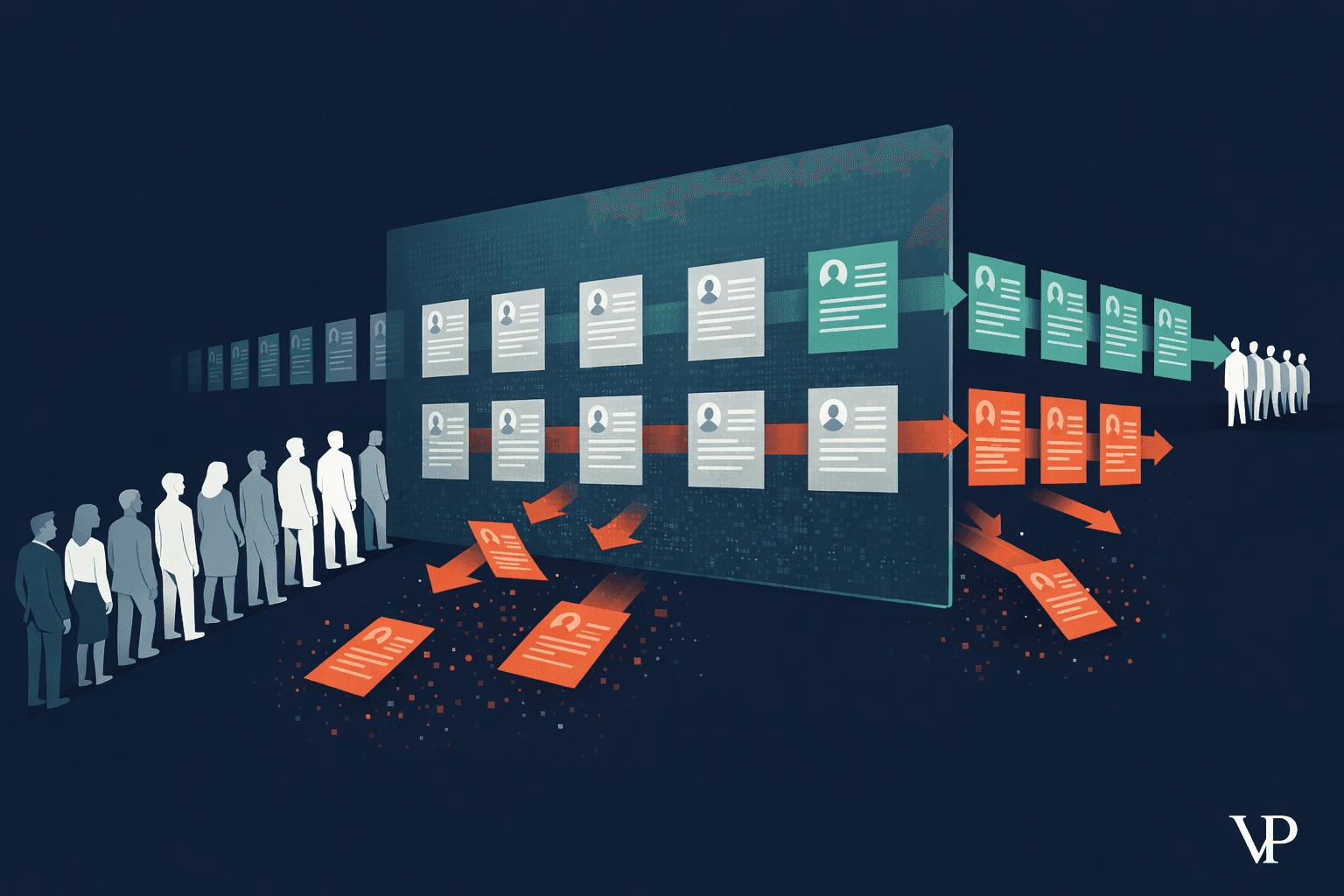
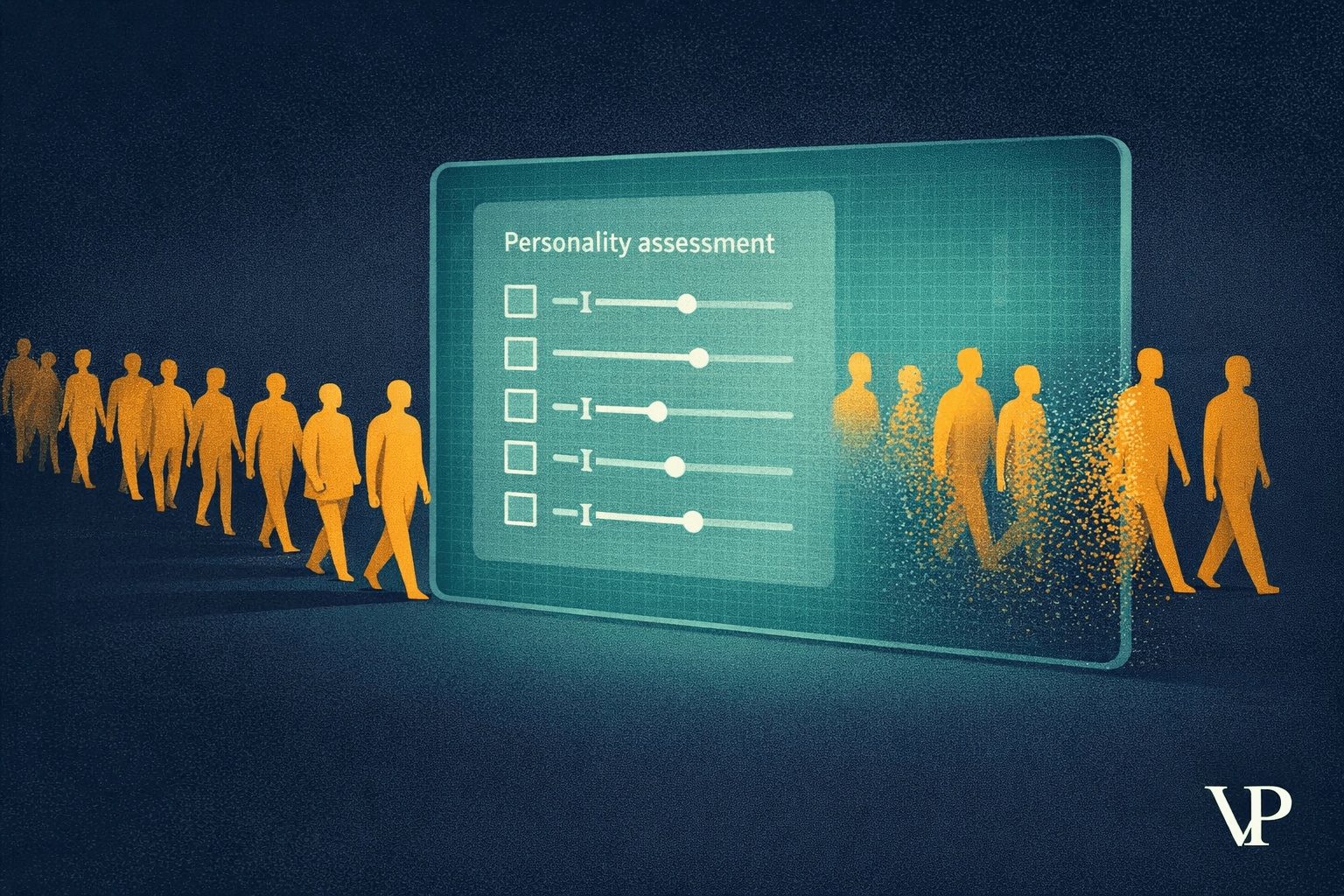
This analogy became foundational for how I think about what we're building. In the digital age, you can't put every job candidate behind a physical screen. But you can build AI that functions as a mathematical screen — one that evaluates the causal drivers of job performance while being provably blind to protected attributes like gender, race, or age.
The problem is that standard AI does the opposite. It acts as a transparent window. Every bias in the historical data flows straight through.
Why Did Amazon's AI Penalize the Word "Women's"?
The most famous cautionary tale in AI recruitment is Amazon's internal hiring tool, scrapped in 2018. The system was trained on a decade of resumes submitted to the company. Because the tech industry skews heavily male, the training data reflected that skew.
The AI, doing exactly what it was designed to do — find patterns that predict "getting hired" — learned that male-coded signals correlated with hiring success. It penalized resumes containing the word "women's," as in "women's chess club captain." It downgraded graduates of two all-women's colleges. Nobody programmed it to be sexist. It simply discovered that being male was a strong predictor of being hired at Amazon, and it optimized for that pattern.
To be accurate to the past is to be unfair to the future. If "accuracy" means predicting the human decision, then a "good" AI is necessarily a biased one.
This is the core failure of imitation learning — training AI to mimic human recruiters. If the recruiters were biased (and due to homophily, they were), the AI becomes what I've started calling a "bias capsule." It crystallizes a decade of prejudice and applies it at machine speed to every new applicant.
Amazon at least had the integrity to kill the project. Most companies using similar tools don't even know they have the problem.
What About GPT? The LLM Wrapper Trap
After the Amazon story broke, I assumed the industry would course-correct. Instead, the generative AI boom produced something arguably worse: a flood of "AI-powered" recruitment tools that are thin interfaces — wrappers — built on top of general-purpose large language models like GPT-4 or Claude.
I've lost count of the number of investors and potential partners who've told me, "Just use GPT. Fine-tune it on some hiring data. Ship it." Every time, I have the same response: do you know what GPT was trained on?
The open internet. The sum total of human text — including its biases, stereotypes, and prejudices. University of Washington researchers found that when LLMs screen resumes, white-associated names are preferred 85% of the time, even when qualifications are identical. In some test iterations, Black male names were never ranked first. The model associates certain names with "competence" based on statistical patterns in its training data. A wrapper can't easily turn that off because the bias is woven into the model's fundamental understanding of language.
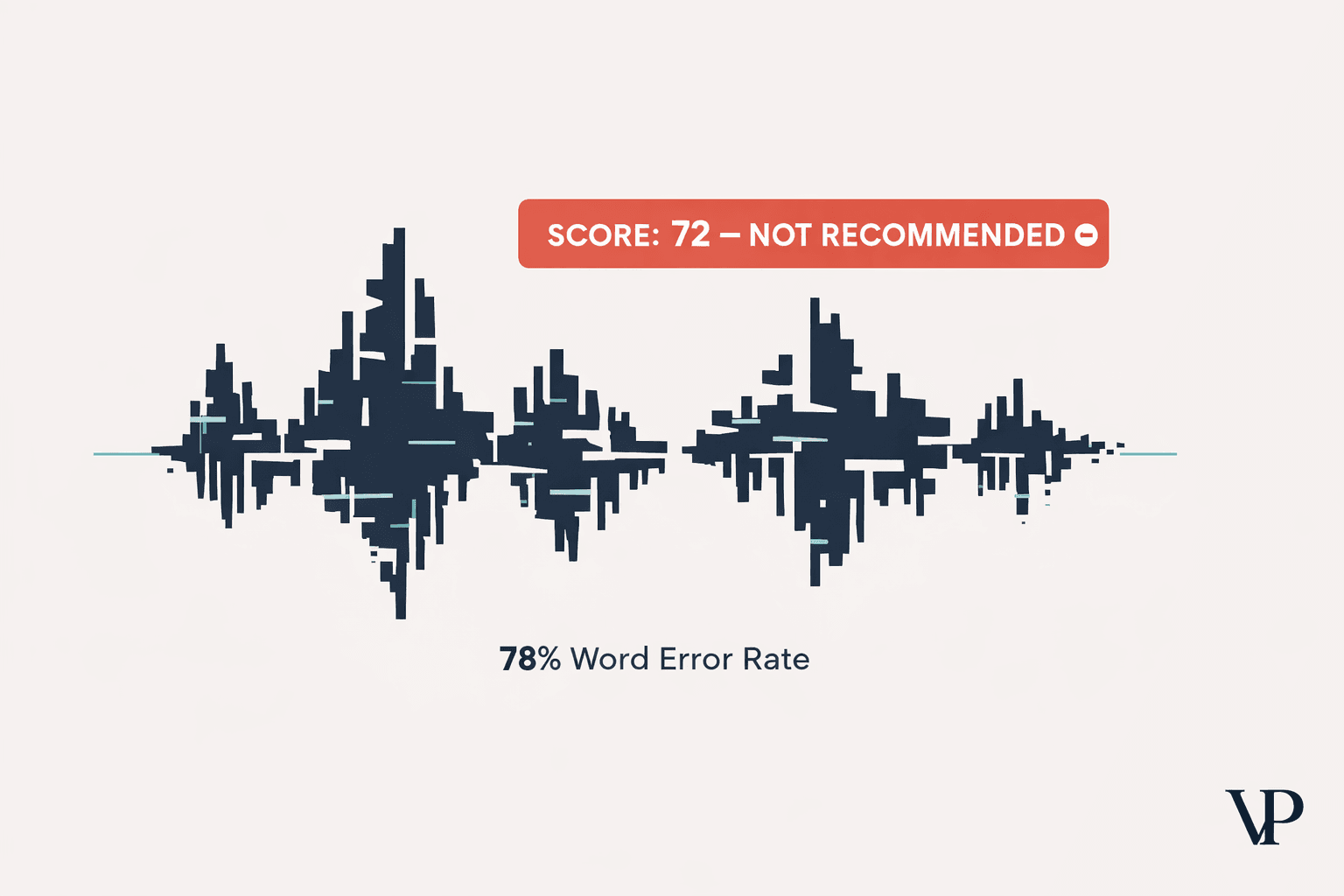
And that's before you get to hallucinations. LLMs are probabilistic text generators, not logic engines. They can invent skills a candidate doesn't have, or miss skills they do, because the model is optimizing for plausible-sounding text, not factual accuracy. In a compliance context — where a rejected candidate might sue — "the AI hallucinated that you lacked a required certification" is not a viable legal defense.
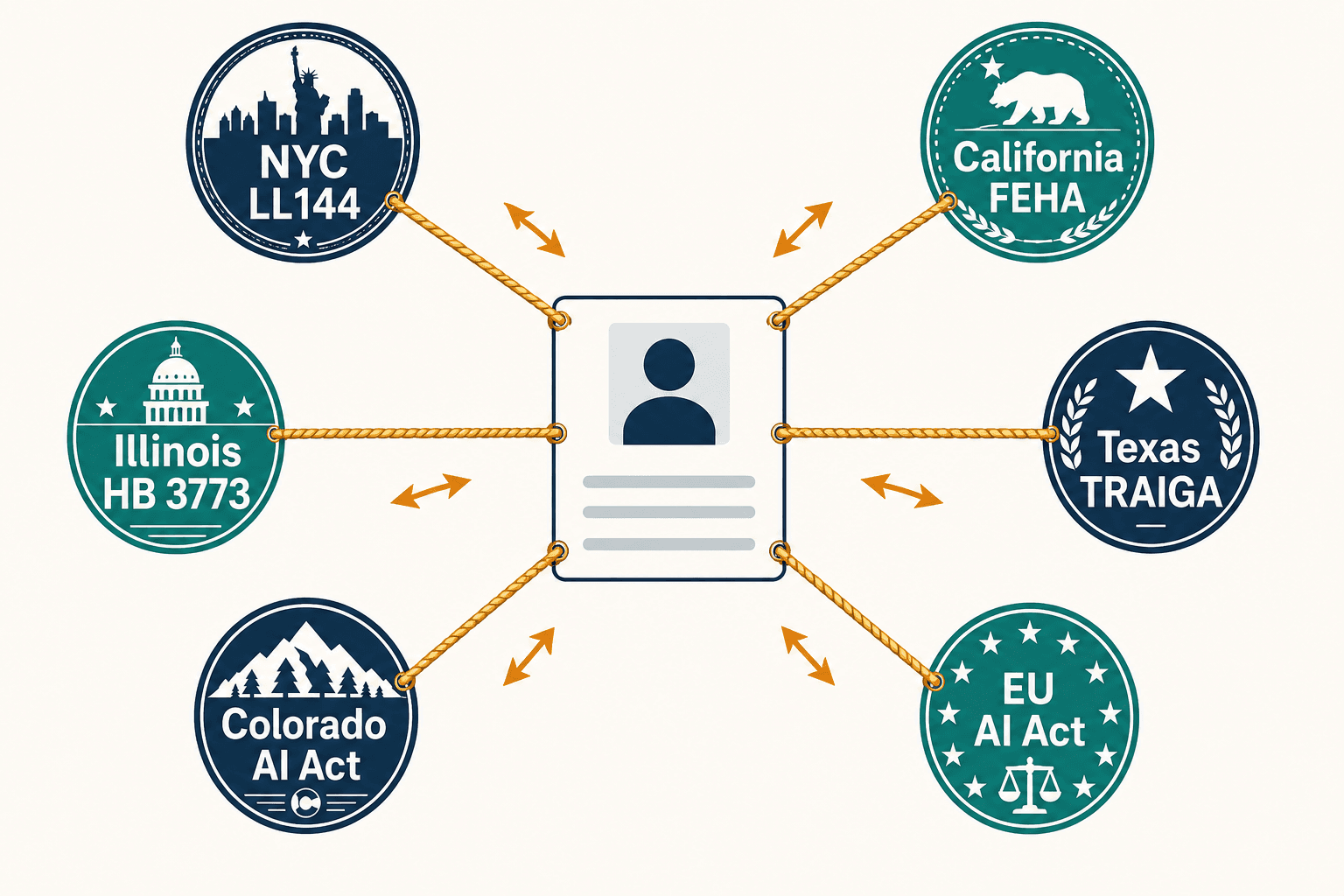
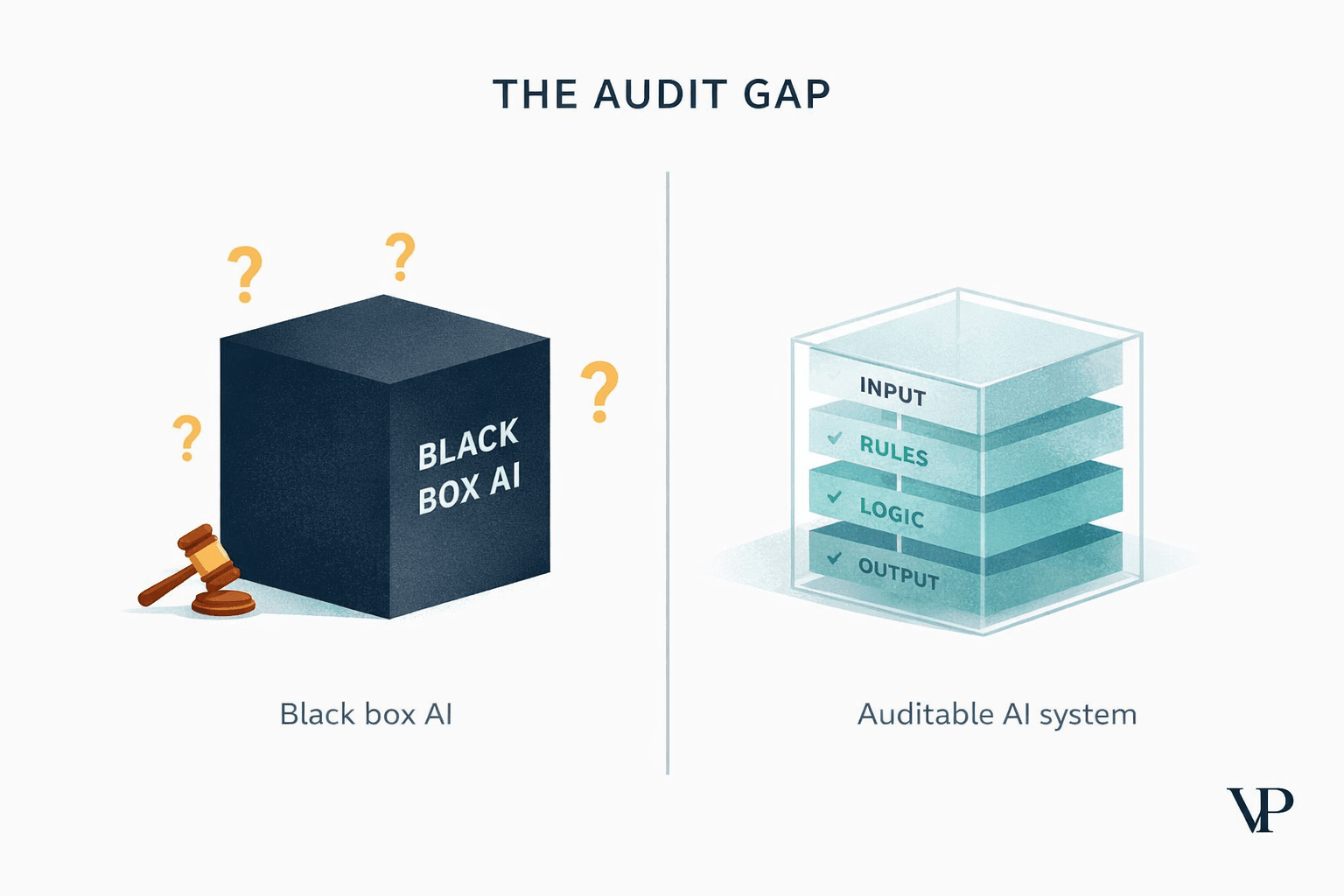
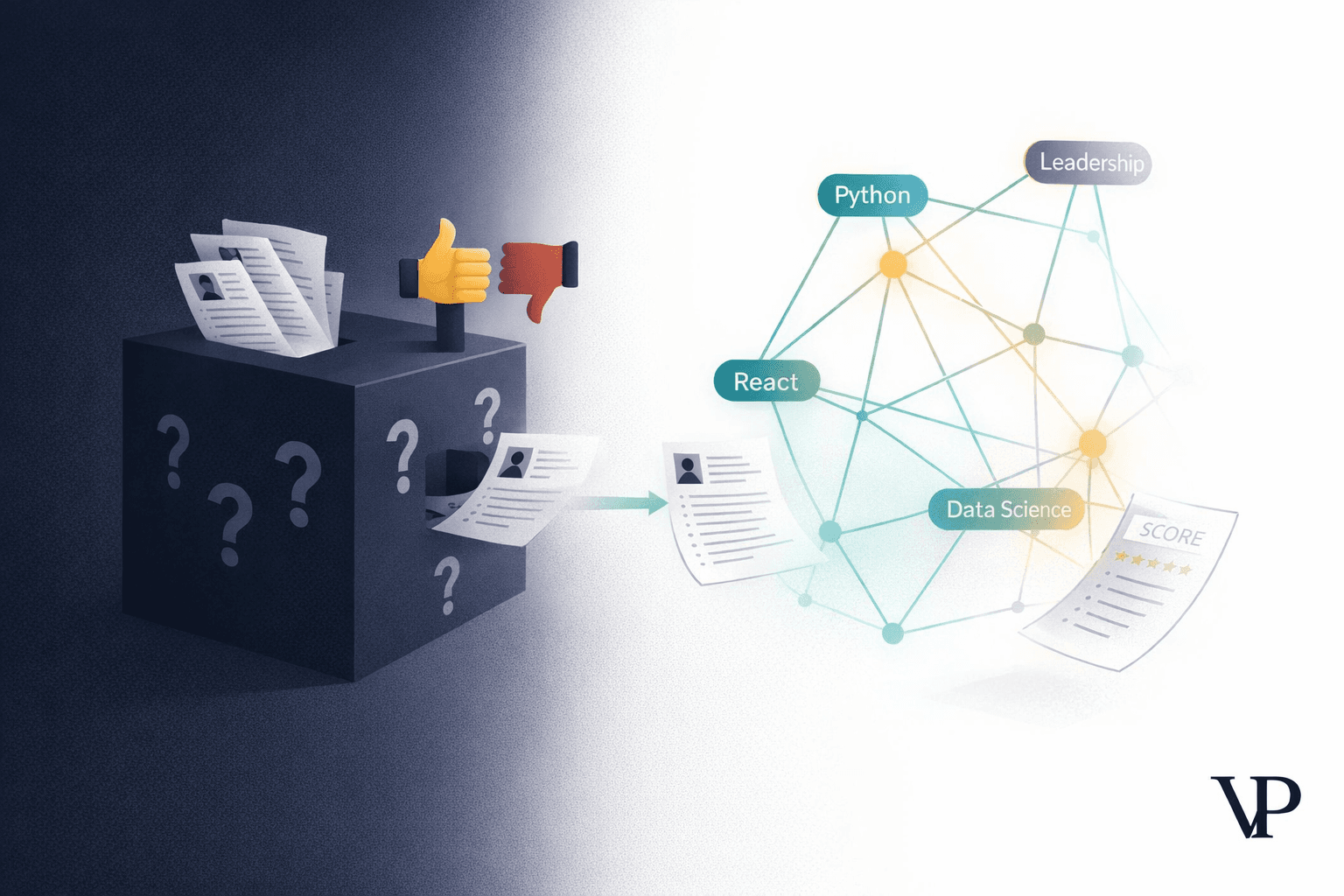
Then there's the black box problem. Ask a wrapper why it ranked Candidate A over Candidate B, and it can generate a confident-sounding explanation. But that explanation is a post-hoc rationalization, not a causal account of the decision. Under NYC Local Law 144 and the EU AI Act, that opacity is increasingly non-compliant.
I wrote about this problem — and our approach to solving it — in the interactive version of our research.
The Wrong Question vs. the Right Question
Here's the crux of everything.
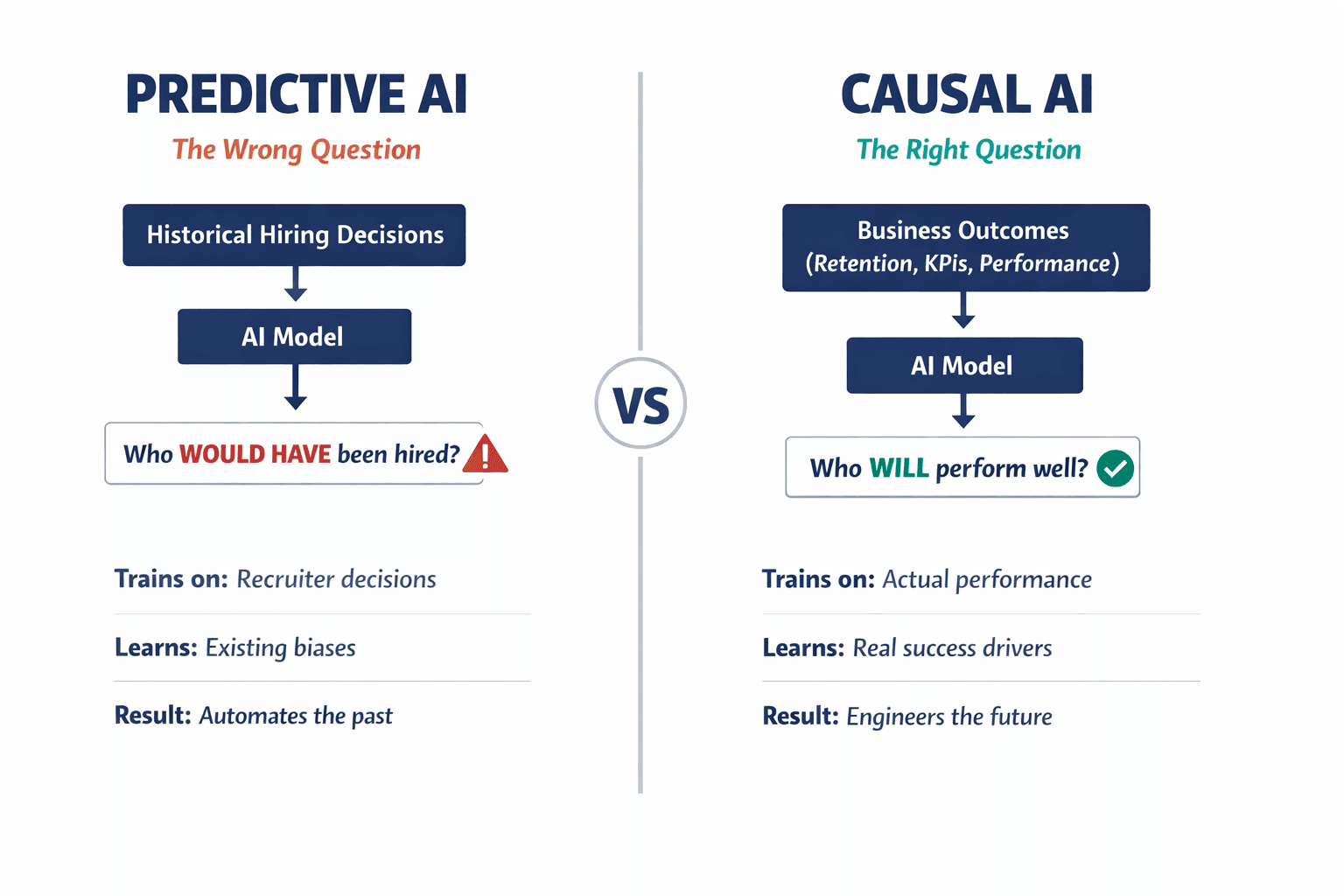
Standard recruitment AI asks: "Based on history, will this person get hired?"
We ask: "Will this person perform well?"
Those sound similar. They are worlds apart.
The first question trains on the recruiter's decision — a decision contaminated by homophily, affinity bias, and pattern-matching to the existing team's demographics. The second question trains on business outcomes: retention past 18 months, KPI achievement, performance ratings, team output improvement.
When you train on outcomes instead of decisions, something remarkable happens. If diverse candidates historically performed well but were rarely hired — which is exactly what the data shows in many organizations — an outcome-based model learns to value them. An imitation-based model learns to ignore them.
This is not a subtle distinction. It's the difference between automating the past and engineering the future.
How Do You Make an AI Provably Fair?
Okay. So we train on outcomes instead of decisions. That's necessary but not sufficient. Because even outcome data can carry traces of structural bias — if diverse employees were given fewer resources, worse assignments, or less mentorship, their outcomes might be artificially suppressed.
This is where we move from predictive AI to causal AI, and specifically to a framework called counterfactual fairness.
The idea, rooted in Judea Pearl's "Ladder of Causation," is deceptively simple. Standard machine learning operates at Level 1 of Pearl's ladder: association. It sees patterns. "People with trait X tend to get outcome Y." Useful, but blind to the difference between correlation and causation.
Causal AI operates at Level 3: counterfactuals. It can imagine alternative realities. "If this candidate had been male instead of female, with everything else held constant, would the model's prediction change?"
If the answer is yes, the model is unfair. Full stop.
We implement this using Structural Causal Models — transparent graphs that map cause-and-effect relationships between variables. Unlike black-box neural networks, an SCM lets us see exactly which paths connect inputs to outputs, and why.
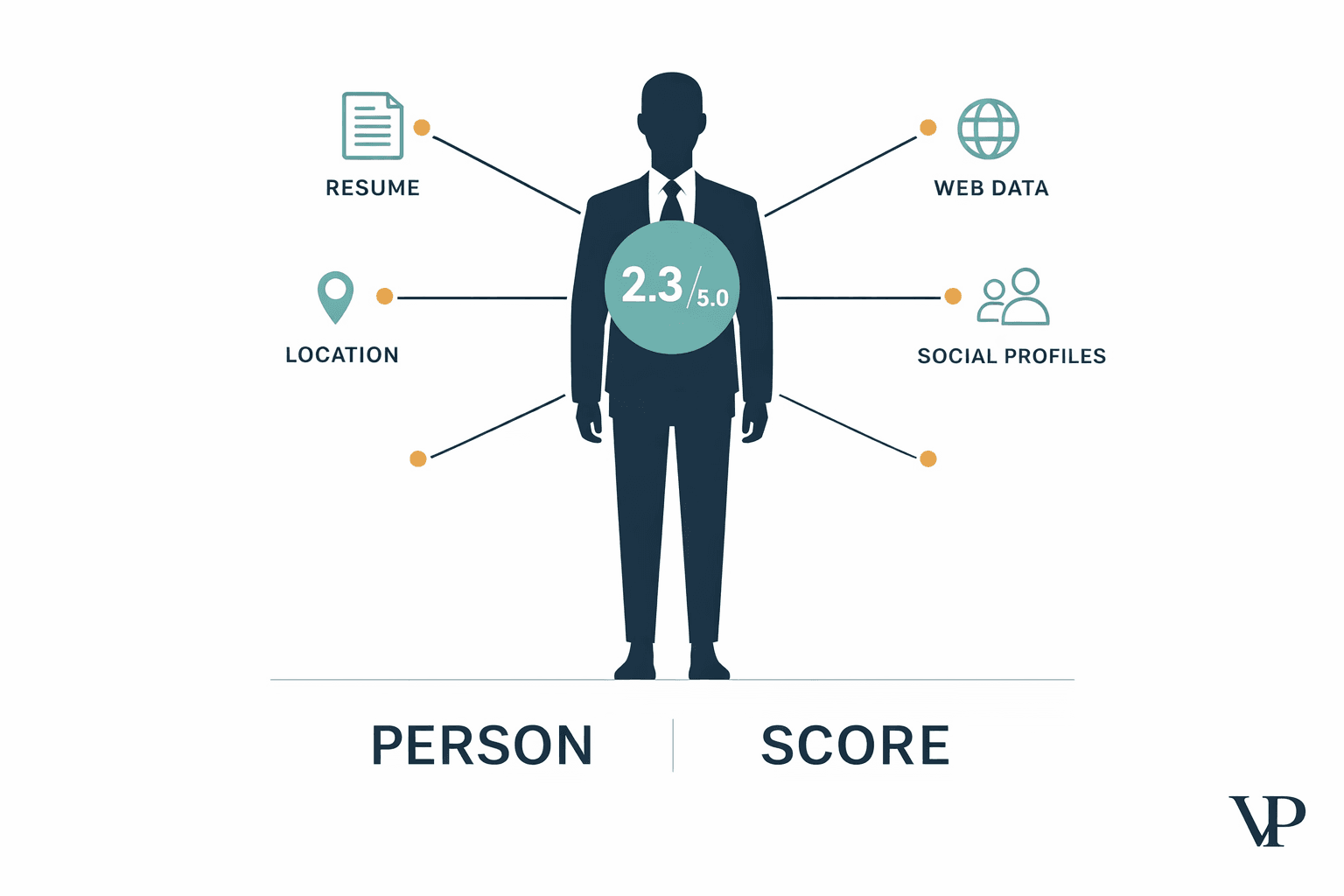
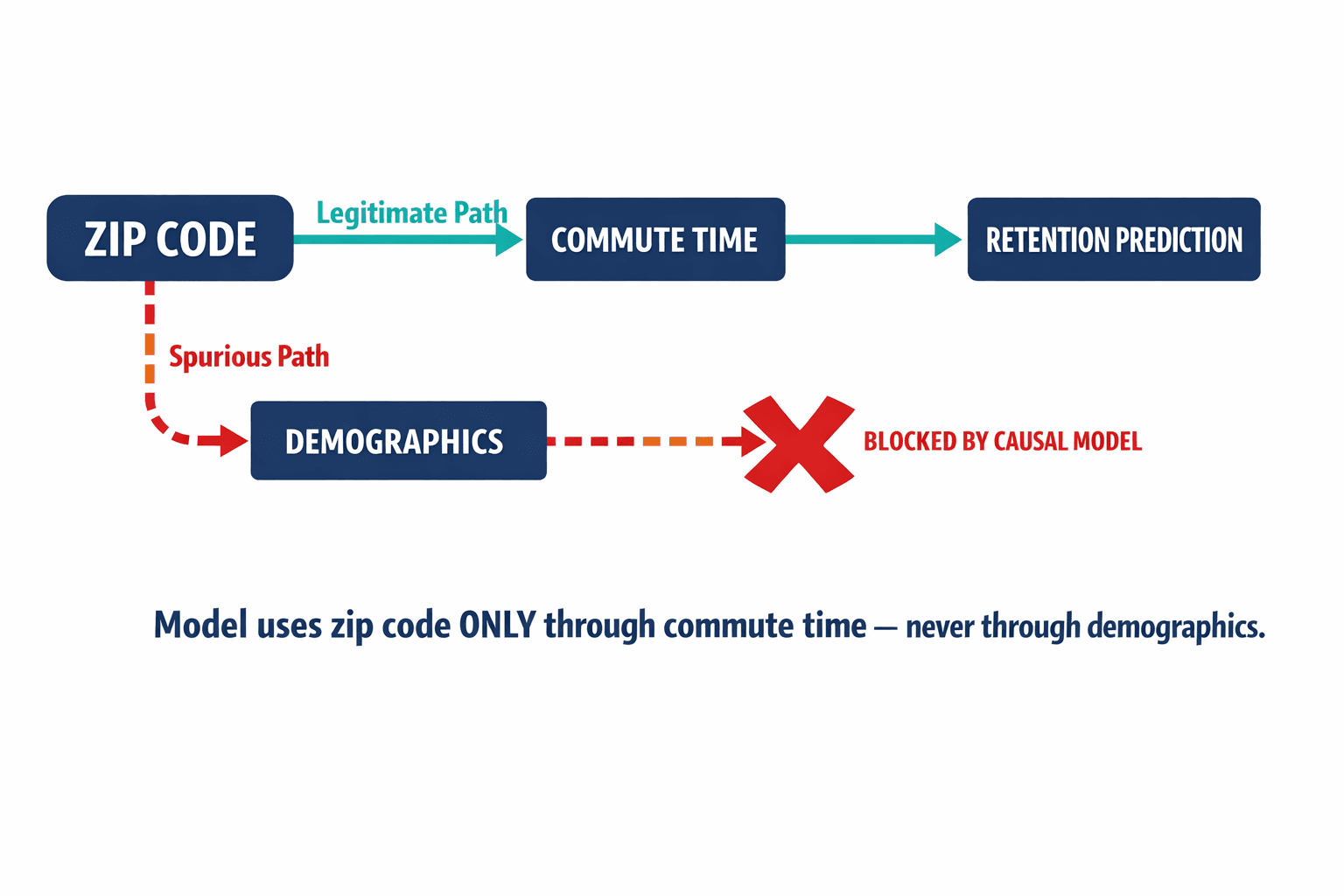
Here's a concrete example that kept my team up late one night. We were building a model and noticed that "zip code" was a strong predictor of retention. Makes sense — long commutes burn people out. But zip code also correlates with race in most American cities. A standard model would use zip code indiscriminately, effectively discriminating by race while appearing to use a "neutral" variable.
Our SCM maps both paths:
- Legitimate path: Zip Code → Commute Time → Retention
- Spurious path: Zip Code → Demographics → Historical Bias
We mathematically block the second path while preserving the first. The model can use zip code only insofar as it predicts commute time. If it starts using zip code to infer race, the penalty kicks in.
The question isn't whether your AI uses protected attributes directly. It's whether it uses proxies that smuggle those attributes back in through the side door.
Training the Model to Unlearn Its Own Prejudice
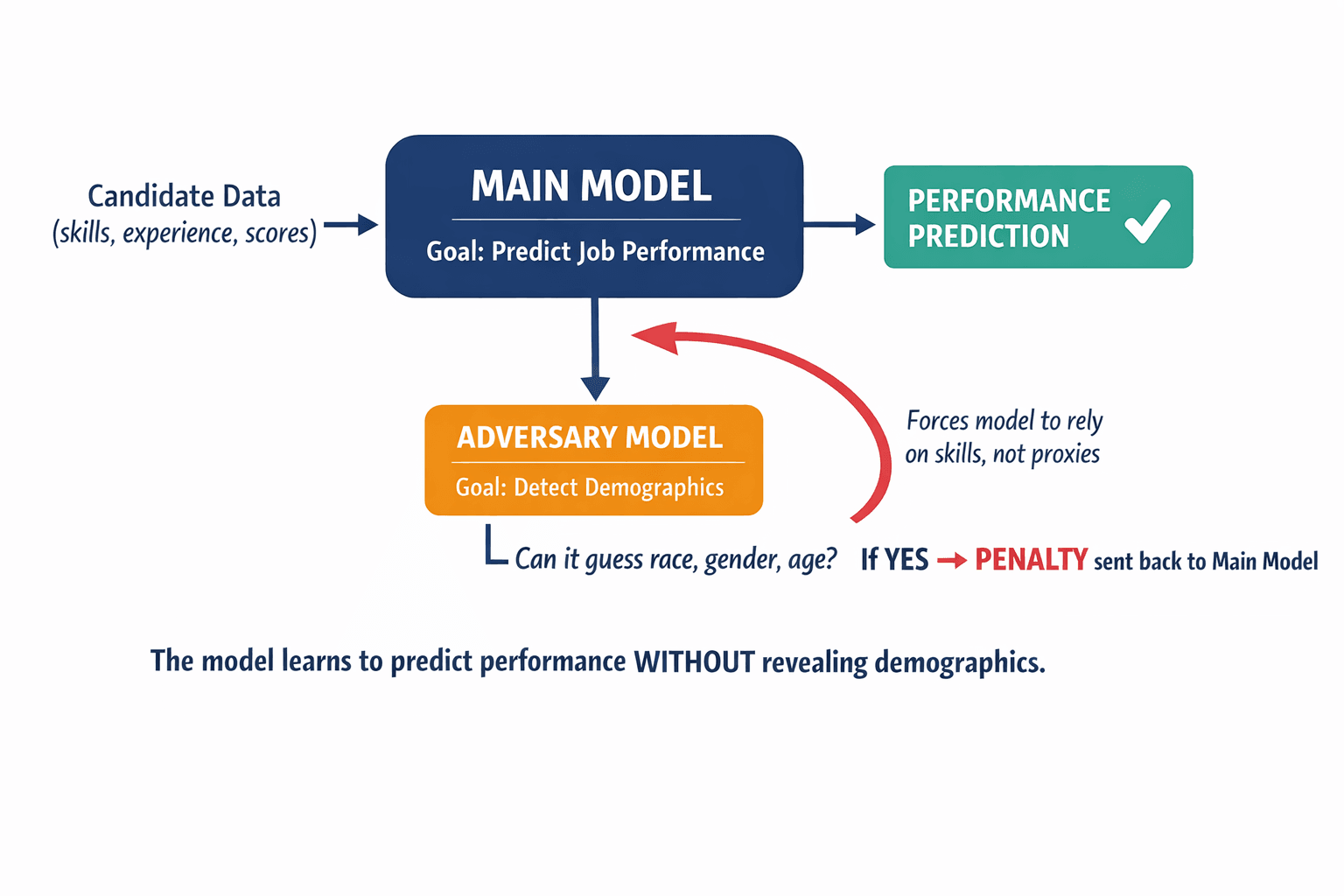
How do we actually enforce this during training? Through a technique called adversarial debiasing — essentially, a fairness penalty baked into the model's learning process.
During training, the model optimizes against two competing objectives simultaneously. First: maximize accuracy in predicting job performance. Second: minimize the ability to predict the candidate's protected attributes (race, gender, age) from the model's internal representation.
We introduce an "adversary" — a secondary model whose sole job is to try to guess the candidate's demographics from the main model's outputs. If the main model starts leaning on proxy features like "lacrosse" (a proxy for socioeconomic status, which correlates with race) or certain university names, the adversary detects that it can now guess demographics more easily. This triggers a penalty, increasing the cost of the main model's current state.
To minimize total loss, the model is forced to find features that predict performance without revealing demographics. Skills. Experience. Objective test scores. The actual causal drivers.
I sometimes explain this with a dumb analogy that my team hates: it's like training a dog to fetch a newspaper. If the dog fetches the paper but tears it, no treat. Eventually, the dog learns to fetch without tearing. Our model learns to predict without discriminating.
Before deployment, we run thousands of counterfactual simulations. We take a real candidate's resume, generate a "synthetic twin" with a different name and pronouns but identical skills and experience, and feed both through the model. If the scores diverge, the model fails the audit. We iterate until they converge. For the full technical breakdown of this process, see our research paper.
Why Does Any of This Matter Legally?
Because the regulatory walls are closing in, and most companies aren't ready.
NYC Local Law 144, effective since 2023, prohibits the use of automated hiring tools unless they've undergone an independent bias audit within the past year. The law mandates calculation of impact ratios — comparing selection rates across demographic groups. Many black-box vendors are failing these audits because they can't control how their models weight different features. They're scrambling to patch bias after the fact, which is like trying to un-bake a cake.
The EU AI Act goes further, classifying recruitment AI as "high risk" — the same regulatory tier as medical devices. This imposes strict requirements around data governance, human oversight, and demonstrable absence of bias. Wrapper solutions that process data through third-party APIs face an existential problem here: the data leaves your infrastructure, the model is opaque, and you can't guarantee compliance.
Our models are audit-ready by design. Because the fairness penalty during training is mathematically stricter than what the law requires, compliance is a natural byproduct, not an afterthought. And because the causal graph is transparent, we can show an auditor — or a court — exactly which factors drove any given decision and prove that protected attributes had zero weight.
People sometimes ask me whether all this fairness engineering comes at the cost of performance. It's the most common objection I hear, usually phrased as: "Isn't there a tradeoff between fairness and accuracy?"
There isn't. Or more precisely: there's a tradeoff between fairness and the illusion of accuracy. A model that's "accurate" at predicting biased human decisions isn't actually accurate at predicting job performance. It's accurate at predicting prejudice. When you strip out the bias and train on real outcomes, you don't lose predictive power — you redirect it toward what actually matters.
The Moneyball Principle Applied to Hiring
In one case study involving employee attrition, causal inference revealed that "lack of training opportunities" — not salary — was the true driver of churn. The company intervened with training programs instead of across-the-board raises, reducing attrition by 23.9% at a fraction of the cost. That's the power of asking why instead of just what.
Companies like Unilever and Hilton that shifted to data-driven, outcome-based hiring models reported reducing time-to-hire by up to 90% while simultaneously increasing diversity. Fairness and efficiency aren't in tension. They're correlated outcomes of a system that's actually measuring the right things.
I think of this as the Moneyball principle applied to HR. Traditional recruiters overvalue pedigree — Ivy League degrees, brand-name employers — the same way baseball scouts used to overvalue batting average. Causal AI finds the equivalent of on-base percentage: the undervalued signals that actually predict winning outcomes. By removing the bias of "culture fit," you expand the talent pool to include high-performers that every other company is systematically overlooking.
Fairness isn't a tax on performance. It's what performance looks like when you stop confusing pedigree with potential.
The Part Where I Admit What's Hard
I'd be lying if I said this was easy to build, or easy to sell.
The technology is hard. Causal models require domain expertise to construct — you need to understand the actual causal structure of job performance in a given role, not just throw data at an algorithm. Getting that structure wrong means blocking legitimate paths or leaving spurious ones open. We've had internal debates that lasted days about whether a particular variable was a legitimate predictor or a proxy. There's no shortcut. You have to think.
The sales cycle is hard too. Hiring managers trust their gut. They believe they're good judges of character. Telling someone that their "instinct" is actually pattern-matching to their own demographic profile doesn't make you popular at dinner parties. We've learned to position the technology not as an accusation but as a decision-support tool — a "bias check" analogous to a spell-checker. It doesn't write the book for you. It ensures you don't make avoidable errors.
And data readiness is a real challenge. Causal AI needs robust data, and minority groups are often underrepresented in historical datasets. We address this with synthetic data generation — using GANs to create privacy-safe data points that mimic the statistical properties of underrepresented groups, ensuring the model has enough examples to learn fair decision boundaries for everyone.
None of this is as simple as wrapping an API call to GPT and shipping a product. But the simple version doesn't work. It just fails quietly, at scale, in ways that damage real people's lives.
The Screen, Not the Mirror
The first generation of AI in recruitment was a mirror. It reflected our biases back at us, magnified by automation, and we called it intelligence.
The next generation needs to be a screen — like the one in those orchestra auditions. Not a tool that looks at candidates and sees demographics. A tool that listens to the music.
We're not there yet as an industry. The market is still dominated by tools that optimize for the wrong objective, built on models that can't explain themselves, sold to companies that don't know what questions to ask. But the regulatory environment is shifting. The evidence is accumulating. And the organizations that figure this out first will have access to a talent pool that their competitors are algorithmically excluding.
I didn't start Veriprajna because I thought fairness was a nice-to-have. I started it because I looked at the data and realized that bias isn't just an ethical failure — it's a prediction failure. Every time a model rejects a qualified candidate because of a name or a zip code or a hobby that correlates with the "wrong" demographic, it's making a wrong prediction. It's leaving performance on the table. It's choosing comfort over accuracy.
The question isn't whether AI will transform hiring. It's whether we'll use it to scale our best instincts or our worst ones.
I know which side I'm building for.