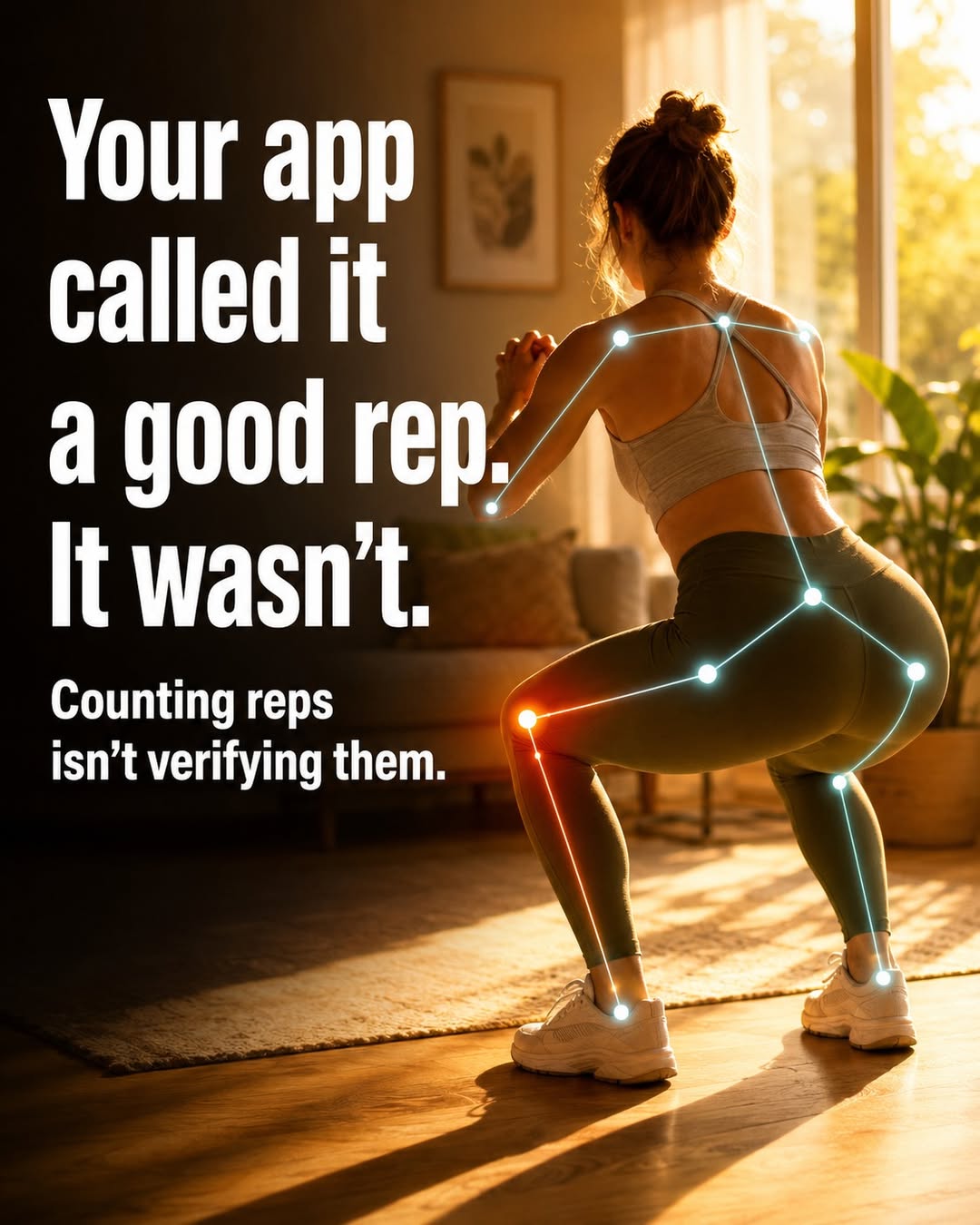
A phone camera can track 33 points on a patient's body, 30 times a second. It still can't tell a safe squat from one that's quietly re-injuring them.
That gap is the whole problem in fitness AI. Pose estimation is solved and free — BlazePose and MediaPipe run on any phone. The missing layer knows a 62-year-old eight weeks post-ACL has different targets than a 30-year-old at the office gym.
The camera reports it cleanly: the knee drifts 4.2cm inward during descent, flexion stops at 78 degrees against a 90-degree target, and the ascent takes twice as long as the descent. A pose library calls it a good rep.
A clinician reads the same three numbers as knee valgus plus compensation — a re-injury pattern that should trigger a review, not a green checkmark.
The sensor is commoditized. The judgment isn't. And that judgment is what CMS now wants documented: the 2026 rule lets clinics bill remote monitoring after as few as 2 days (down from 16), and manage it in 10 minutes instead of 20 — but only with verified, timestamped data tied to a treatment decision.
We build that interpretation layer — thresholds a clinician can set per patient and per exercise, running on-device, so wellness programs get verified compliance without asking the 50%+ of employees who won't share health data to ship any video out.
If you run a PT platform or a wellness program: when a patient logs a rep today, do you know whether it was a good one — or just that it happened?
#DigitalHealth #PhysicalTherapy