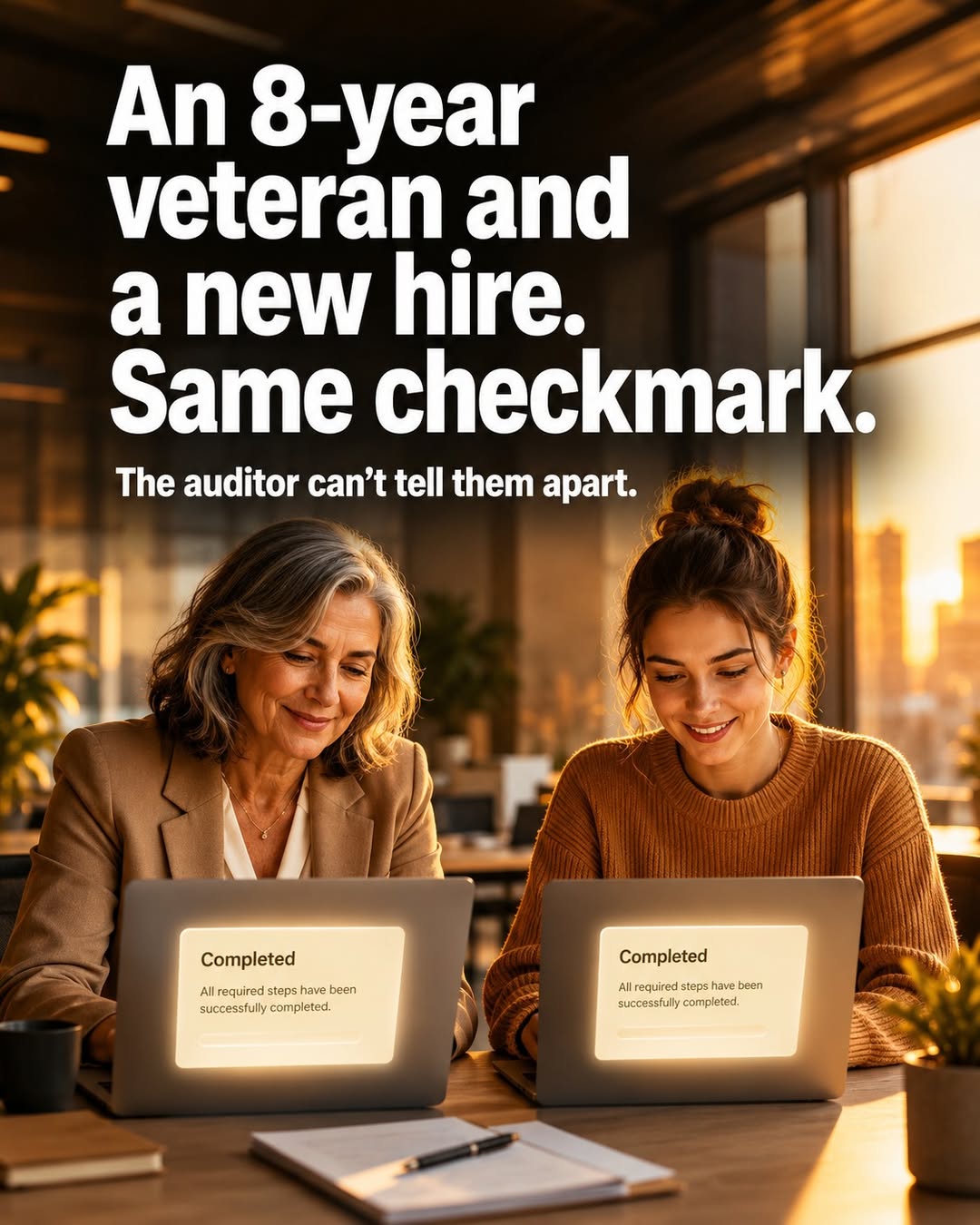
A senior analyst with 8 years in anti-money-laundering sits through the same 4-hour compliance module as a new hire. Both get a green checkmark. The auditor sees two identical "completed" records.
That checkmark is the problem.
Most training measures whether someone watched a video, not whether they learned anything. U.S. companies spent $102.8 billion on training last year, around $874 per learner, and still can't tell mastery apart from attendance.
Every LMS now sells "AI-powered adaptive learning," but most of it is recommendation, not measurement. Cornerstone's 2026 Adaptive Learning Agent leans on collaborative filtering: "people like you took this course next." That's Netflix for training, not a read on which concepts you personally haven't mastered.
Knowledge tracing is. It models skill-level mastery per person and updates with every answer: above 0.75 probability you verify and move on, below 0.35 you get scaffolded practice. So the veteran clears what she knows in minutes while the new hire drills exactly where she's weak. When Allegiant Airlines applied this approach, training time fell from 51 days to 23, and auditors got mastery probability instead of a completion box.
With the EU AI Act's AI-literacy obligation enforced from August 2026, "they finished the course" stops being defensible.
If you run compliance or L&D: could you prove to an auditor your people actually know the material, not just that they finished it?
#AdaptiveLearning #ComplianceTraining