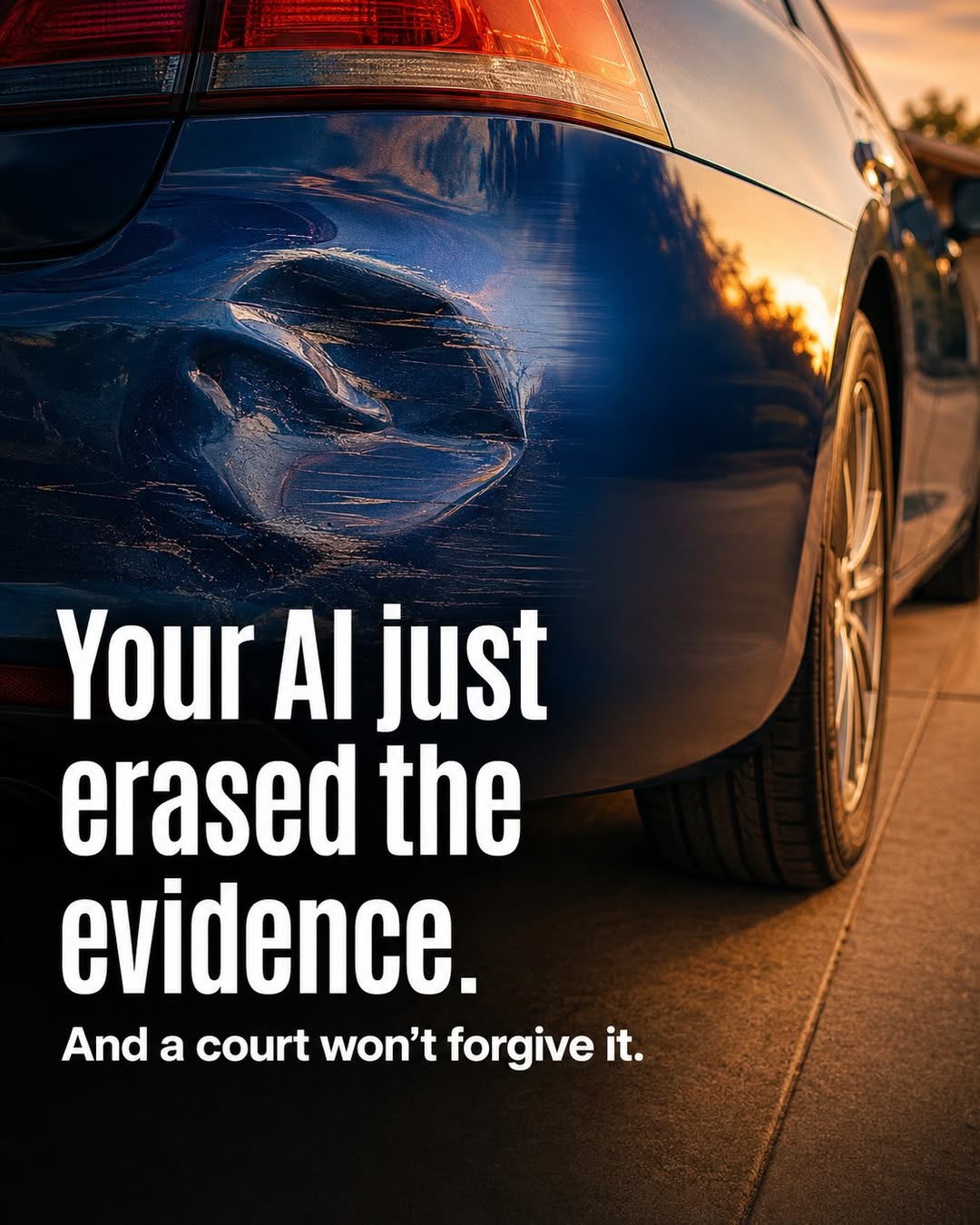
Your claims app "enhances" a blurry photo of a dented bumper. The AI, trained to clean up images, reads the dent as noise and quietly smooths it away.
The adjuster sees less damage than the policyholder actually photographed. The original pixels are gone.
If that claim gets denied and ends up in court, you didn't just make a bad call — under US law you altered evidence. That's spoliation: adverse-inference instructions, sanctions, even summary judgment. The intent to "improve" the photo is irrelevant.
Most claims AI was built to answer one question — what does this damage look like? The threat model has moved. The real question now is whether the damage was physically there when the shutter clicked.
Verisk's 2026 study found 36% of consumers would consider altering a claim image — 55% among Gen Z. Only 32% of insurers are confident they could catch a manipulated photo. One UK motor carrier reported a 300% jump in AI-altered vehicle images in a single year. In one disclosed UK case, injected scratches and cracks inflated payouts by roughly GBP 13,000 per claim.
The fix isn't a sharper damage-detection model. It's forensic computer vision that authenticates the image first, measures the damage second, and preserves the original frame untouched — so what you hand a court is what the camera saw.
If you run claims: would your pipeline survive a spoliation challenge today — and what are you doing to keep the original upload untouched?
#InsuranceFraud #ComputerVision