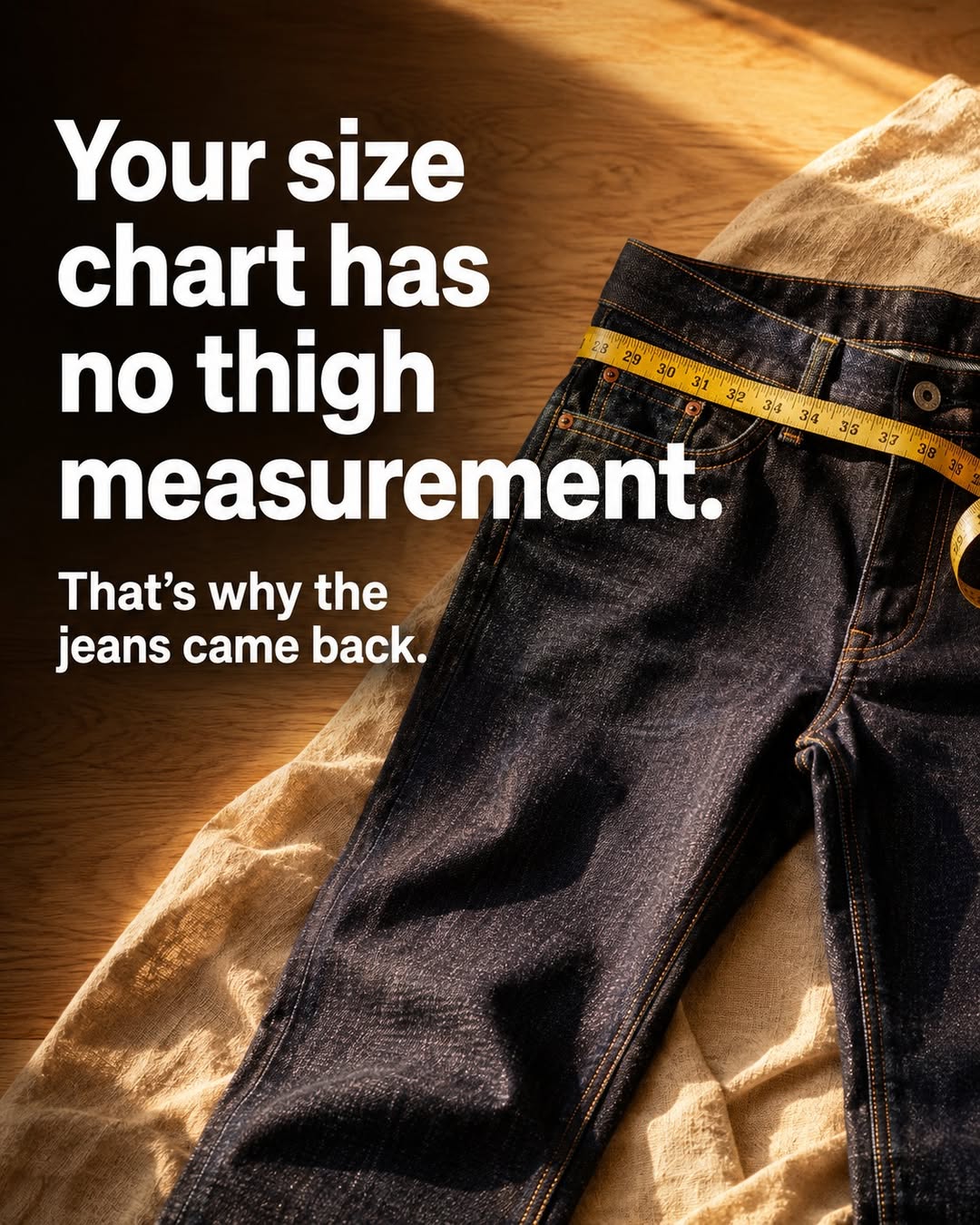
She matched the size chart's waist measurement perfectly, ordered a size 28, and still sent the jeans back.
The waist fit. The thigh didn't. The raw denim had zero stretch — and a size chart has no thigh measurement, so nothing warned her that standing and seated hip geometry are different shapes.
This is what most fashion brands get wrong about returns: fit isn't a visual problem, it's a physics problem.
Generative AI virtual try-on is the hot fix — Google, Zalando, and Walmart are rolling it out. But it predicts likely pixels, not mechanics: it can't tell a size M from a size L, and it doesn't know whether the fabric is 14oz raw denim or 4-way stretch ponte. There's still no published return-rate reduction for GenAI-only try-on.
Yet fit drives 53–70% of apparel returns, and U.S. retail returns hit $849.9B in 2025. Processing one return can eat up to 66% of the item's price — so at fashion's 26–40% return rates, the items that sold subsidize the ones that came back. 63% of shoppers now "bracket" — ordering multiple sizes to return all but one.
The approaches that actually move returns are less glamorous: statistical size recommendation, photo-based body measurement, and physics-based fabric simulation. One photo-measurement deployment cut a swimwear brand's returns by 47% and dropped bracketing to 2%.
If you sell apparel online: is your return problem "wrong size selected," or "fit didn't match expectation"? Those need very different fixes.
#FashionTech #RetailAI