- Fashion e-commerce loses more money to returns than to marketing, logistics, and fraud combined. In 53-70% of apparel returns, the cause is identical: the garment didn't fit. Size charts turned fit into a guessing game. 🧵
- The fit problem is mechanical, not visual. A size chart gives you four 1D numbers — bust, waist, hip, inseam — to describe a 3D surface. A "Medium" at Zara is a different body than a "Medium" at Everlane. Apparel has no standardized grading system.
- Vanity sizing makes it worse. A women's size 6 waistline varies by up to 5 inches across brands; 91% of shoppers need a different size depending on the label. So they hedge: 63% now "bracket" — order multiple sizes meaning to return all but one.
- Bracketing doubles your outbound shipping, locks inventory through the return cycle, and guarantees half of what you ship comes back. U.S. retail returns hit $849.9B in 2025. Processing a single return can eat 66% of the item's price.
- The hyped fix — generative AI virtual try-on — solves the wrong problem. Diffusion models paint a photoreal image of the garment on you by predicting likely pixels. They can't tell a size M from an L. They don't know whether the fabric stretches.
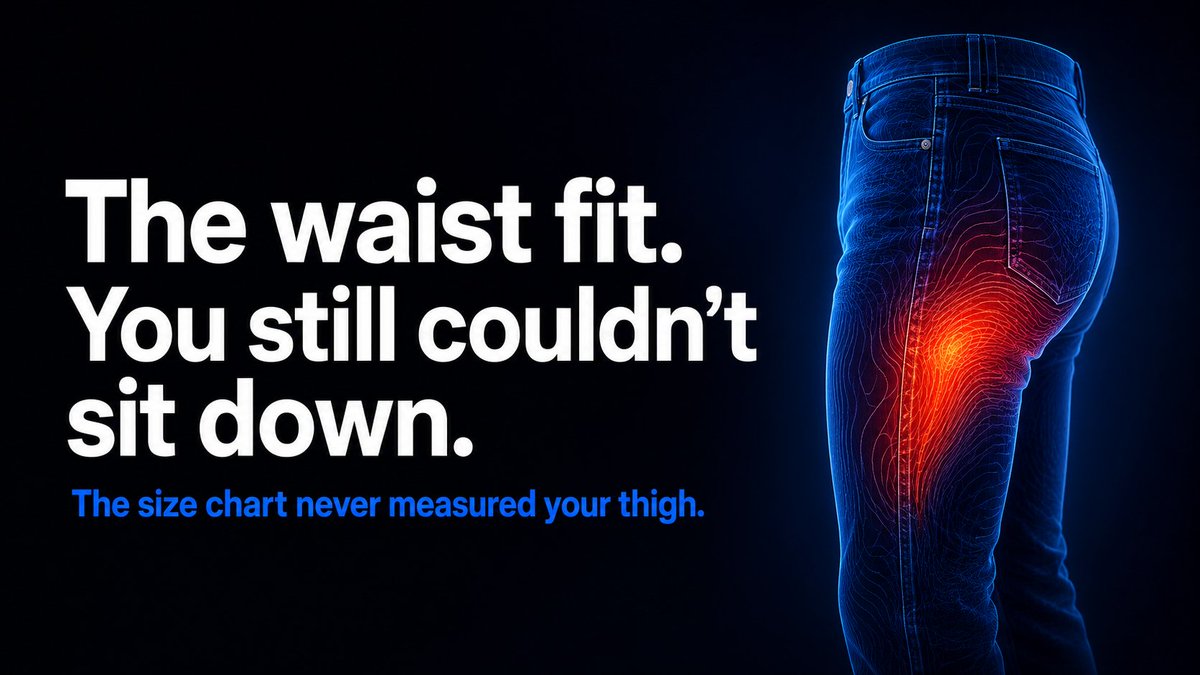
- Take denim — the highest-return category in apparel, 20-25% sent back. Waist matches the chart at 71cm, you order a 28. Waist fits. But the thigh is 1.5cm too tight to sit in: 14oz raw selvedge has zero stretch. The chart had no thigh measurement. Both missed the physics.
- Physics-based simulation models it: bending rigidity (drape), tensile stiffness (stretch), shear (conform). Drape the digital pattern on a 3D body mesh, compute strain at every point. High strain at the thigh = tight fit. A calculation, not a guess.
- There's no single right tool. Four categories each solve a different slice: statistical recommendation (True Fit, 82M users), photo body measurement (3DLOOK), GenAI try-on (Google, Zalando), physics simulation (CLO3D, Browzwear). The wrong pick burns budget.
- Matched correctly, the results are real. 3DLOOK cut TA3 SWIM's returns 47% over 6 months, bracketing to 2%. Bold Metrics reports ~34% fewer with Gap. Perfitly took one brand from 28% to ~10%. Same vendors, different catalogs, opposite ROI — the data match is the whole game.
- One catch most vendors skip: a 3D body scan is biometric data. Under GDPR it's a special category; Illinois BIPA carries real liability. On-device measurement, not cloud storage, is how you cut returns without inheriting a privacy problem.
- Honest question for fashion teams: is your return problem "wrong size selected" or "wrong fit expectation"? Those need completely different tools — and most brands buy before they diagnose. #FashionTech #RetailAI
- We build fit prediction matched to your catalog, data maturity, and economics — vendor-neutral and privacy-first. How we think about it: https://veriprajna.com/solutions/ai-fit-prediction-fashion