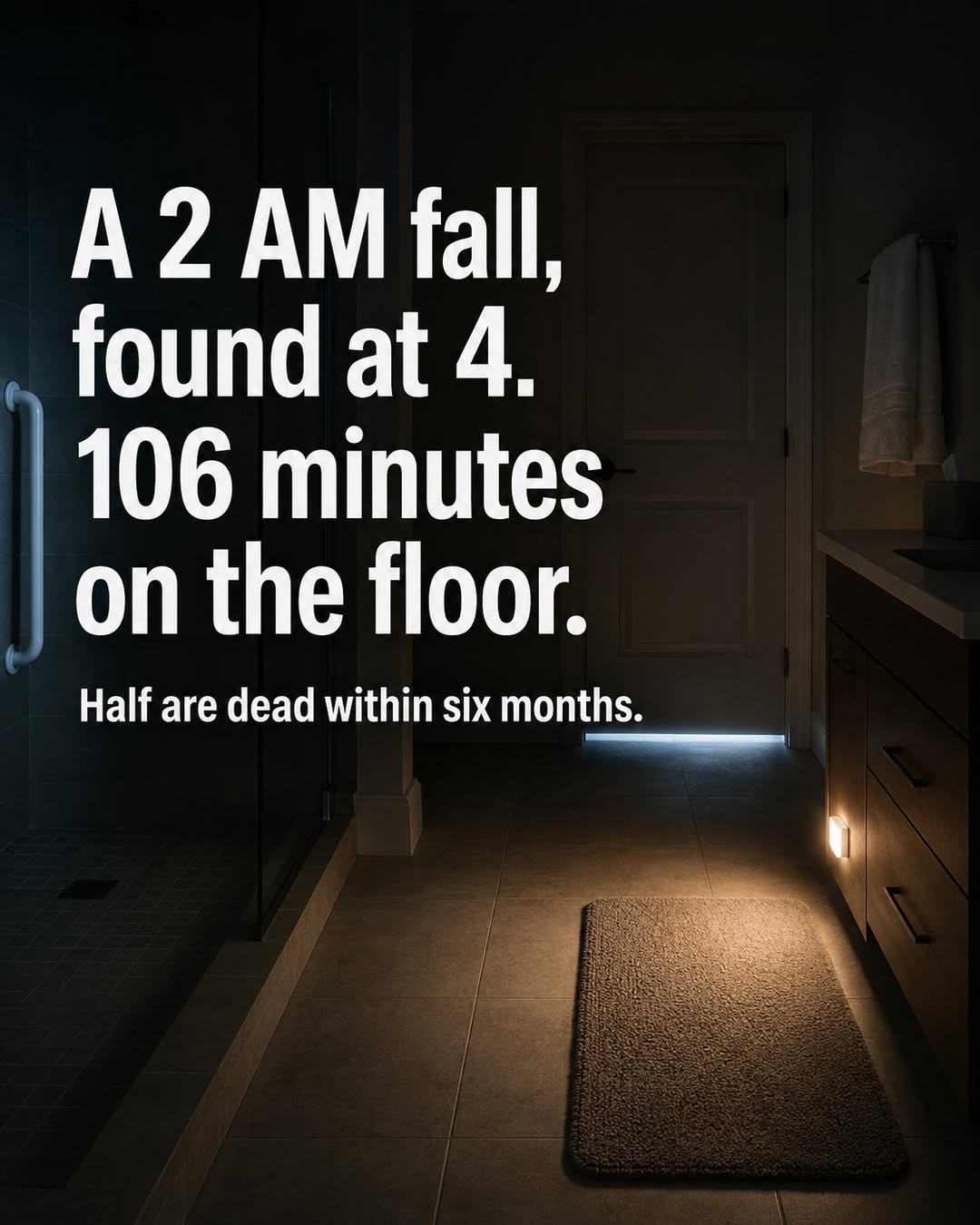
The most dangerous room in senior care is the one no camera is allowed to watch — and no pendant survives: the bathroom.
All three default options fail exactly where falls are deadliest.
Cameras work — but 19 states regulate them, and bathrooms are off-limits. So you cover the bedroom and ignore the higher-risk room next door.
Pendants assume an 84-year-old with memory loss will wear and charge a device mid-crisis. The data: 24% never wear it, only 14% reach 24-hour adherence, and it comes off for bathing — the exact moment falls turn fatal.
Bed alarms tell you someone left the bed — not that she fell 13 seconds later on the way to the bathroom. At 5–15 false alarms per room per day, staff tune them out. Alarm fatigue is the #1 reason facilities abandon fall tech.
But the real killer isn't the impact — it's the long lie. A 2 AM fall found on the next 4 AM round is 106 minutes on the floor, and half of residents found after an hour are dead within six months.
mmWave radar covers the room a camera legally can't: no wearable, just the fall signature off the ceiling. Wi-Fi sensing (802.11bf, ratified September 2025) extends coverage building-wide. The hard part was never the sensor — it's choosing the right modality per room and wiring it into the nurse call system without recreating alarm fatigue.
If you run a community: which room is your real blind spot at 2 AM — a pendant nobody wears, a camera you can't put there, or nothing?
#AgeTech #FallPrevention #SeniorLiving