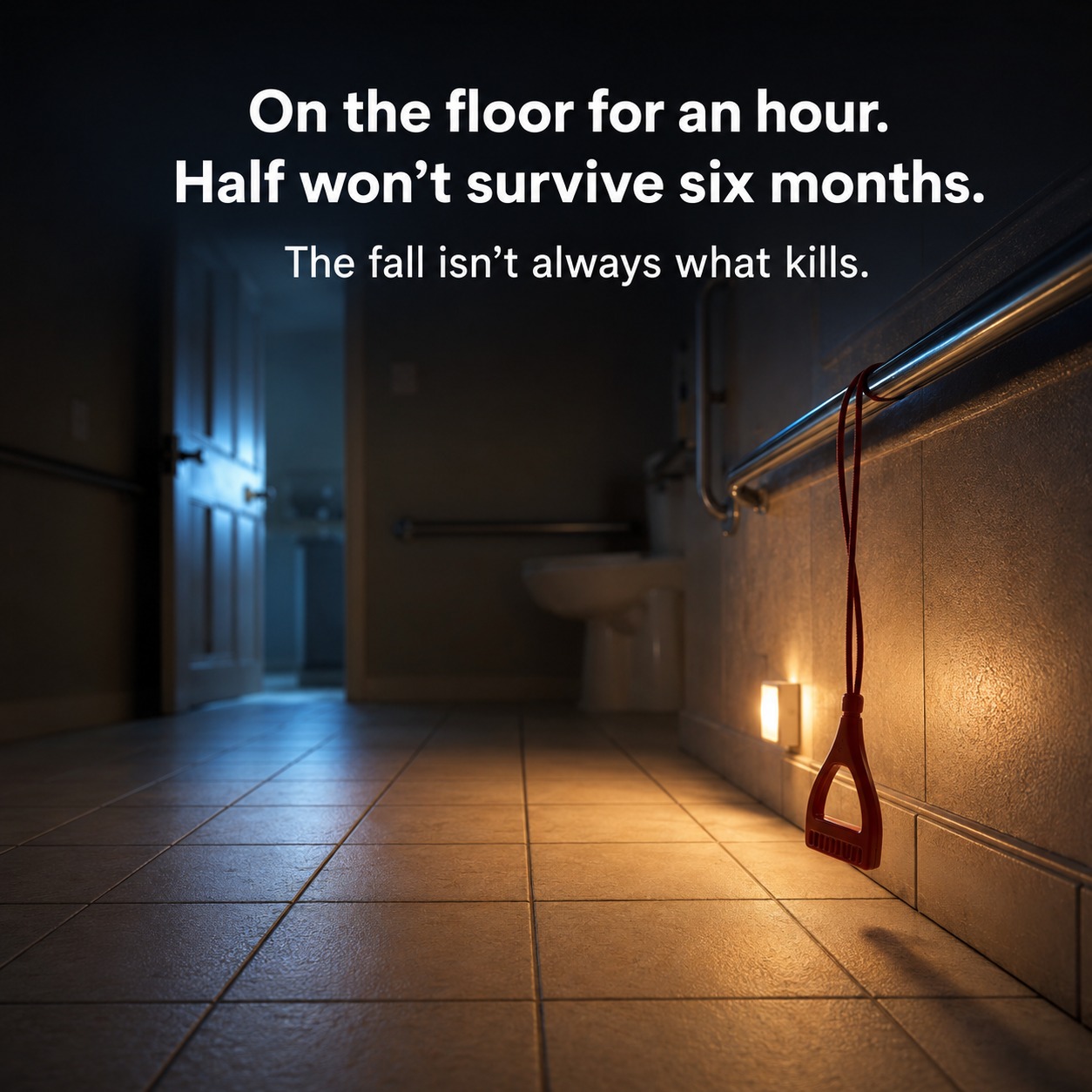
Lie on the floor for over an hour after a fall, and your six-month mortality risk hits 50% — even if the fall itself didn't injure you.
In assisted living and skilled nursing, the "long lie" is often the real killer, not the impact. One in five elderly fall patients reaches the ED having been on the ground more than an hour. The complications do the damage: rhabdomyolysis, hypothermia, dehydration, acute renal failure.
So why isn't this solved? Because the three standard options each fail at the exact moment they matter.
Pendants — 24% of residents never wear them, and only 14% manage true 24-hour adherence. The device comes off for bathing, which is the highest-risk activity in the highest-risk room.
Cameras — strong clinical results, but they can't go where falls are most dangerous. 19 states now regulate cameras in resident rooms, and bathrooms are categorically off-limits.
Bed alarms — they detect bed exit, not falls. 5–15 false alarms per room per day train staff to ignore them. Alarm fatigue is the number one reason facilities abandon fall detection tech. Properly tuned radar runs under 5% false alarms — the difference between a sensor staff trust and one they mute.
What actually covers the 2 AM bathroom is passive sensing that asks nothing of the resident. mmWave radar (60 GHz) reads a fall signature through a shower curtain and detects breathing on the floor — bathroom-safe, no camera, no wearable. Wi-Fi CSI sensing (802.11bf, ratified Sept 2025) extends coverage building-wide over infrastructure you may already own.
The hard part was never the sensor. It's choosing the right modality per room and wiring it into your existing nurse call system — Rauland, Ascom, Austco — so an alert reaches a CNA in minutes instead of at the 4 AM round.
Save this for your next fall-prevention review.
#AgeTech #SeniorLiving #FallPrevention #AssistedLiving #AmbientMonitoring