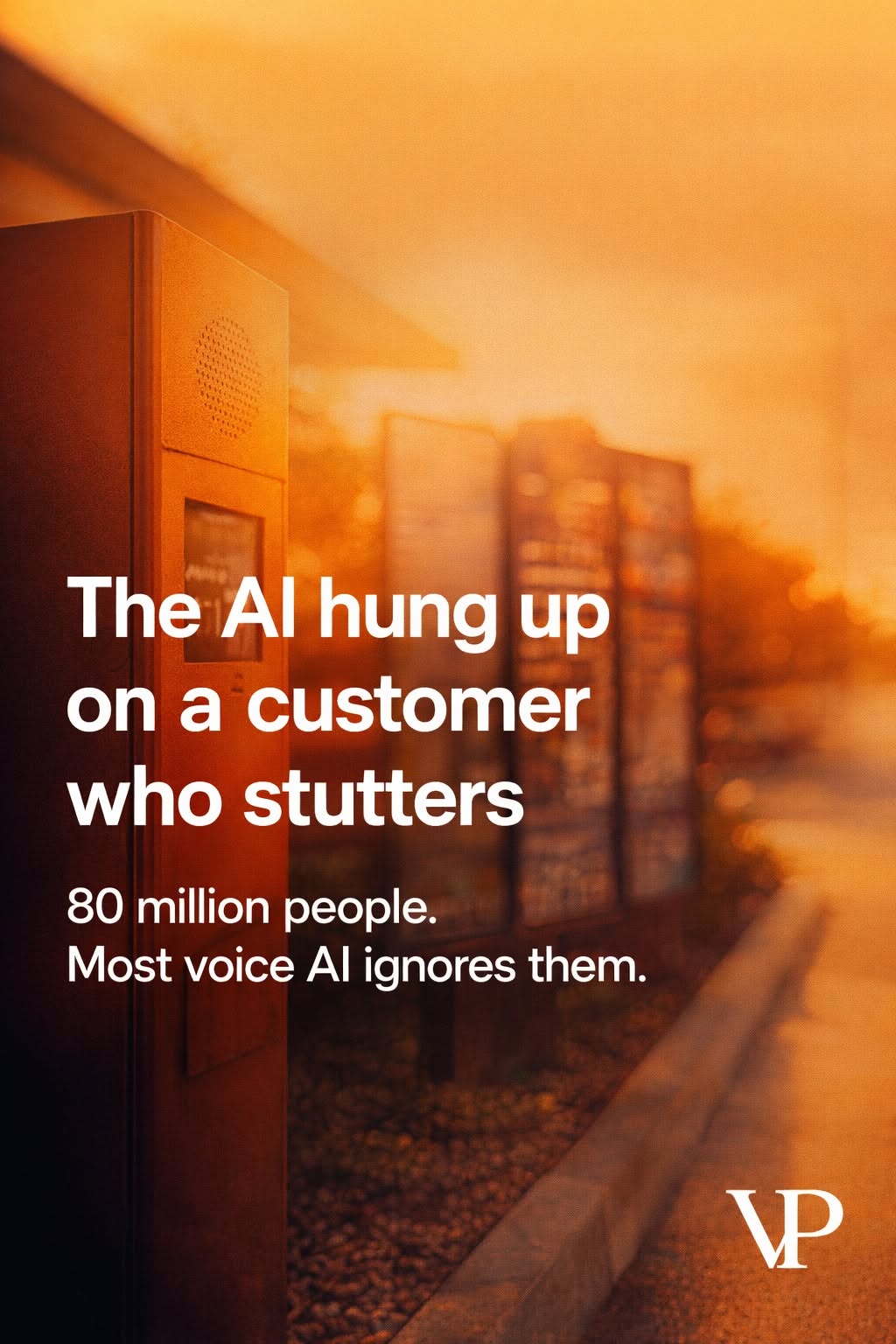
A customer said "b-b-b-baconator" and the AI hung up on them.
That actually happens. When drive-thru voice AI encounters someone who stutters, it often interprets a mid-word pause as "done talking" and cuts them off.
Over 80 million people worldwide stutter. And most speech recognition models were trained almost entirely on smooth, standard speech. So when someone repeats a sound or pauses mid-word, the system doesn't adapt. It breaks.
This isn't a minor bug. It's a design choice baked into the architecture.
Our team dug deep into what's going wrong with current drive-thru AI rollouts and found a pattern. The systems getting deployed at scale aren't built for the real world. They're built for quiet labs with clear speakers.
Real drive-thrus have diesel engines rumbling, wind hitting the mic, kids yelling in the backseat, and people who speak in all the beautifully imperfect ways humans actually speak.
The fix isn't a better prompt. It's better architecture. Think neural voice detection that actually distinguishes speech from noise. Edge processing that responds in milliseconds instead of waiting for a round trip to the cloud. Models trained on how people really talk, not just how we wish they did.
We wrote up the full technical breakdown in our latest whitepaper, covering everything from signal processing to the new accessibility standards hitting in 2025.
Honest question for anyone reading this: have you ever had a voice AI completely fail to understand you? What happened?
#VoiceAI #Accessibility #EnterpriseAI