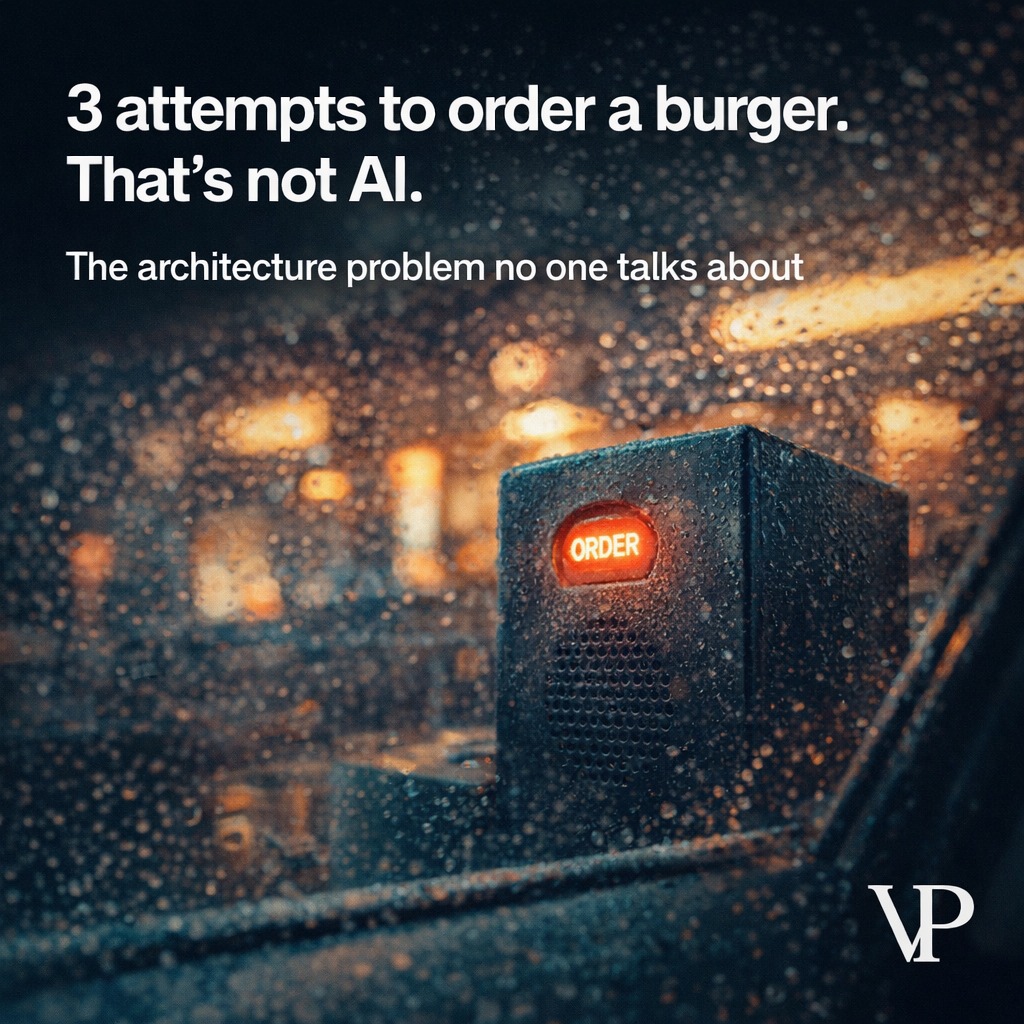
Drive-thru voice AI that cuts you off mid-sentence isn't innovation. It's broken architecture.
Most QSR voice AI systems are built the same way: plug a standard mic into a cloud-based large language model and call it done.
The result?
Customers repeating orders three times. People who stutter being told their silence means "done talking." And response delays so long the conversation feels like a bad phone call.
This isn't a model problem. It's a foundation problem.
Our latest whitepaper breaks down why the "API wrapper" approach fails in real-world environments and what enterprise-grade voice AI actually requires:
→ Neural voice activity detection that distinguishes human speech from engine noise, wind, and background chatter
→ Dynamic pause tolerance that lets customers think without getting interrupted
→ Edge processing that delivers sub-300ms response times instead of routing every word through a distant data center
→ Speech recognition trained on diverse voices, accents, and disfluencies — not just standard broadcast English
→ Real-time safeguards that catch hallucinations before they reach the customer
The gap between "works in a demo" and "works at 600 locations" is enormous. And that gap lives in the architecture layer most providers skip entirely.
When the system can't tell the difference between a thoughtful pause and a completed order, no amount of LLM intelligence fixes the experience.
Save this if you work in voice AI, QSR tech, or enterprise automation — this framework applies far beyond the drive-thru.
What's the worst AI ordering experience you've had? 👇
#VoiceAI #QSRTech #EdgeComputing #EnterpriseAI #AccessibleDesign