You wash it. You sort it. And the AI still throws it away.
What if 15% of the plastic waste stream is invisible to today’s “AI-powered” recycling systems?
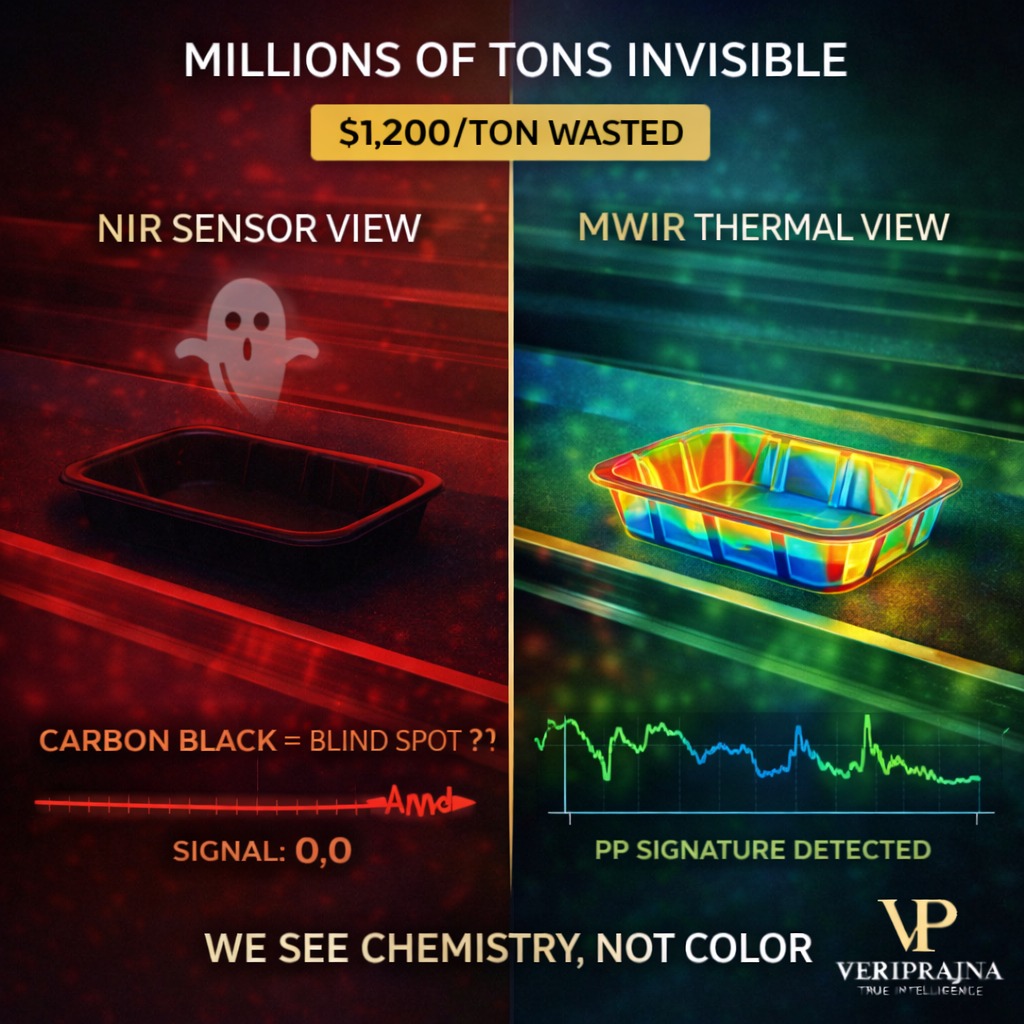
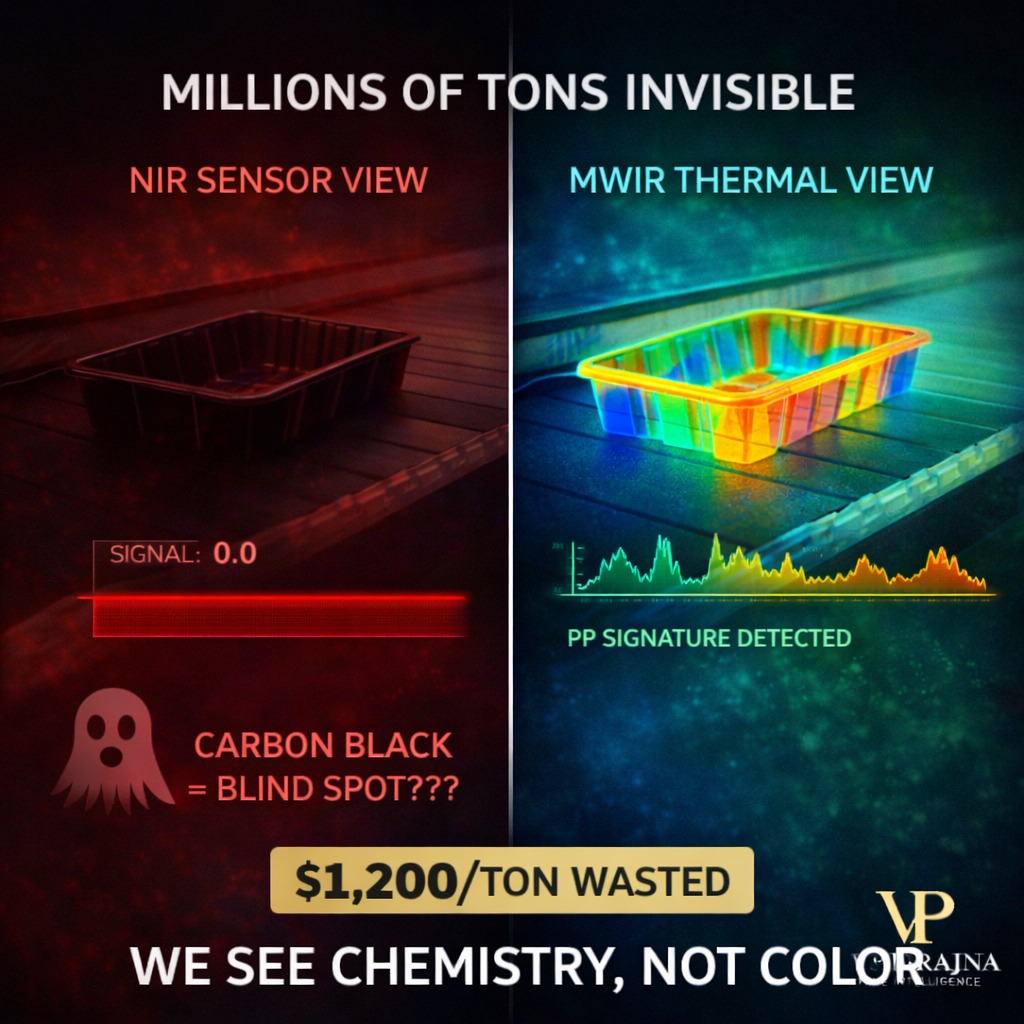
Black plastics—used everywhere from food trays to automotive parts—are silently rejected by conventional Near-Infrared (NIR) sorters. The result? Millions of tons lost to landfill or incineration every year, not because they lack value, but because current sensors are physically blind to them .
Our latest whitepaper exposes the uncomfortable truth behind circular economy failures—and why “AI wrappers” can’t fix broken physics.
🔍 Key insights from the whitepaper:
• Global plastic recycling rate is just 9%, with black plastics disproportionately ending up as residue.
• Black plastics can make up 3–15% of the total waste stream in a typical MRF.
• Recycled black polymers like PP and ABS trade at $1,000–$1,200 per ton, rivaling virgin material prices.
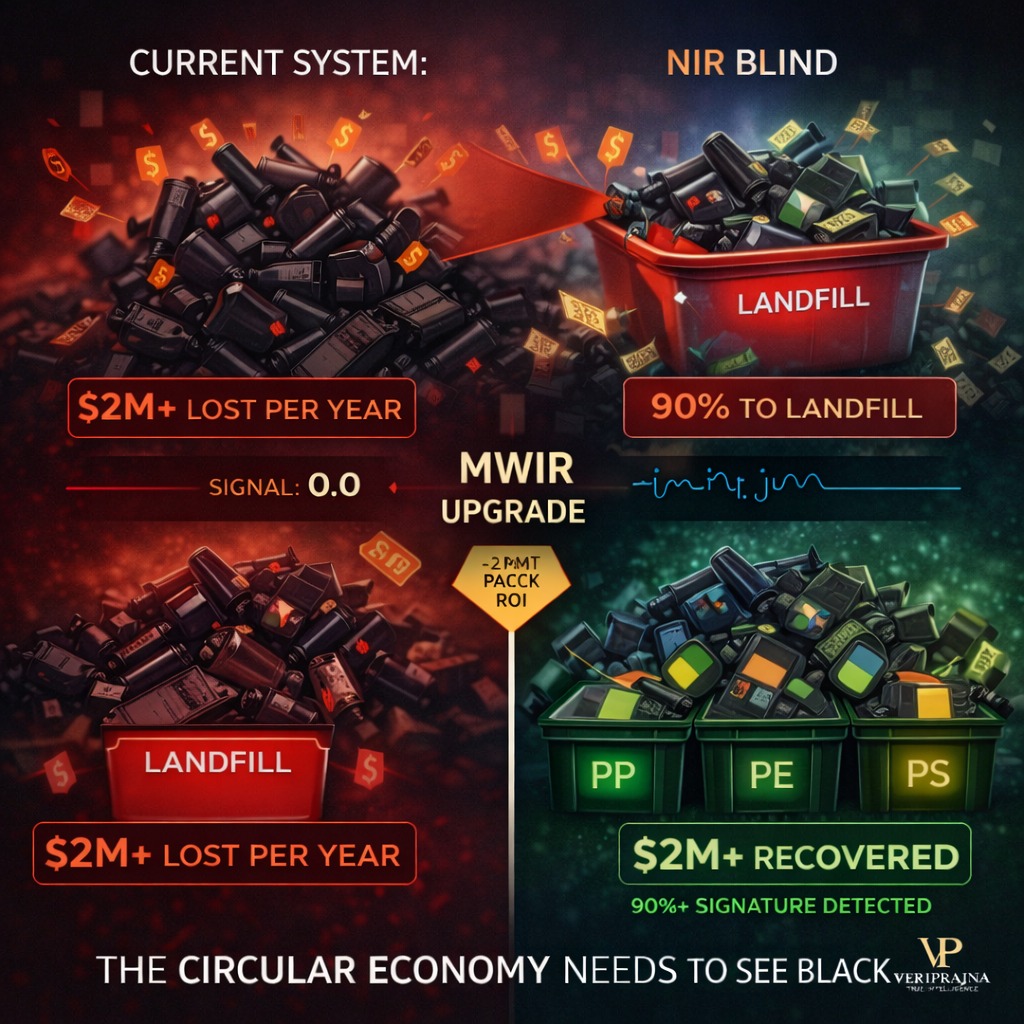
• A mid-sized facility processing 50,000 tons/year can unlock €2+ million in annual value, with a payback period under 2 months, by recovering black plastics instead of burning or burying them.
🚫 The problem isn’t “better prompts” or larger models.
✅ The solution is Deep Tech: Mid-Wave Infrared (MWIR) Hyperspectral Imaging + real-time edge AI that sees chemistry, not color.
At VeriPrajna, we engineer intelligence from the sensor layer up—rendering carbon black transparent and enabling polymer-accurate recovery at industrial speeds.
👉 Read the full whitepaper (link in comments) to understand the physics, economics, and intelligence reshaping black plastic recovery.
📩 Want to explore deployment or ROI for your facility? Email us at [email protected]
💬 Or message us directly on WhatsApp: +91 92170 59957
Stop guessing. Start seeing the invisible.
#DeepTech #CircularEconomy #PlasticRecycling #IndustrialAI #Sustainability