Your AI may be “smart”—but is it fast enough to obey physics?
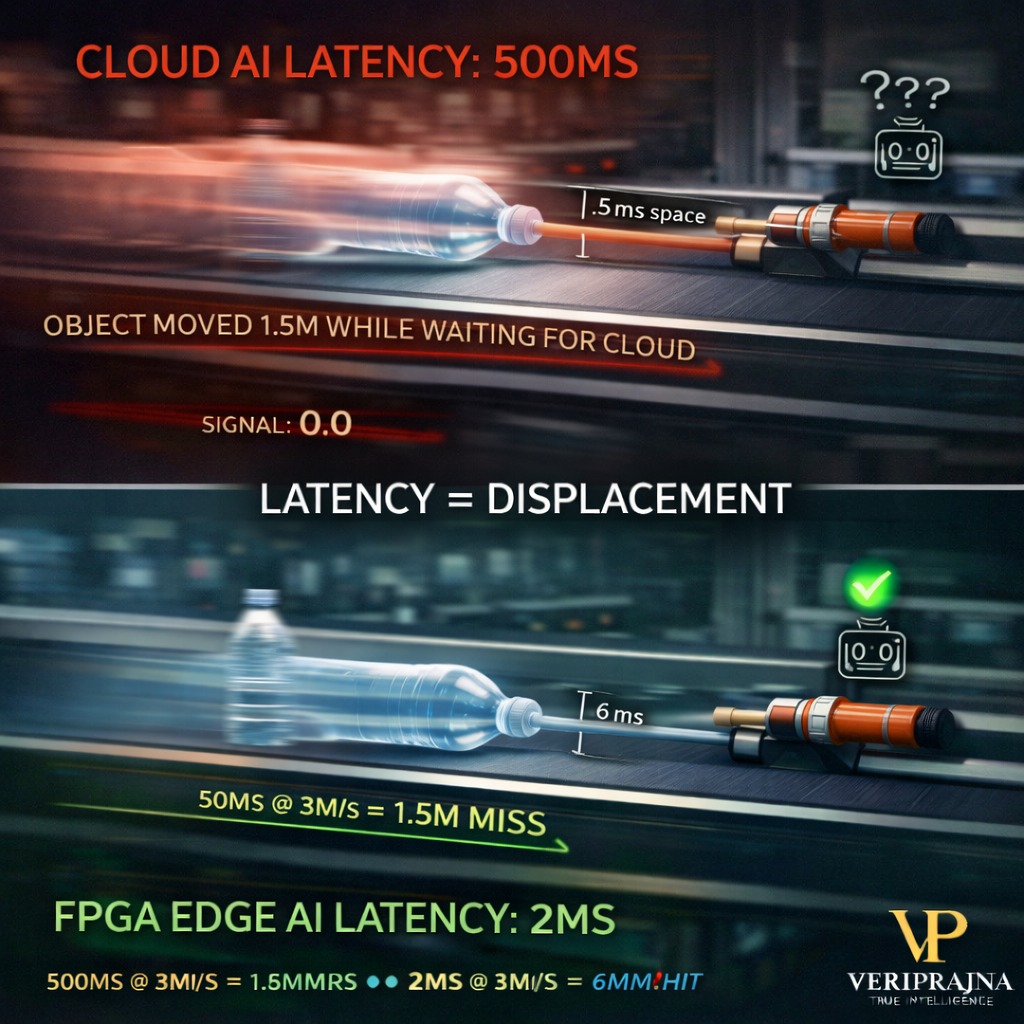
In high-velocity material recovery, 500 milliseconds can mean a 3-meter mistake. That’s not a software bug. That’s a structural failure.
Most AI-powered sorting systems today rely on cloud inference. Our latest whitepaper shows why this approach is fundamentally incompatible with industrial reality—and how it silently destroys throughput, purity, and ROI.
📉 The hard numbers:
• Cloud AI introduces ~500 ms round-trip latency, causing 1.5–3.0 meters of blind displacement on conveyors running at 3–6 m/s.
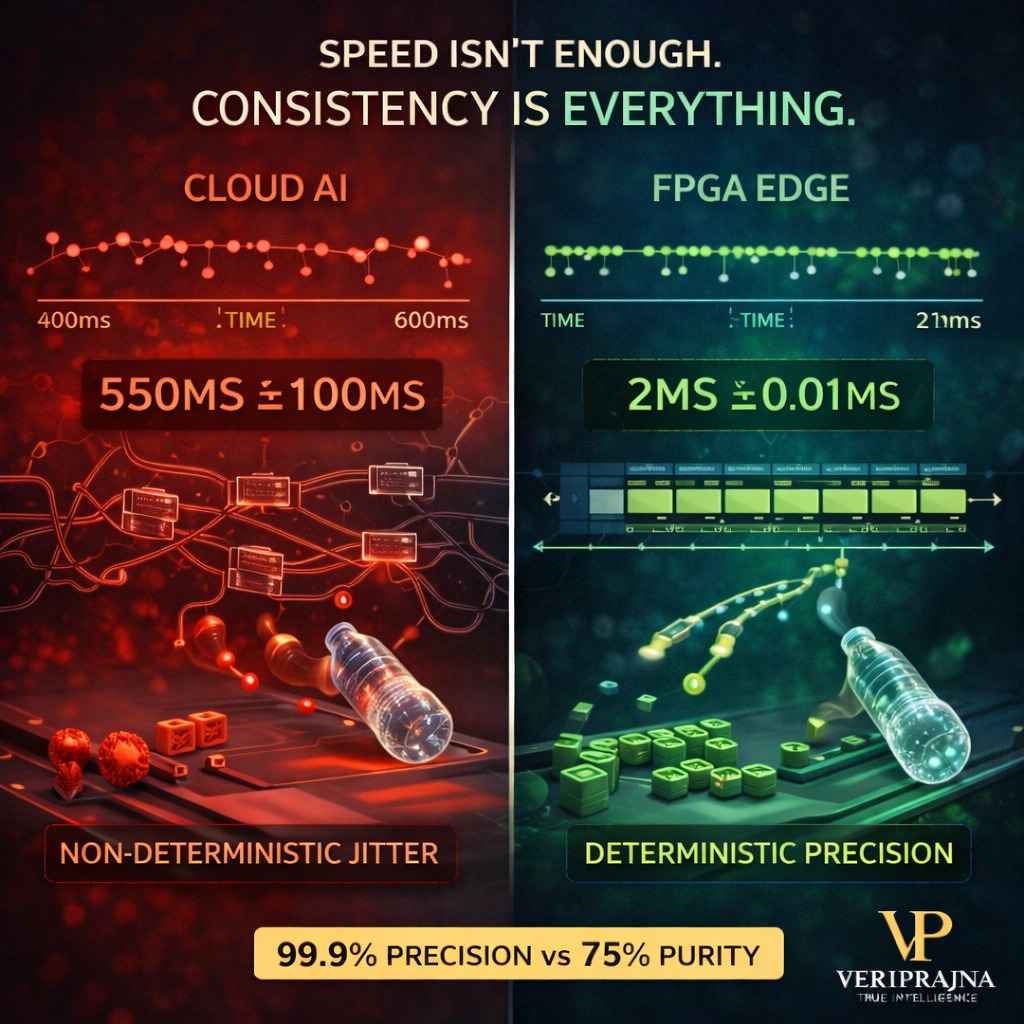
• Operators are forced to slow belt speeds by up to 75%, capping throughput and negating AI’s promised gains.
• Even 1% jitter-induced purity loss can downgrade bales—costing hundreds of thousands annually.
• By contrast, quantized FPGA Edge AI delivers <2 ms deterministic latency, restoring sub-millimeter ejection accuracy and enabling 3× throughput increases—without expanding facility footprint.
⚙️ The insight:
This isn’t an “edge vs cloud” debate. It’s a physics vs abstraction problem. When AI decisions must synchronize with pneumatic valves firing in milliseconds, non-deterministic architectures simply fail.
📄 Our whitepaper, The Millisecond Imperative, breaks down:
• Why cloud + GPU architectures introduce unavoidable jitter
• How FPGA dataflow, INT8/INT4 quantization, and bare-metal control eliminate latency tax
• The direct financial impact: throughput, purity, energy, and OpEx
• Why “Deep AI architecture” matters more than model size or APIs
👉 If you’re designing, upgrading, or rethinking high-speed sorting systems, this is required reading.
📩 Talk to our Deep AI architects: [email protected]
💬 Or WhatsApp us directly: +91 92170 59957
🔗 Whitepaper link shared in comments
#EdgeAI #IndustrialAI #FPGA #CircularEconomy #DeepTech