Your AI can detect objects. But does it understand reality?
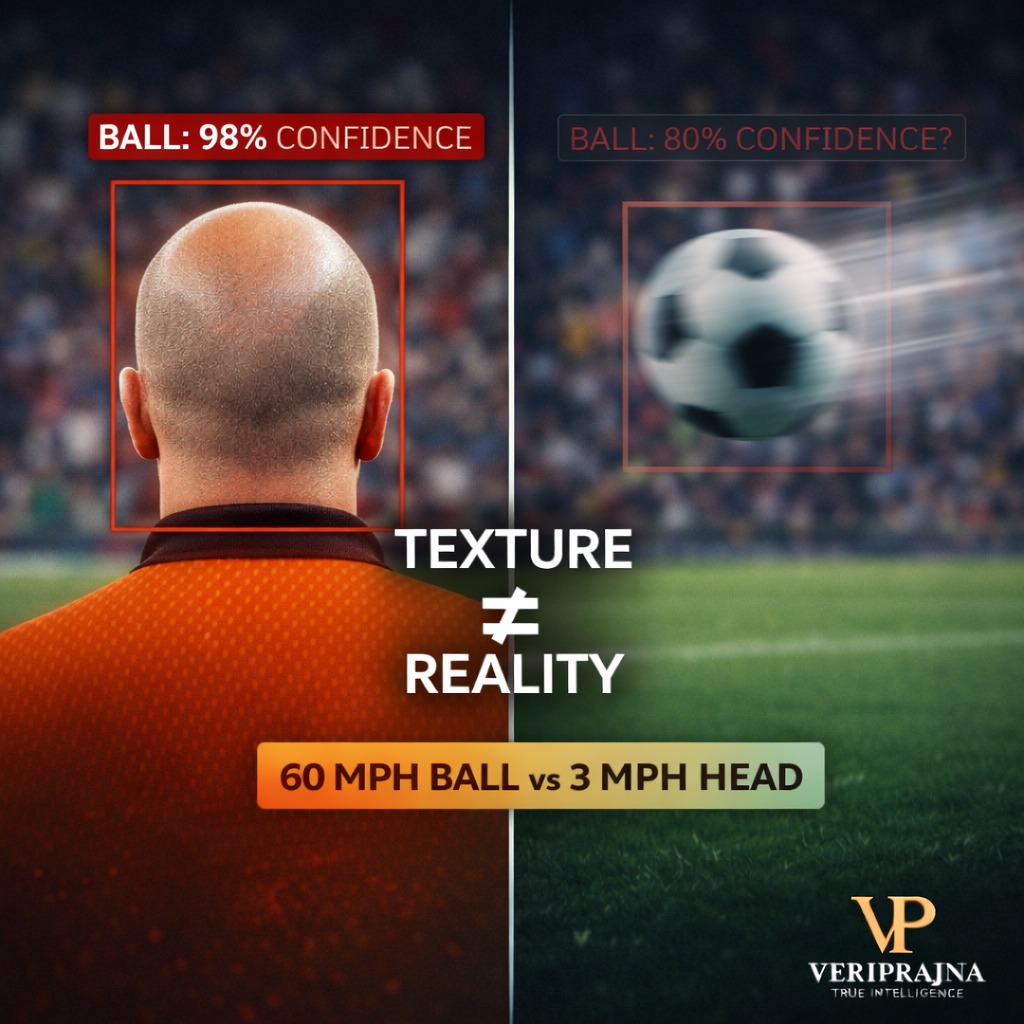
When a vision system mistakes a human head for a soccer ball, it’s not a glitch—it’s a warning sign. ⚠️
Enterprise AI is hitting a hard ceiling. Generic computer vision models can reach ~90% accuracy, but that last 10% is where business risk lives: false positives, missed defects, phantom braking, and costly manual reviews. In high-stakes environments, probability without physics breaks systems.
In our latest whitepaper, “Beyond the Bounding Box: The Imperative for Physics-Constrained Intelligence in Enterprise AI,” we show why:
• A 1% improvement in defect detection accuracy can drive a 5–10% yield increase in semiconductor manufacturing—saving millions annually.
• False positives in vision systems directly translate into yield loss, safety risks, customer churn, and regulatory exposure.
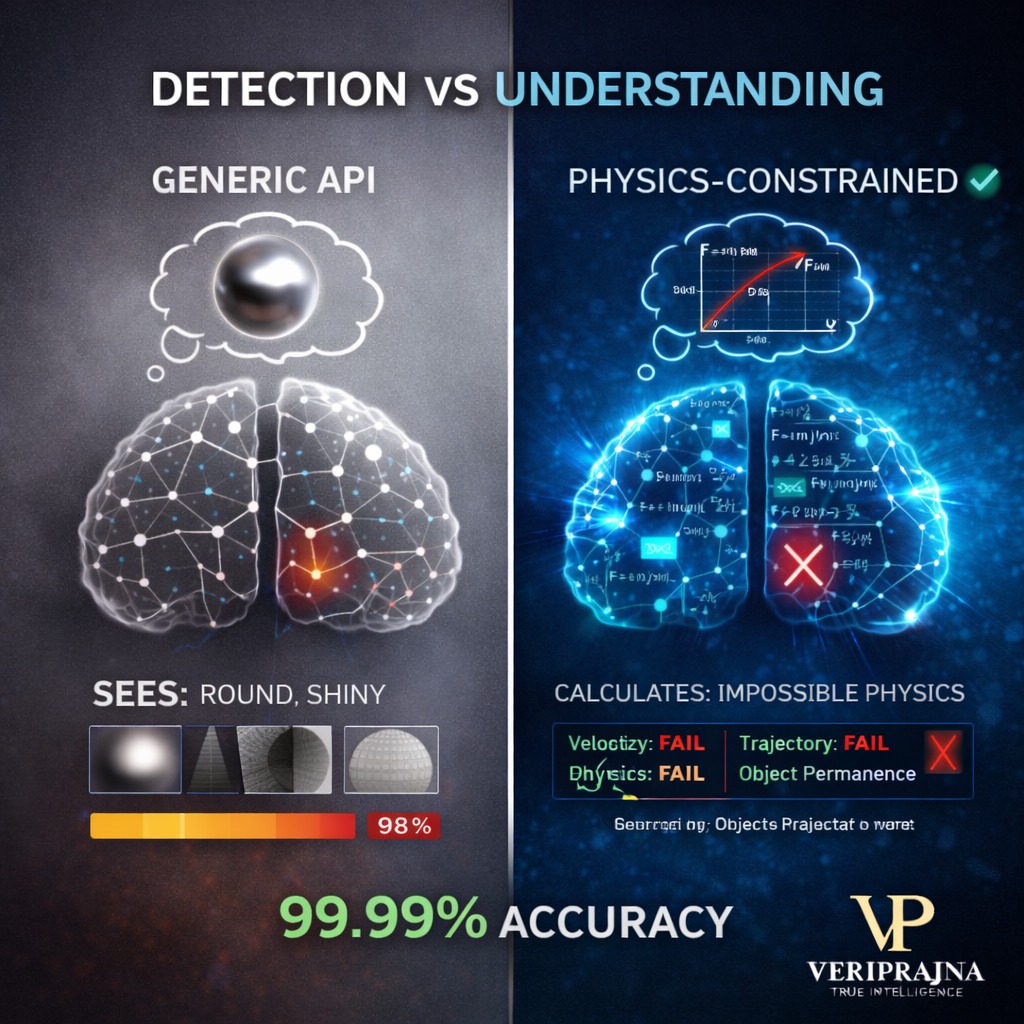
• Wrapper AI detects patterns, but Physics-Constrained Vision Systems understand motion, causality, and physical limits—filtering out impossible outcomes before they hit operations.
At Veriprajna, we embed the laws of physics—kinematics, geometry, and temporal consistency—directly into AI architectures. The result: robust, enterprise-grade intelligence that performs in the real world, not just on clean datasets.
📄 Read the full whitepaper to see how Physics-Constrained AI bridges the gap from 90% accuracy to 99.99% operational reliability.
🔗 Whitepaper link is shared in the comments.
👉 Want to discuss how this applies to your enterprise systems?
📧 Email us at [email protected]
💬 WhatsApp: +91 92170 59957
Because in mission-critical AI, context is the new accuracy. 
#EnterpriseAI #ComputerVision #PhysicsInformedAI #DeepTech #Veriprajna