We Built One Bias Audit to Satisfy Six AI Hiring Laws. It Failed in the Same Week We Shipped It.

The first thing I had to explain to a Chief People Officer last winter was that her company was now breaking the law in a way nobody on her team had the vocabulary to describe.
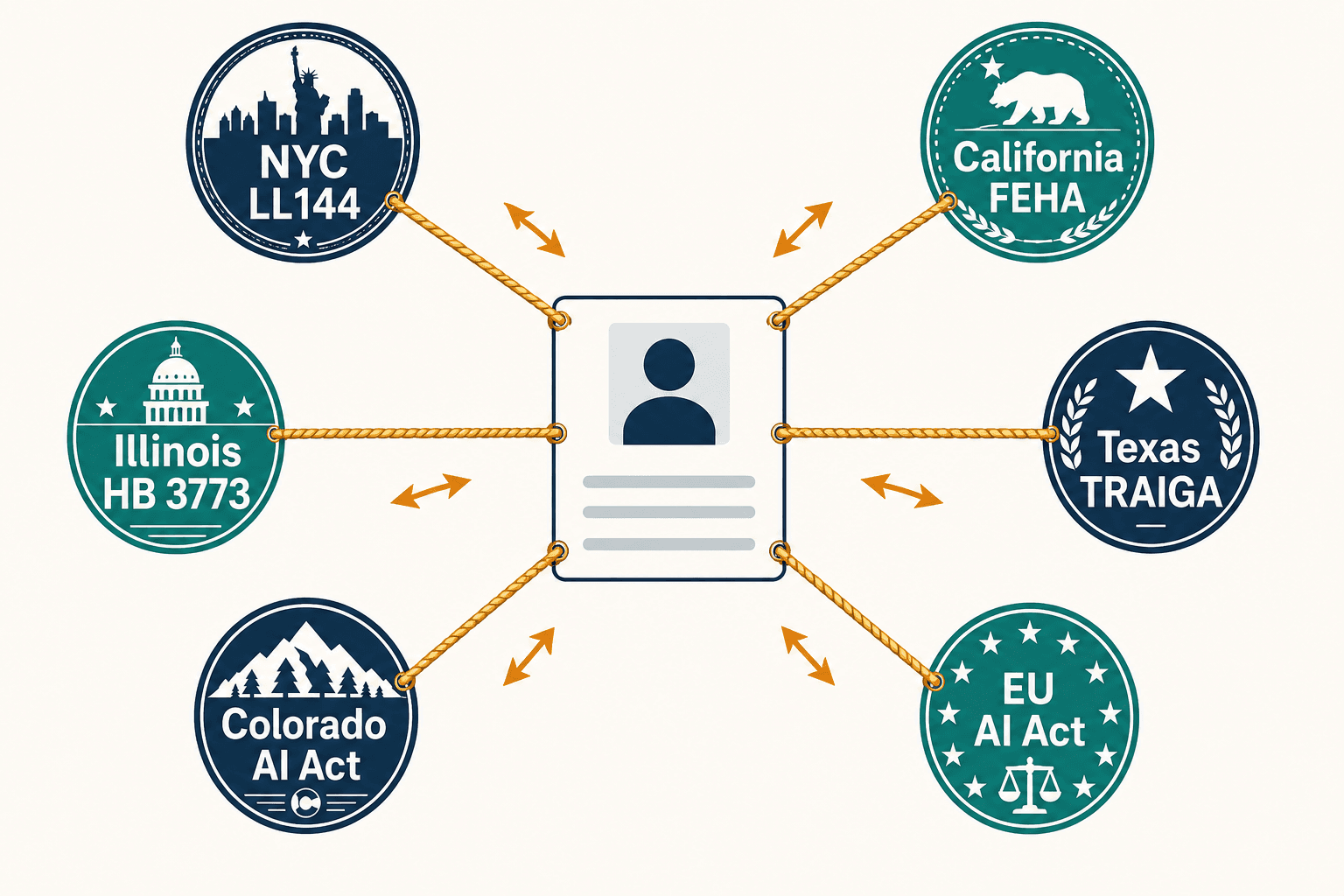
She ran hiring across New York, Chicago, Denver, Austin, and a London office. Her stack was unremarkable — an applicant tracking system, an AI screening layer bolted onto it, a video-interview vendor, a scheduling chatbot. Standard 2024 procurement. The problem was that between October 2025 and August 2026, six different governments decided, more or less independently, that exactly this stack was a regulated high-risk activity. And each of them wrote the rules a little differently.
This is what AI hiring compliance actually looks like now: not one law to follow, but a pile of overlapping ones that occasionally contradict each other, sitting on top of a hiring pipeline that was never built to be inspected. When I started digging into it, I assumed the job was to run a good bias audit. I was wrong, and the way I was wrong is the whole story.
The CHRO Who Was Subject to Six Regimes Before Lunch
Let me lay out what she was actually facing, because the convergence is the part people underestimate.
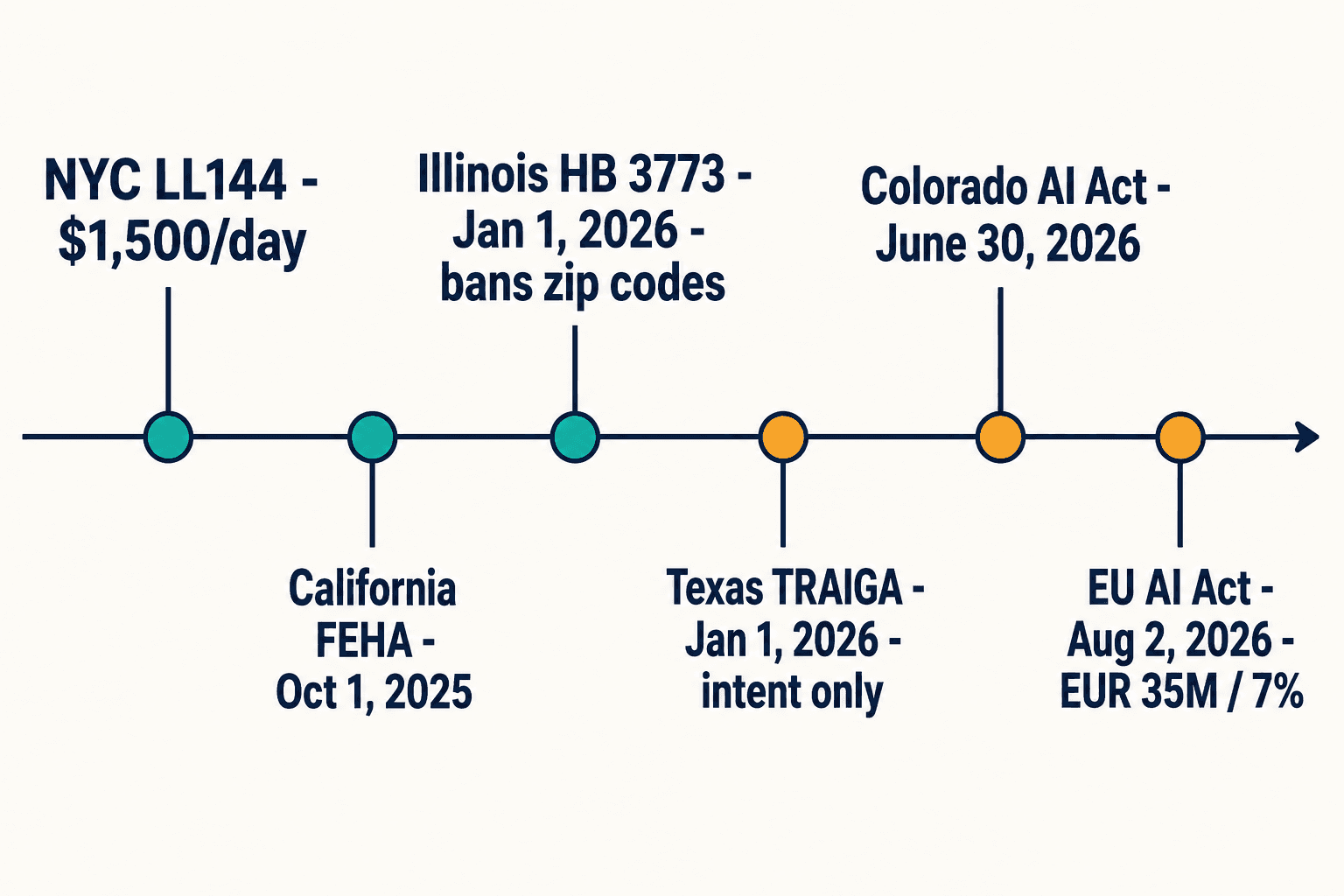
California's FEHA amendments on automated decision systems went live October 1, 2025 — four years of mandatory retention on every input, output, and bias-test result, and liability that attaches whether the discrimination was intentional or not, for any employer hiring in California regardless of where they're headquartered. Illinois HB 3773 went live January 1, 2026, and it explicitly bans using zip codes as proxies for protected classes. Texas TRAIGA went live the same day — except Texas deliberately rejected disparate impact as a theory and only punishes intentional discrimination, with fines from $12,000 for a curable violation to $200,000 for one that isn't — with a 60-day window to cure before the penalty hardens, a detail that changes how you triage a Texas notice versus a New York one. Colorado's AI Act takes force June 30, 2026. The EU AI Act treats recruitment as Annex III high-risk starting August 2, 2026, with penalties reaching €35 million or 7% of global annual turnover.
So a single company with offices in those five cities and London answers to six regimes, three of them already live, three going hot before the end of summer. Same hiring decision. Six different definitions of what makes it illegal.
A company that hires in New York, Chicago, Denver, Austin, and London is not running one hiring process. It's running one process that six governments each believe belongs to them.
And then the part that made the room go quiet: the thing most of them had been relying on to stay safe had just stopped working.
Is "Our Vendor Says It Isn't an AEDT" Still a Defense?
For two years, the quiet strategy in New York was something researchers named Null Compliance — and once you see it, you see it everywhere. New York City's Local Law 144 lets the employer decide whether their tool "substantially assists" a hiring decision. So employers decided it didn't. A Cornell, Data & Society, and Consumer Reports study presented at FAccT in 2024 surveyed 391 NYC employers running these tools and found that only 4.6% had published the bias audit the law requires. Only 3.3% had posted the transparency notice. The rest had effectively self-classified their way out of scope.
It was a memo. Somewhere in legal, there was a one-page memo from 2024 saying our vendor told us this isn't an AEDT, so LL144 doesn't apply. That memo was the compliance program.
Then December 2, 2025 happened. The New York State Comptroller audited the city's enforcement and found 17 potential LL144 violations in the same 32-company sample where the city's own agency had found one. Seventy-five percent of complaint calls had been misrouted. The agency admitted, on the record, that its staff lacked the technical expertise to evaluate these tools — and agreed to shift to proactive, research-driven enforcement. The penalty structure didn't change: up to $1,500 per day, per violation. Run one unaudited tool continuously in New York and you're looking at over half a million dollars a year before anyone files a private lawsuit.
"Null Compliance" was never a legal position. It was a bet that no one was checking. On December 2, 2025, someone started checking.
I remember reading the Comptroller's audit PDF on a Sunday and thinking: every one of those 2024 self-classification memos just became a discovery exhibit. Which, it turns out, is not a metaphor.
The Lawsuits Quietly Rewriting Who's Liable
Because the other thing happening in parallel is that courts are dismantling the idea that the vendor's opinion protects you.
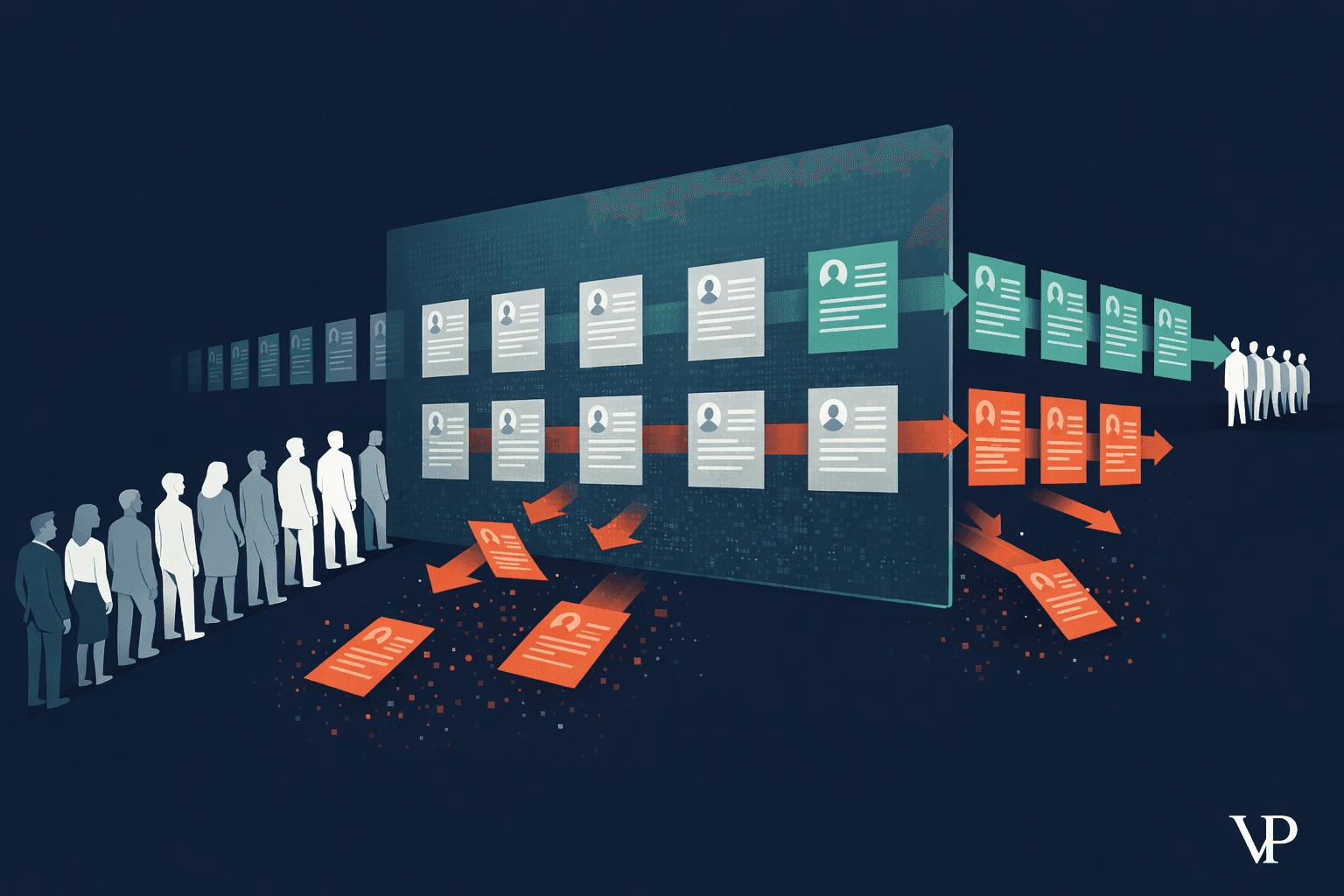
In Mobley v. Workday, Judge Rita F. Lin refused to dismiss the case, holding that an AI hiring vendor can be directly liable as an "agent" of the employer when its tool recommends or filters candidates — regardless of what the employer's memo claims the tool does. The court granted preliminary collective certification in May 2025, and the opt-in window for over-40 applicants closed March 7, 2026. Then the judge ordered Workday to produce an exhaustive list of every employer who had enabled its HiredScore screening products, rejecting the attempt to keep the post-acquisition tools out of the case. By the court's own reckoning, over a billion applicants may have passed through that pipeline.
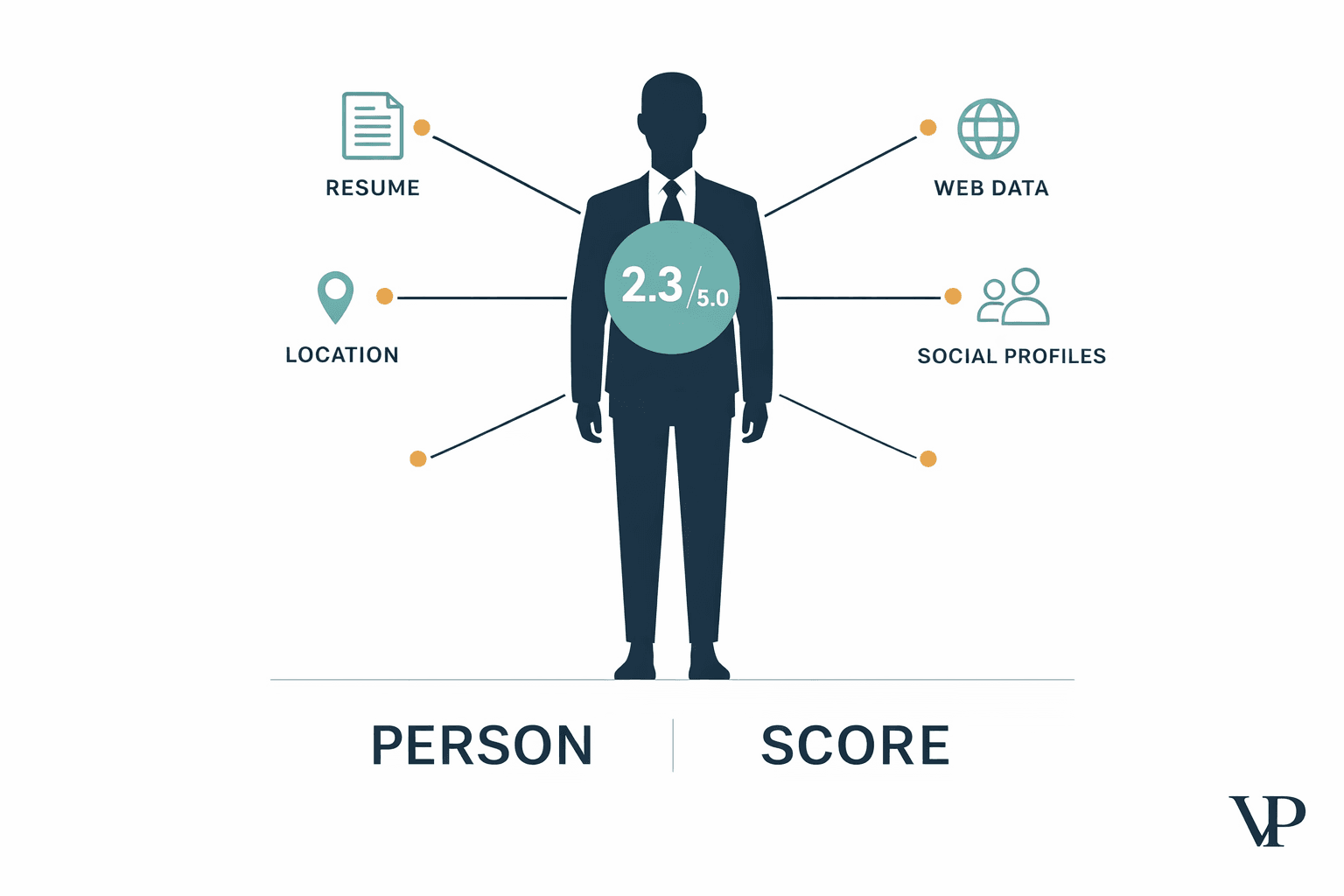
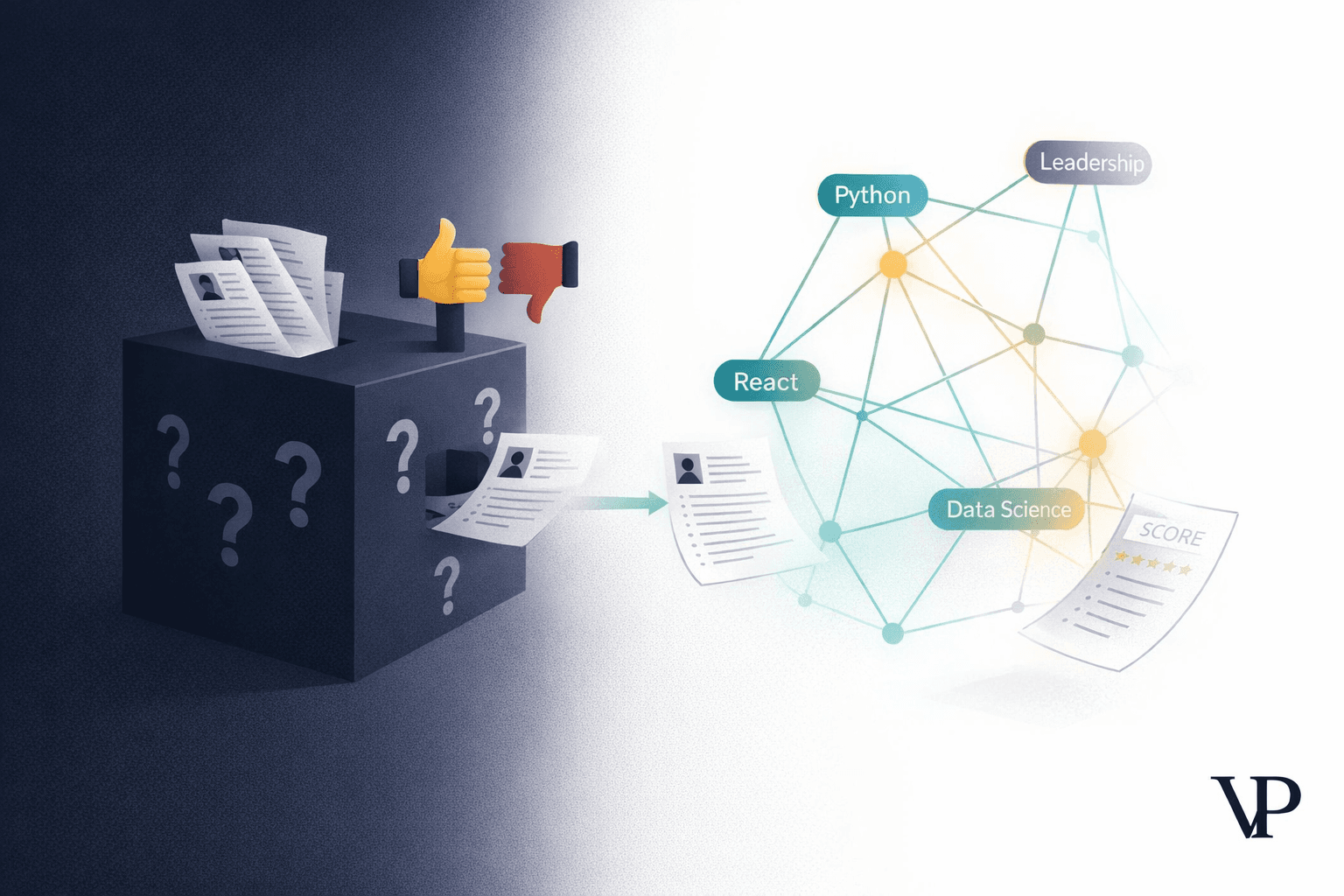
And on January 20, 2026, a new front opened. Kistler v. Eightfold asks a question nobody in HR tech wanted asked: are these platforms consumer reporting agencies under the Fair Credit Reporting Act? The complaint alleges Eightfold scraped LinkedIn, GitHub, and Stack Overflow, assembled candidate dossiers from "more than 1.5 billion global data points," and produced a 0-to-5 "likelihood of success" score with no candidate notification, no disclosure, no dispute process. If a court agrees, every similar platform owes every scored candidate an adverse-action notice and a way to contest it — and FCRA statutory damages run $100 to $1,000 per consumer, per violation. Multiply that by every candidate a platform has ever scored.
So that's the landscape my client was standing in. Six regimes, two active lawsuits redefining liability, a regulator that just learned how to audit. My instinct — and I'll own this, because it cost me a month — was that the answer was a really good universal bias audit.
The Universal Audit That Couldn't Exist
What I built first is worth describing, because it's exactly where the whole approach broke.
The plan was elegant: one rigorous adverse-impact analysis, run to the methodology that independent auditors like DCI Consulting and ORCAA use, that we'd map across all six jurisdictions. Pass it once, document it well, satisfy everyone. We built the pipeline, pulled the hiring data, ran the four-fifths impact ratios, even did the intersectional race-by-sex cuts that New York specifically requires.
Then I sat down to map the single result against the six regimes, and it fell apart in front of me.
New York demands intersectional impact ratios. Colorado asks for "reasonable care" with no intersectional requirement at all. Texas doesn't recognize disparate impact as a theory in the first place, so the entire statistical exercise is legally beside the point there — only intent matters. The EU AI Act doesn't have a four-fifths rule; it has a data-representativeness mandate under Article 10. One audit, run one way, produces a deliverable that is correct for one jurisdiction and either insufficient or irrelevant for the others.
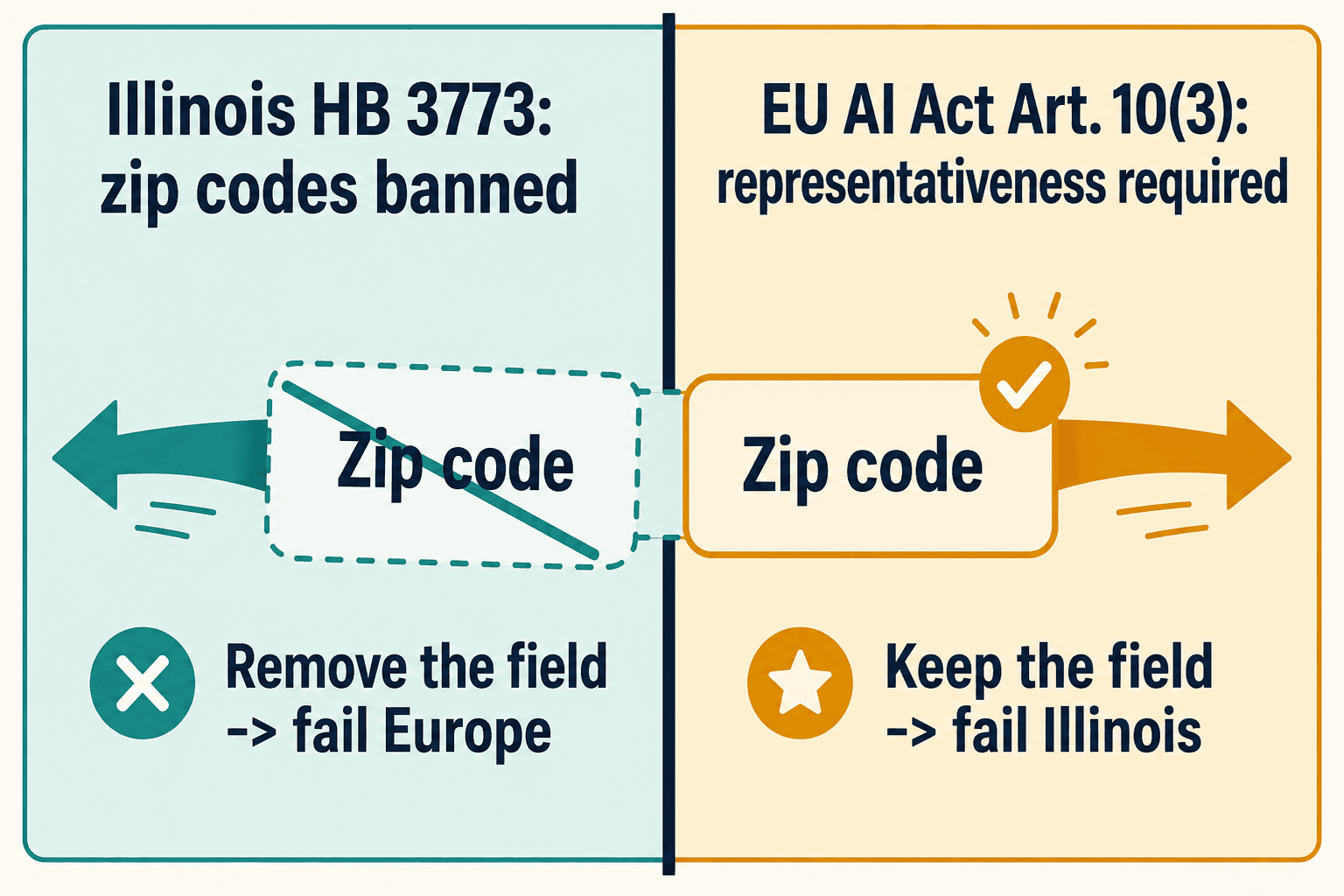
The deepest one — the one that genuinely stopped me — was the zip code. Illinois HB 3773 explicitly bans using zip codes as proxies for protected classes; strip them out, you're compliant. But the EU AI Act's Article 10(3) requires training data to be "relevant, representative, and free of errors," and the geographic coverage that makes a dataset representative is often exactly what zip codes encode. Remove the field and you fail Europe's representativeness test. Keep it and you fail Illinois.
The same data field is contraband in Illinois and mandatory evidence in Brussels. There is no version of the dataset that is clean in both places at once.
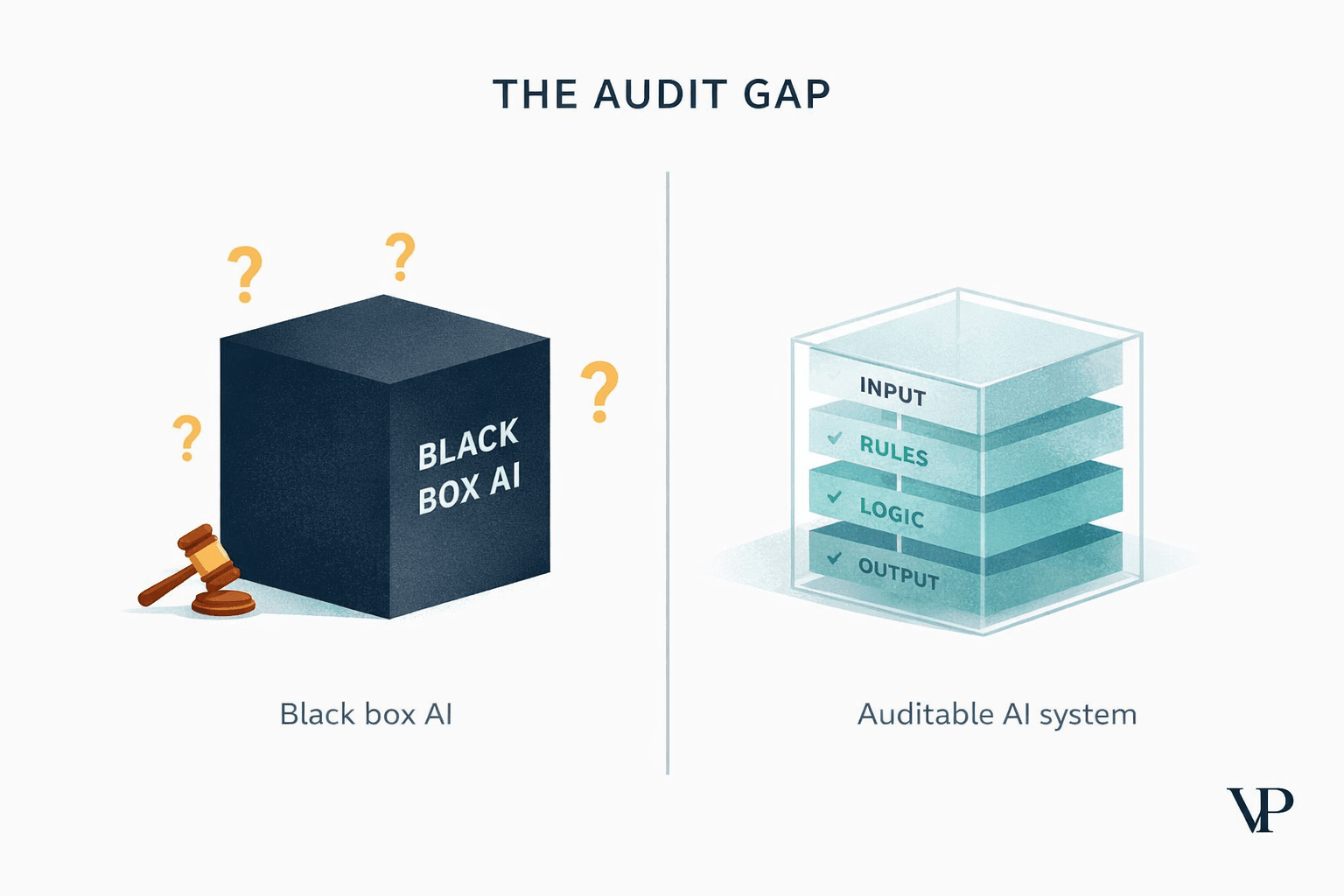
You cannot audit your way out of a contradiction in the law. I'd spent weeks building a tool to answer a question, and the real problem was that the question had six different correct answers, two of which were mutually exclusive. That was the turn. The product wasn't a better audit engine. The product was the thing that sits above the audits and reconciles them — and tells you honestly which conflicts can't be reconciled, so your general counsel can make a legal-strategy call instead of pretending the conflict isn't there.
The Exposure Nobody's Bias Audit Was Catching
Once I stopped trying to build one audit, I started seeing the gaps the audits never covered. Two of them are large.
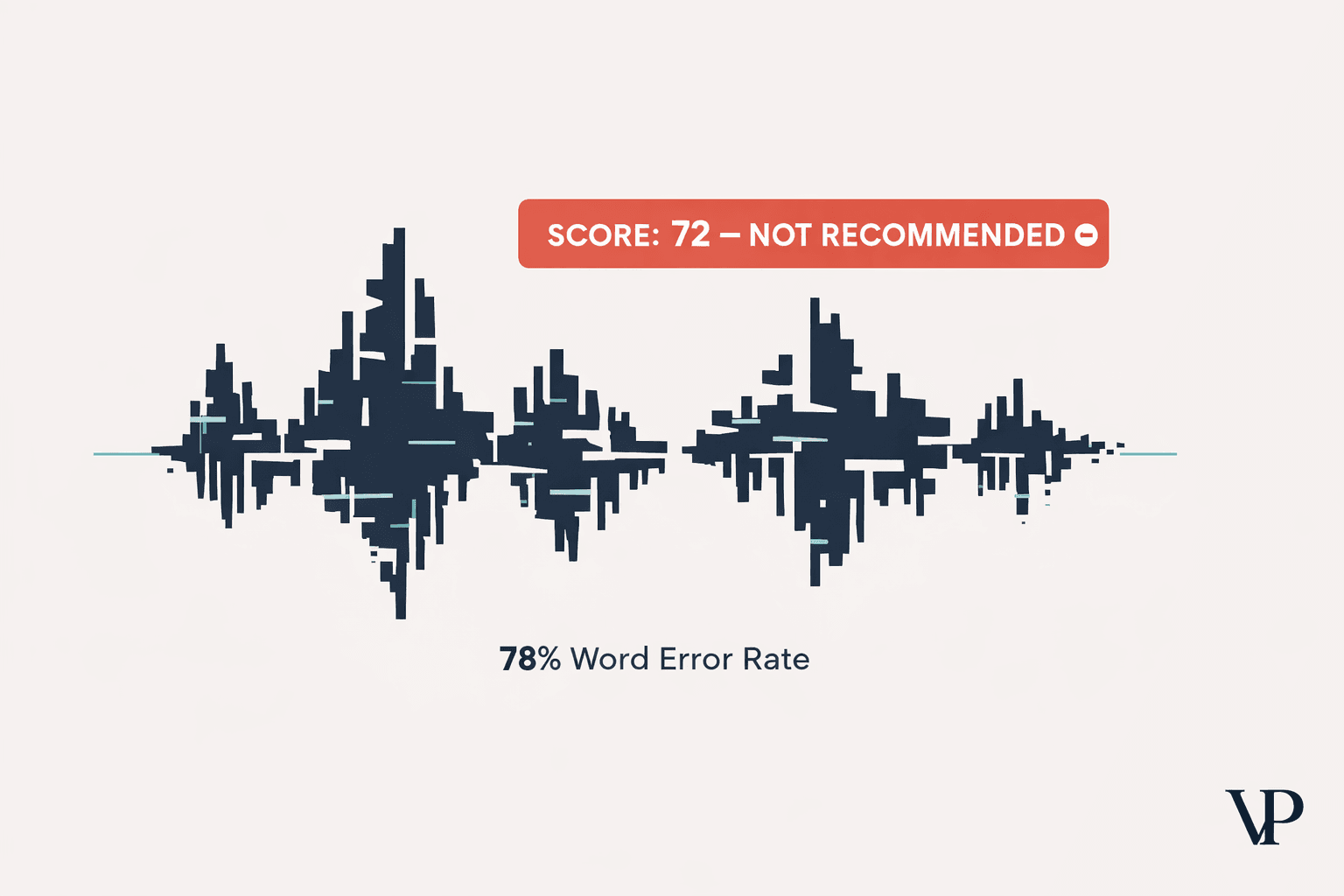
The first is accessibility, and it's its own legal universe. In March 2025, the ACLU filed a complaint on behalf of an Indigenous Deaf applicant, "D.K.," alleging that an AI-driven video interview process discriminated against her under the ADA, Title VII, and Colorado's civil rights law. Strip away the statutes and the harm is plain: a qualified candidate was filtered out because the machine literally could not hear her — and no one in HR ever saw the rejection happen. The technical reality underneath that claim is brutal: automatic speech recognition still performs far worse on disabled speech. OpenAI's Whisper model runs roughly three times the word-error rate on multilingual and non-standard speech, and even the winning team at the 2025 Interspeech Speech Accessibility Project Challenge — trained on 400-plus hours from over 500 speakers with speech disabilities — landed at 8.11% word-error rate on impaired speech, still multiples of the standard English benchmark. A bias audit checking race and sex impact ratios will pass a tool that systematically can't understand a Deaf candidate, because that's a different legal theory with a different test that almost nobody is running. I now treat accessibility testing as a separate discipline with its own deliverable, because it is one.
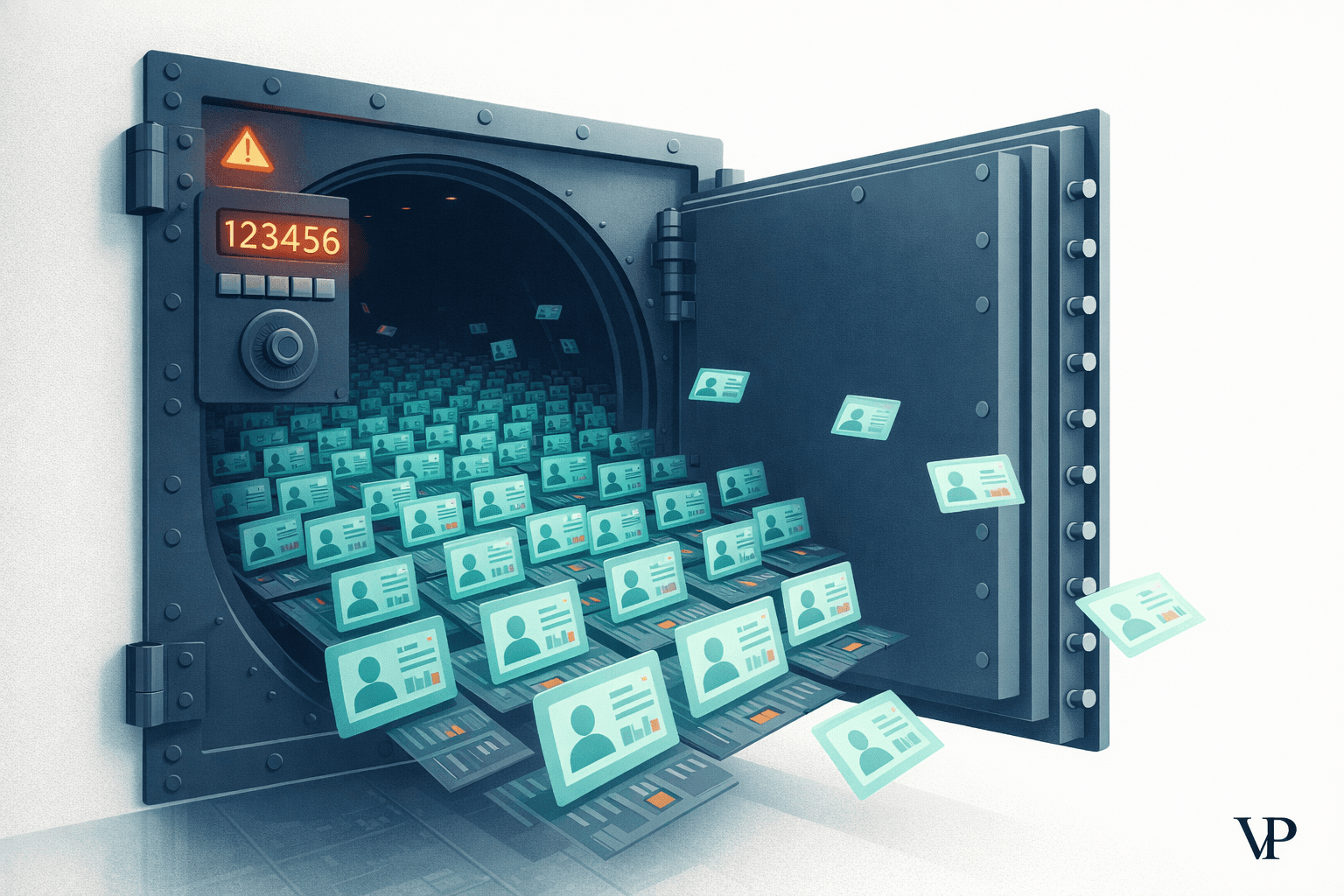
The second is security, and I learned to put it on the table after McHire. In June 2025, researchers Ian Carroll and Sam Curry found that McDonald's hiring platform, built on Paradox.ai, had exposed the records of around 64 million applicants — names, emails, phone numbers, full chatbot interview transcripts. The root cause was a 2019 test admin account where the username and password were both 123456, with no multi-factor authentication, plus an API flaw that let anyone iterate through applicant IDs. Your compliance stack does not care that the weak link was a vendor's forgotten test account. The breach-notification obligation, the class-action exposure, the loss of lawful basis to keep processing that data — all of it lands on the employer. After that disclosure, the CISO is at the table for every HR-tech purchase, and a generic SOC 2 letter is not an AI-aware security review.
Why Can't You Just Buy a Tool for This?
People always ask me some version of: can't I just buy a tool for this? And I understand the instinct, because the market is full of credible-looking options. The honest answer is no, and it's worth knowing why before you spend.
The dedicated governance platforms — FairNow, Holistic AI, Credo AI, which has raised around $45 million — are genuinely good at what they do. But each ships essentially one methodology and runs on your data; none of them sits between you and Workday and extracts what your actual vendor contract does and doesn't protect. The independent auditors like DCI and ORCAA produce excellent work at $50,000 to $200,000 per system per year, but it's a snapshot on an annual cadence, not a standing answer to six moving regimes. And the Big Four will absolutely take the engagement — for $500,000 to several million — with advisory teams that don't build technology and can't get into the technical detail of why your screening model behaves the way it does.
The gap isn't a missing audit vendor. It's that no one on your shortlist can sit between the CHRO, the GC, the CISO, and every HR-tech vendor at once — and is willing to tell you where the law simply can't be satisfied.
What we built at Veriprajna is the thing that lives in that gap: a jurisdictional reconciliation and AEDT due-diligence practice that inventories every tool touching your hiring, runs the right audit for each regime you fall under instead of one generic one, tests accessibility and security as their own disciplines, and gives your general counsel the cost numbers and litigation timelines to defend the budget to a CFO. Not insurance you hope never to use — documentation you'll be very glad to have when New York's proactive enforcement, or Mobley's discovery list, comes looking.
The 120 Days That Decide This
The reason I keep a countdown on this isn't drama. It's that the calendar is unusually unforgiving right now. Colorado's deadline is roughly twelve weeks out. The EU's high-risk obligations land about four weeks after that. New York's enforcement posture already flipped. Mobley's discovery is producing the employer list as you read this.
What changed my own thinking, and what I'd want a CHRO or general counsel to take from all of this, is narrow and specific: the old protective move — let the vendor define the tool out of scope, run one audit, file the memo — was never a compliance program. It was a bet that no one with technical skill was looking. Everyone is looking now, from six directions, and two of those directions disagree about what you're even supposed to do. The work isn't passing an audit anymore. It's knowing, regime by regime, exactly where you stand — including the places where the honest answer is that the law contradicts itself and someone has to decide which way to lean. That's not a tool you buy. It's a judgment you have to actually do the work to earn. You can see how we do it here.